
Natural Stone Paving
At Sydney Landscaping Pty Ltd, we design and construct premium Vertical Gardens in Sydney that transform ordinary walls into stunning living landscapes. Whether you’re enhancing a residential courtyard, commercial property, apartment balcony, or outdoor entertaining area, our tailored vertical garden solutions combine innovative design, expert craftsmanship, and high-quality materials to deliver exceptional, long-lasting results. Every project is customised to suit your property’s style, available space, and environmental conditions, ensuring your living wall not only looks spectacular but also thrives in Sydney’s climate. Our experienced team manages every stage of the process, from consultation and design through to installation and ongoing maintenance, creating beautiful green spaces that add value, improve privacy, and elevate your property’s visual appeal.
We are committed to delivering custom vertical garden solutions that blend functionality with natural beauty, making us a trusted choice for homeowners, businesses, and property developers across Sydney. Our living walls are carefully designed using premium plant selections and efficient irrigation systems to promote healthy growth while minimising maintenance requirements. Whether you’re looking for a lush indoor green wall, an eye-catching outdoor vertical garden, or a low-maintenance feature for your commercial premises, we provide tailored landscaping solutions that exceed expectations. At Sydney Landscaping Pty Ltd, we take pride in creating sustainable, visually striking landscapes that enhance everyday living and help your property stand out in Sydney’s competitive market.
Sydney Brick Pavers
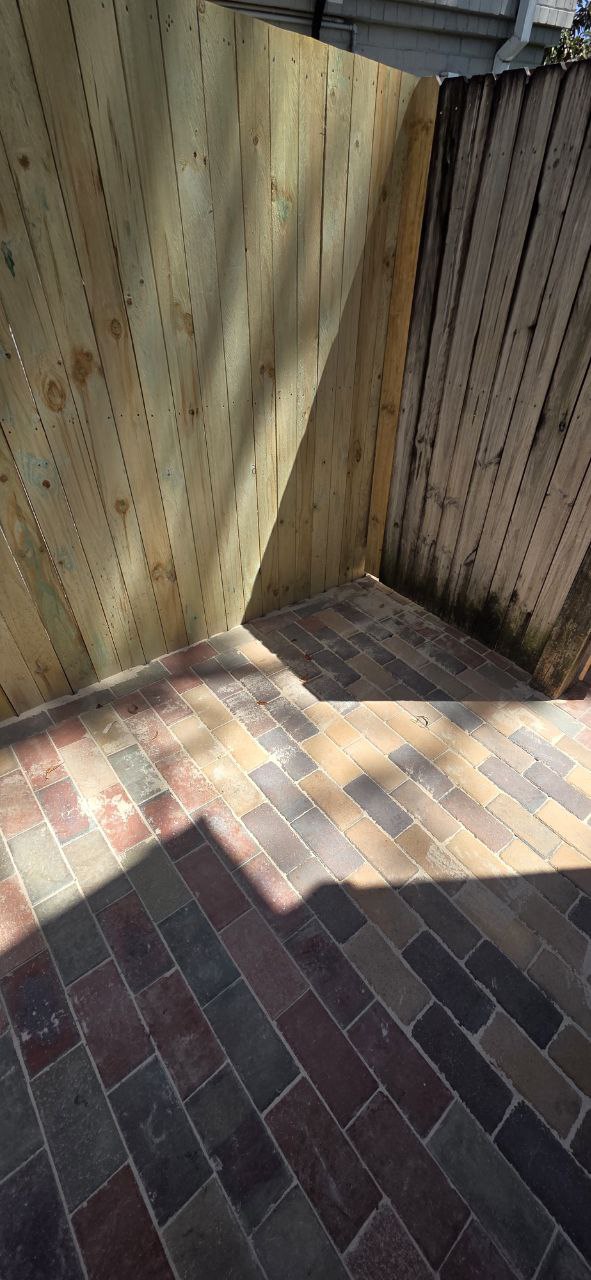
Brick pavers have been a cornerstone of Sydney paving for over a century, and their enduring popularity is no accident. From the heritage terraces of Paddington and Balmain to modern entertainers on the Northern Beaches, clay brick pavers offer an unmatched combination of timeless character, exceptional durability, and rich, earthy colours that only improve with age .
Unlike mass-produced concrete or the uniform consistency of porcelain, each clay brick paver carries natural variations in tone and texture, creating a warm, inviting surface that feels like it belongs in an Australian landscape.
Below is a comprehensive guide to understanding, selecting, and installing brick pavers for your Sydney property.
1. What Are Brick Pavers?
Brick pavers are created from natural clay and shale, which are shaped and then fired in high-temperature kilns . This firing process transforms the clay into a hard, dense ceramic material that is incredibly strong, resistant to fading, and able to withstand Sydney’s harsh sun, heavy rain, and coastal salt air.
Unlike standard wall bricks, paving bricks are specifically manufactured to be laid flat and withstand the compressive forces of foot traffic and vehicles. They are the genuine article – not a concrete imitation.
Key characteristics of quality brick pavers:
Fade-resistant colour: The colour is fired into the clay, not painted on the surface. Sydney’s intense UV rays will not turn a terracotta red brick paver grey .
Natural variations: Expect subtle shifts in shade from brick to brick – this is the hallmark of real clay and a feature prized by landscape designers.
Exceptional durability: A properly installed brick paved surface can last 50+ years with minimal maintenance.
Sustainable: Made from natural materials and fully recyclable at end of life.
2. Cost Guide for Sydney (2025–2026)
The cost of brick paving in Sydney varies significantly based on the quality of the brick, the complexity of the laying pattern, and the amount of site preparation required. Unlike some other paver types, brick paving requires skilled labour for patterns like herringbone, which adds to the installation cost.
Based on current Sydney market rates:
| Project Type | Cost per m² (Installed) | Typical Use |
|---|---|---|
| Standard brick pavers (basic pattern) | 90–90–160 | Patios, pathways, courtyards |
| Premium brick pavers (complex pattern) | 160–160–220 | Feature driveways, heritage restorations, herringbone layouts |
| Brick driveway paving (NSW average) | 90–90–130 | Single car driveways (~20m² total 1,800–1,800–2,600) |
| Material-only (brick pavers) | 70–70–100 | Supply only, DIY installations |
Note: Driveway installations typically require a thicker base (minimum 150-200mm of road base compared to 100-130mm for a patio) to support vehicle loads, which increases the overall project cost .
What affects the price most?
The pattern: A simple running bond is fast and affordable. A 45-degree herringbone requires constant cutting and significantly more labour time.
The base condition: Paving directly over an existing concrete slab is cheaper than excavating and laying a fresh road base.
Access: A backyard with limited access for wheelbarrows or machinery will increase labour hours.
3. Popular Laying Patterns for Sydney Homes
The pattern you choose has a dramatic impact on the final look and functionality of your paved area. Here are the most popular patterns used by Sydney landscapers, with guidance on where each works best .
Running Bond (Stretcher Bond)
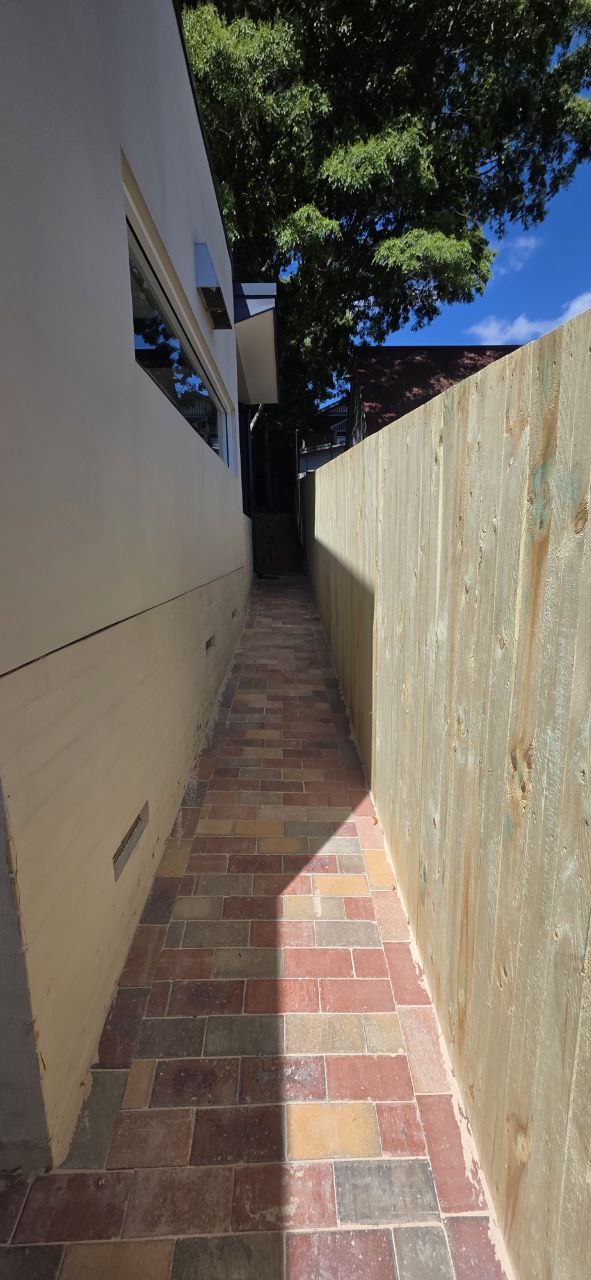
The classic offset brick pattern – simple, forgiving, and eternally popular. Bricks are laid end-to-end in rows, with each row offset by half a brick.
Best for: Narrow side paths (lay the long joints in the direction of travel), small courtyards, and anywhere you want a clean look without visual noise .
Visual effect: Creates a sense of length, making narrow spaces feel less cramped.
Herringbone (90-degree)
Bricks are laid at 45 or 90-degree angles in a V-shape pattern. This is the strongest interlocking pattern available.
Best for: Driveways, high-traffic pathways, bin storage areas, and anywhere durability matters as much as style .
Visual effect: Structured, purposeful, and solid. The 90-degree version feels less “busy” than the diagonal version.
Herringbone (45-degree)
The same V-shape pattern rotated to run diagonally across the space.
Best for: Boxy courtyard shapes that need a visual lift, or areas where you want movement and texture .
Visual effect: Adds perceived width and softens rigid rectangular boundaries.
Basketweave
Bricks are laid in pairs – two bricks side-by-side, then two bricks across them, creating a woven checkerboard appearance.
Best for: Cottage gardens, heritage terraces, and homes that suit a softer, more classic feel .
Visual effect: Warm, charming, and character-rich. Best kept to smaller areas.
Stack Bond
Bricks are laid in a straight grid pattern, with joints perfectly aligned both vertically and horizontally.
Best for: Modern courtyards with contemporary lines and larger-format brick pavers .
Visual effect: Calm, minimalist, and uncluttered. However, it highlights any set-out errors, so precision is essential.
4. Critical Installation Requirements
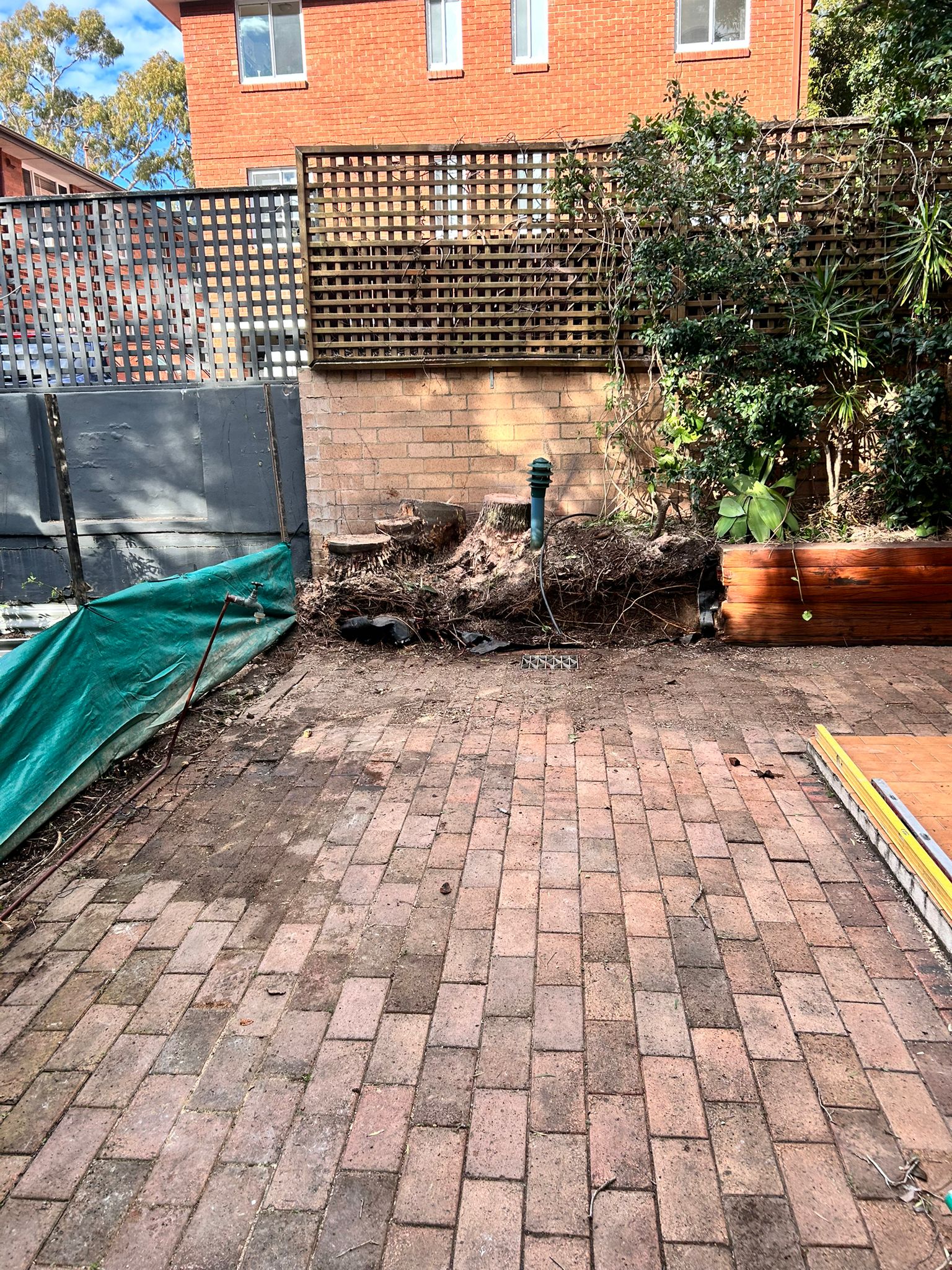
The longevity of a brick paved surface depends almost entirely on what lies beneath it. Most paving failures in Sydney are attributed to inadequate base preparation, not the bricks themselves .
The Standard Base Layers (from bottom to top):
| Layer | Material | Thickness | Purpose |
|---|---|---|---|
| Sub-grade | Native compacted soil | N/A | Stable foundation after excavation |
| Base course | Road base / crushed rock | 100–150mm (more for driveways) | Load distribution and drainage |
| Bedding layer | Sand-cement mix (4:1 sand to cement) | 20–30mm | Smooth, level surface for bricks |
| Pavers | Clay bricks | Standard thickness | Wearing surface |
| Jointing | Polymeric sand or sand-cement | Fills gaps | Locks bricks in place |
DIY Paving Steps (Simplified):
For a small patio or garden path, a confident DIYer can achieve excellent results :
Mark and excavate the area to approximately 130mm depth.
Spread and compact road base (aim for ~35mm thickness after compaction).
Mix and screed a sand-cement bedding layer (4 parts sand to 1 part cement) to 20mm thick.
Lay bricks starting from a straight edge or centre point, tapping each into place with a rubber mallet.
Sweep jointing mix into gaps, then lightly hose to cure.
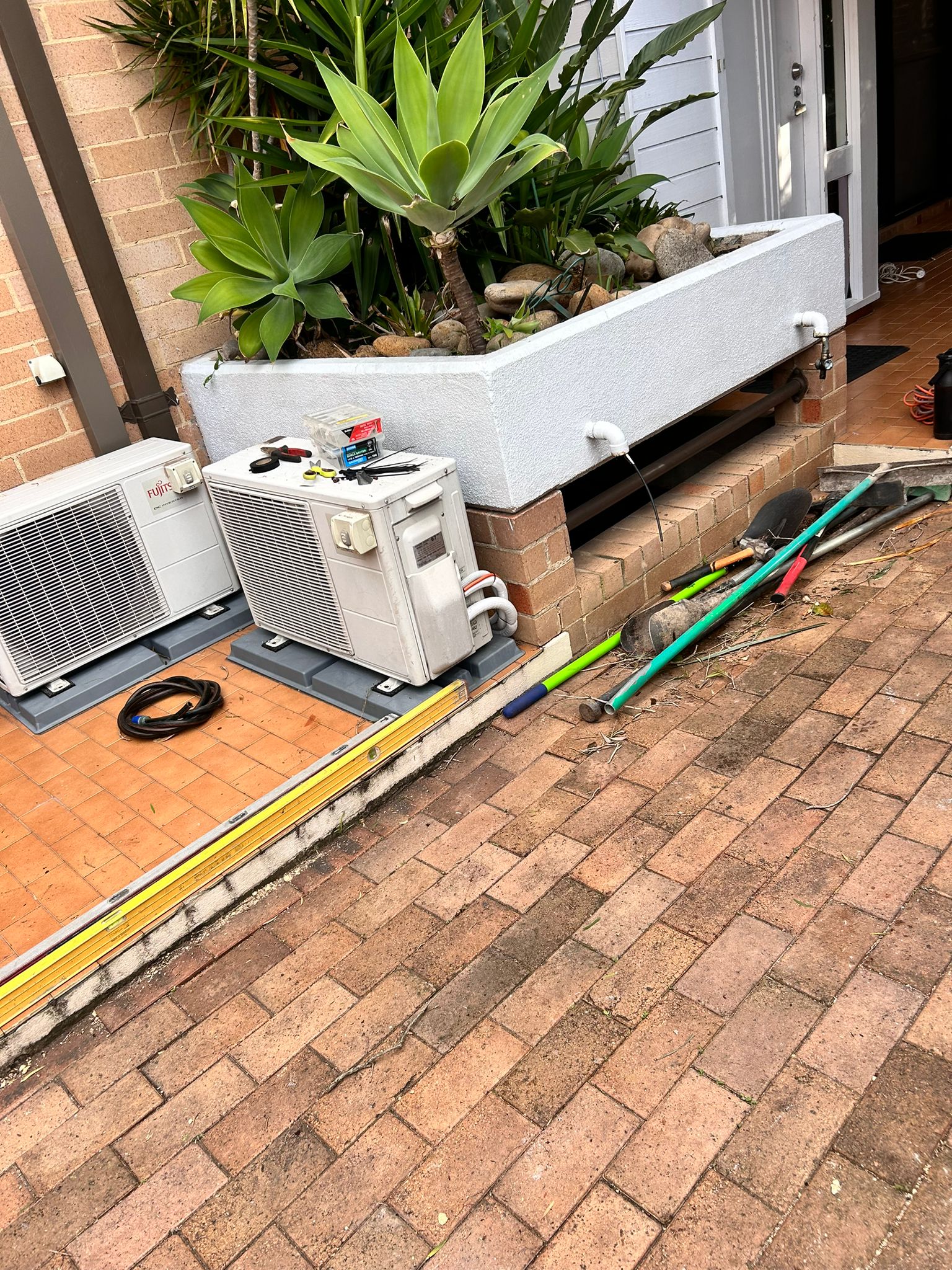
Professional tip: The key to a perfectly flat paved area is to use a spirit level to check each layer of material as it is positioned, adjusting as needed .
5. Maintenance: Simple and Long-Lasting
One of the great advantages of quality clay brick pavers is their low maintenance requirement. Unlike natural stone, they do not require annual sealing.
Regular Care:
Sweep or leaf-blow weekly to remove abrasive grit and debris that can settle into joints.
Hose down with fresh water to remove dust and general grime.
Remove organic matter (leaves, fallen flowers) promptly to prevent staining on lighter-coloured bricks.
Pressure Washing:
A pressure washer can be used on brick pavers, but caution is required:
Use a wide fan tip (40 degrees) and keep the nozzle at least 300mm from the surface.
Test on a hidden area first – too much pressure can erode the brick surface or blow out jointing sand.
For general cleaning, a garden hose with a trigger nozzle is usually sufficient.
Sealing (Optional but Beneficial):
Brick pavers do not require sealing to function, but a quality penetrating sealer provides benefits:
Enhances colour: Brings out the rich terracotta and red tones, especially when the brick is damp.
Resists weeds: Sealed joints are less hospitable to weed germination.
Prevents efflorescence: Reduces the white salt deposits that can sometimes appear on new brickwork.
Re-sanding Joints:
Over time, wind and rain may wash jointing sand away. When joints appear low (more than 5mm below the brick surface), sweep in fresh polymeric sand and lightly hose to re-set. This should be necessary only every 5–10 years in most Sydney applications.
6. Brick Pavers vs. Other Materials: Quick Comparison
| Feature | Brick Pavers (Clay) | Concrete Pavers | Natural Stone | Porcelain |
|---|---|---|---|---|
| Colour longevity | Excellent – fired in, does not fade | Moderate – can fade and chalk over time | Natural – may weather | Excellent – stable |
| Character | Warm, traditional, rustic | Uniform, modern | Unique, premium | Uniform, sleek |
| Maintenance | Low – occasional re-sanding | Low | Moderate – requires sealing | Very low – no sealing |
| Slip resistance | Good – naturally textured surface | Variable | Excellent – natural cleft | Good – textured options |
| Cost (installed) | 90–90–220/m² | 80–80–180/m² | 180–180–300+/m² | 180–180–300+/m² |
| Lifespan | 50+ years | 30–50 years | 50+ years | 50+ years |
The bottom line: If you want a warm, character-rich surface that will not fade and feels distinctly “Australian”, choose clay brick pavers. If you want a uniform, modern look with minimal ongoing care, consider concrete or porcelain.