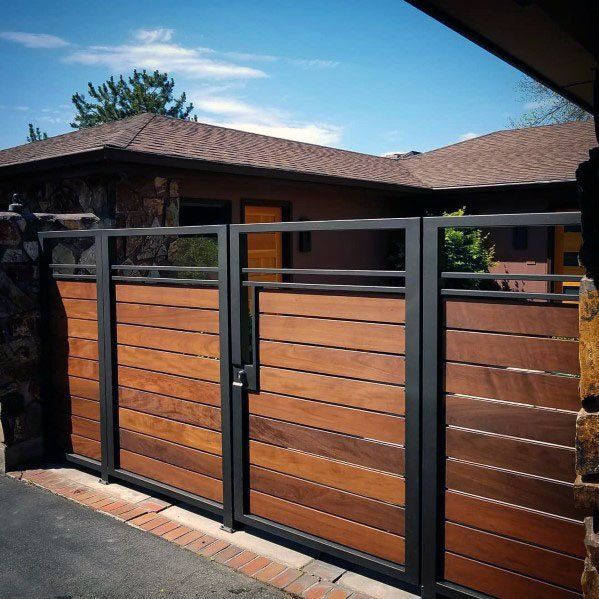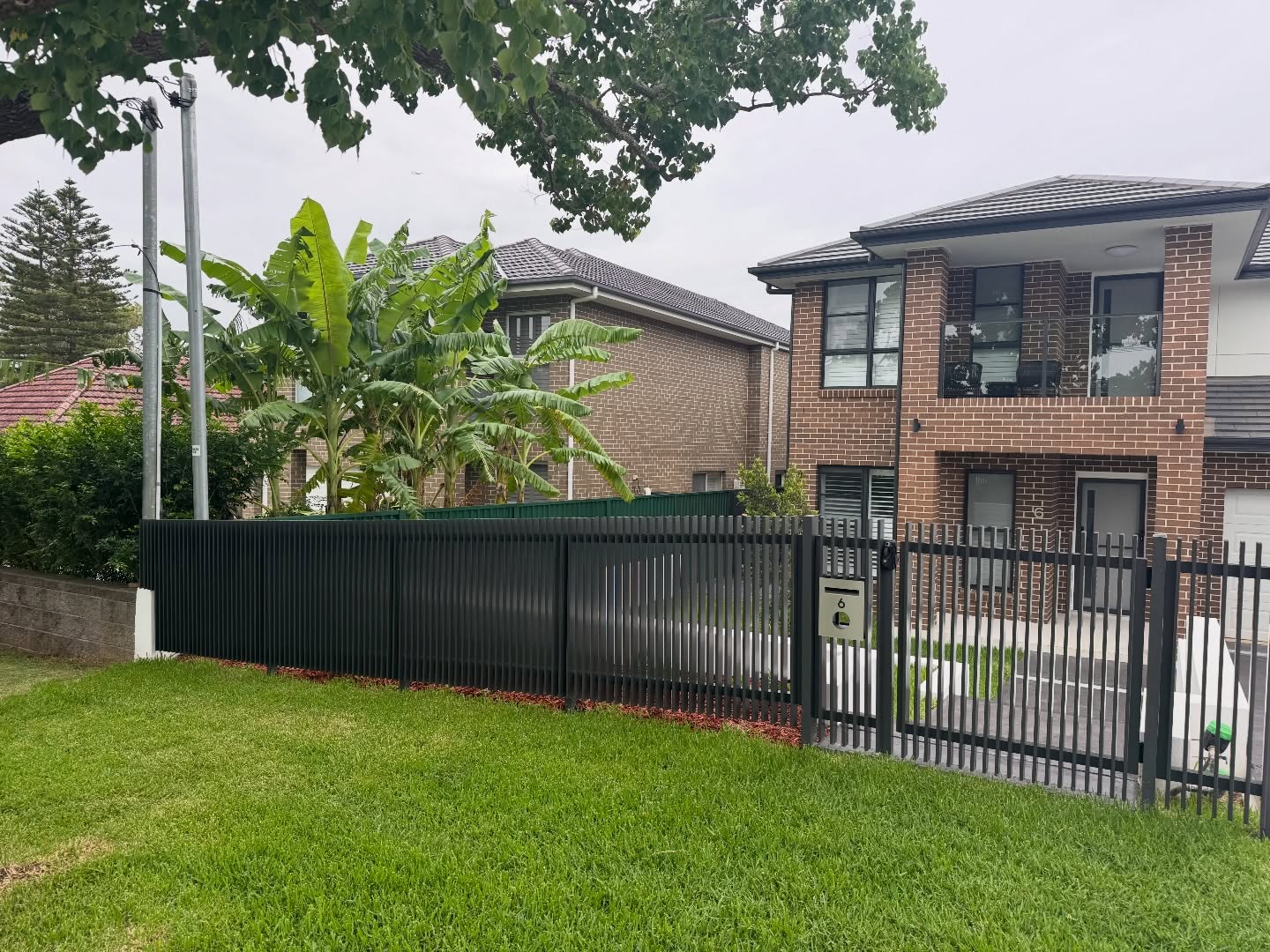
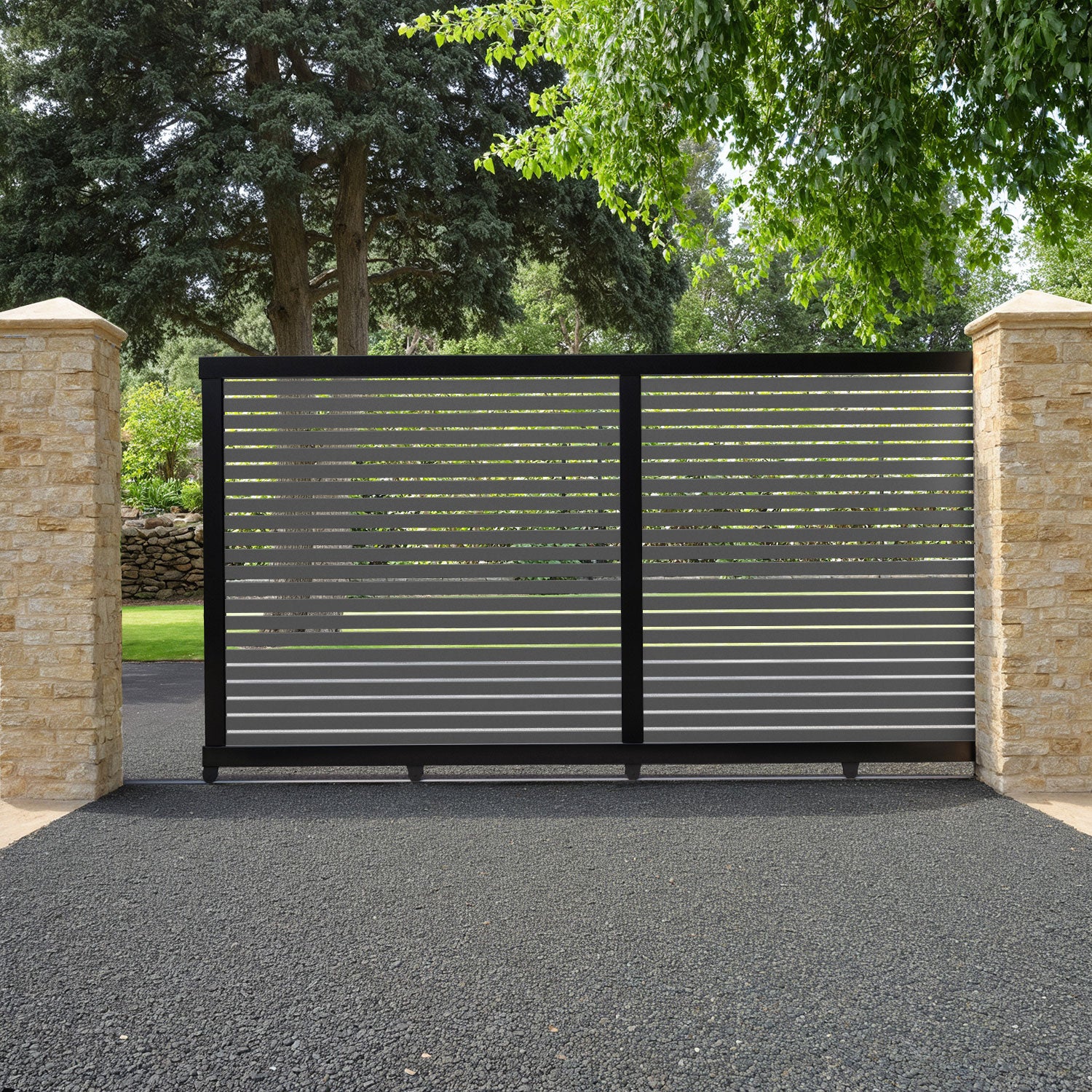
Aluminium driveway gate (sliding)
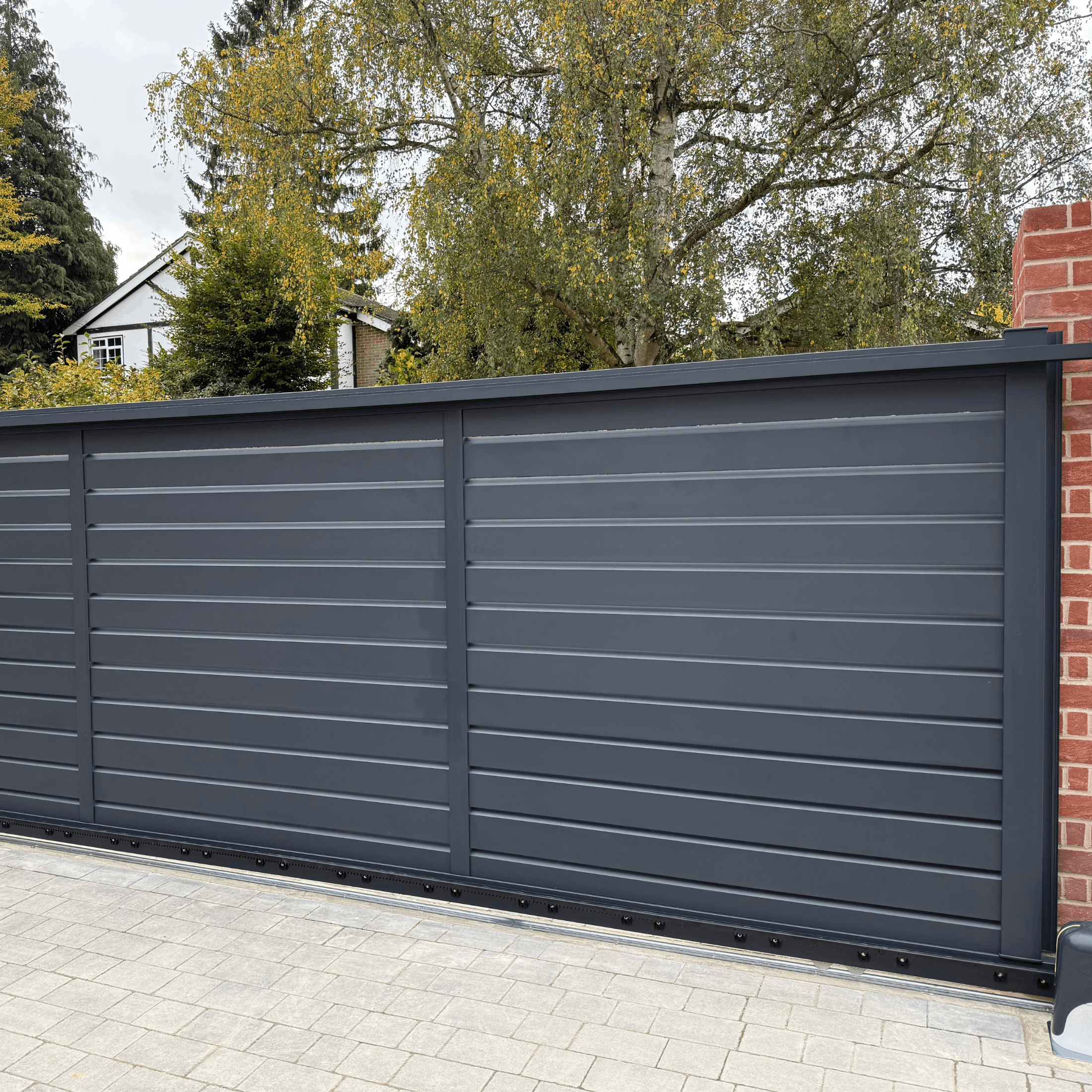
Aluminium driveway gate (swing)
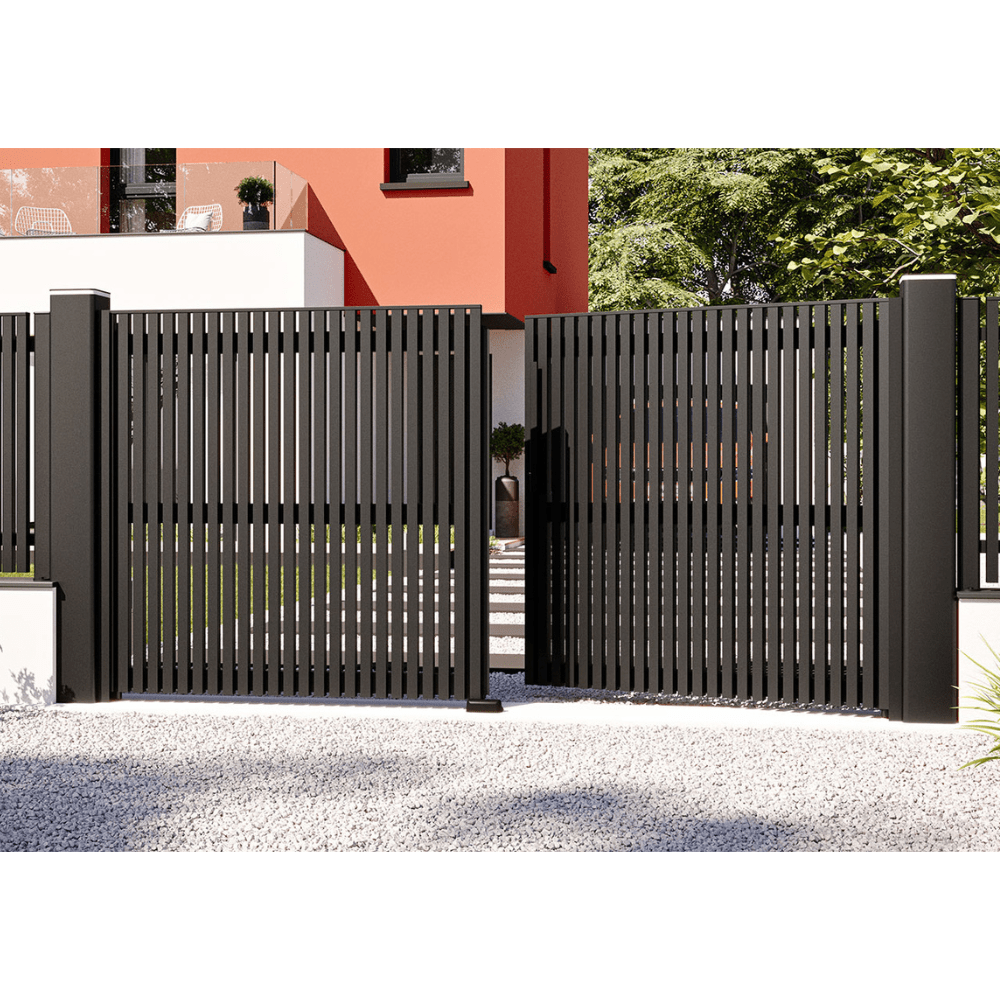
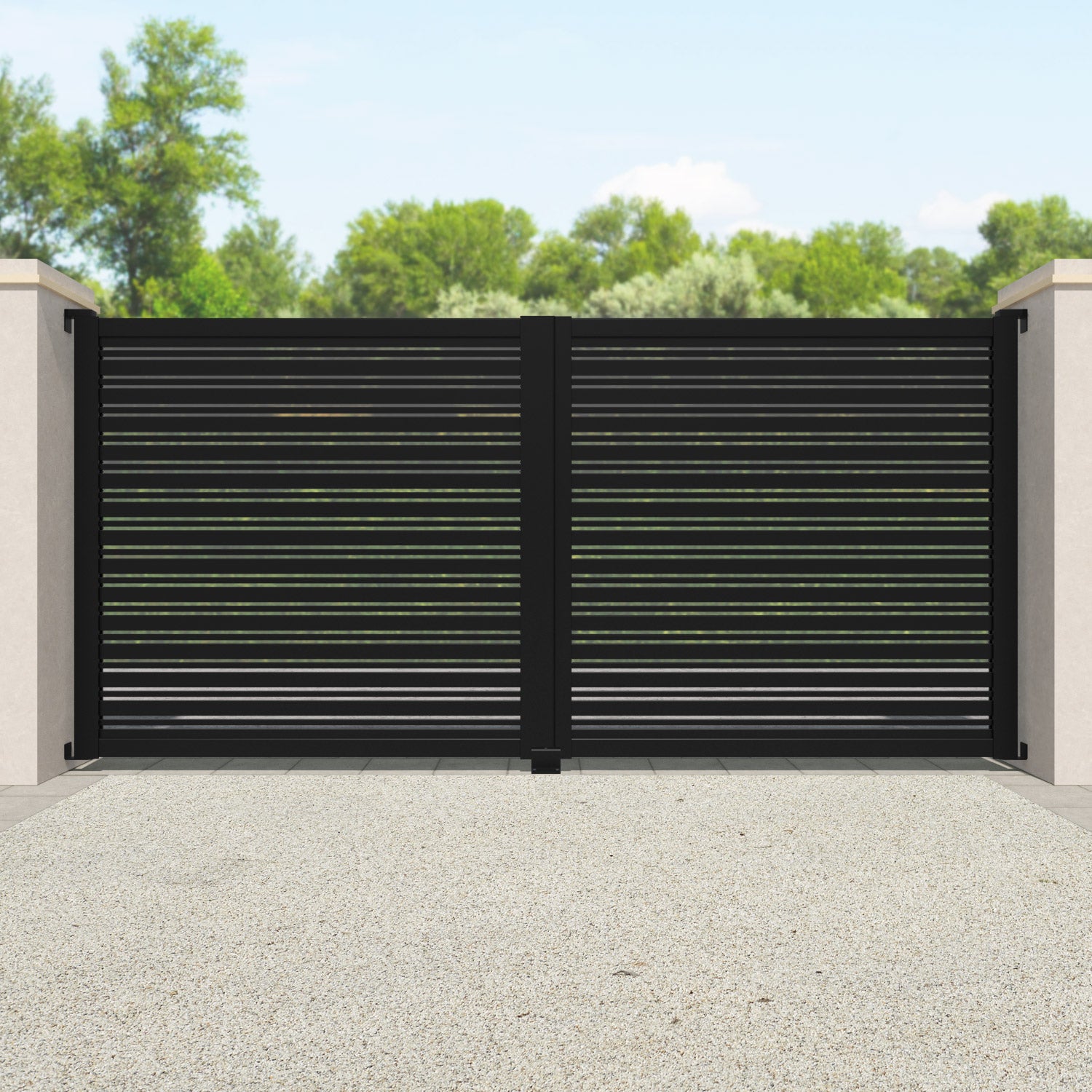
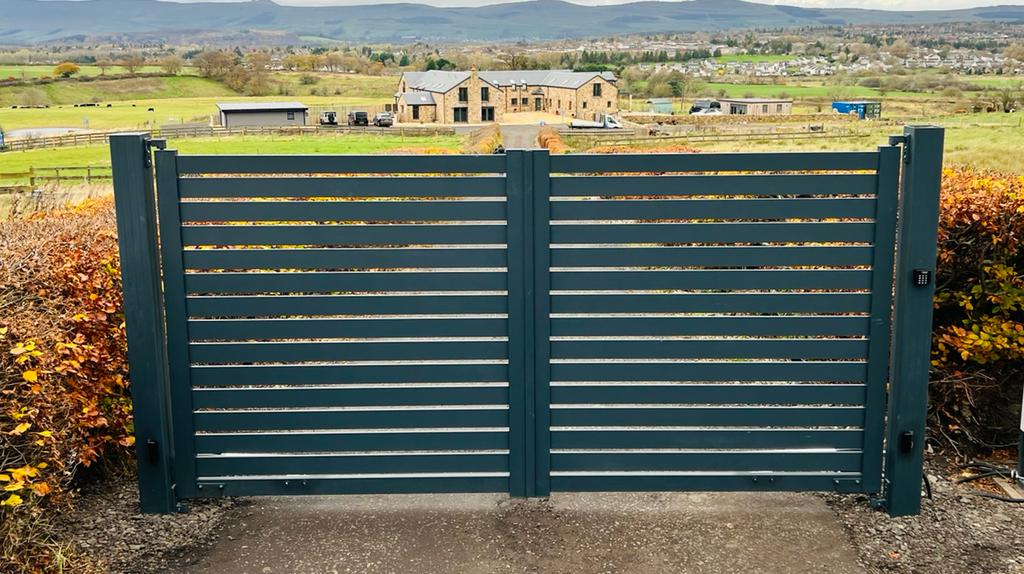

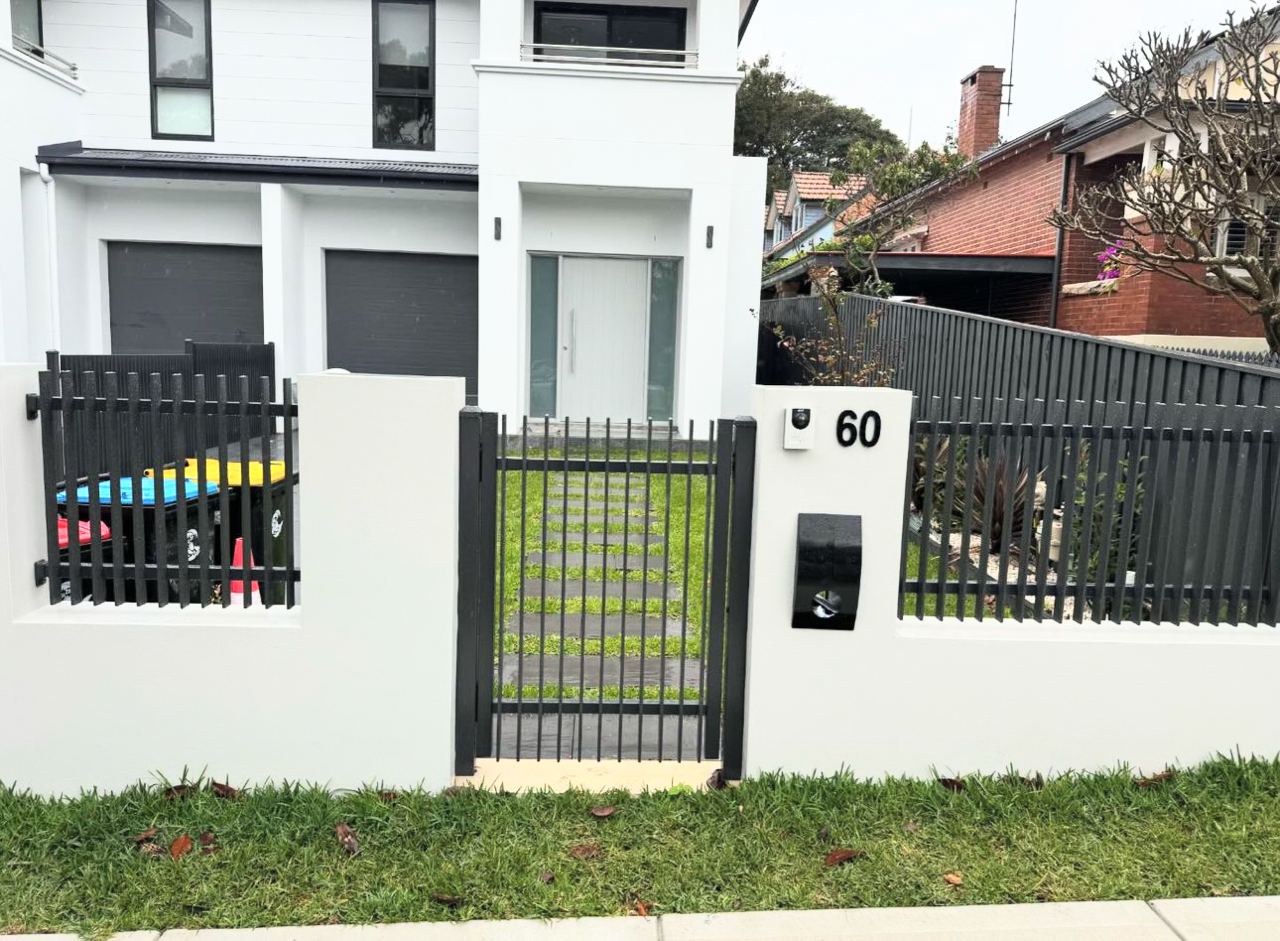
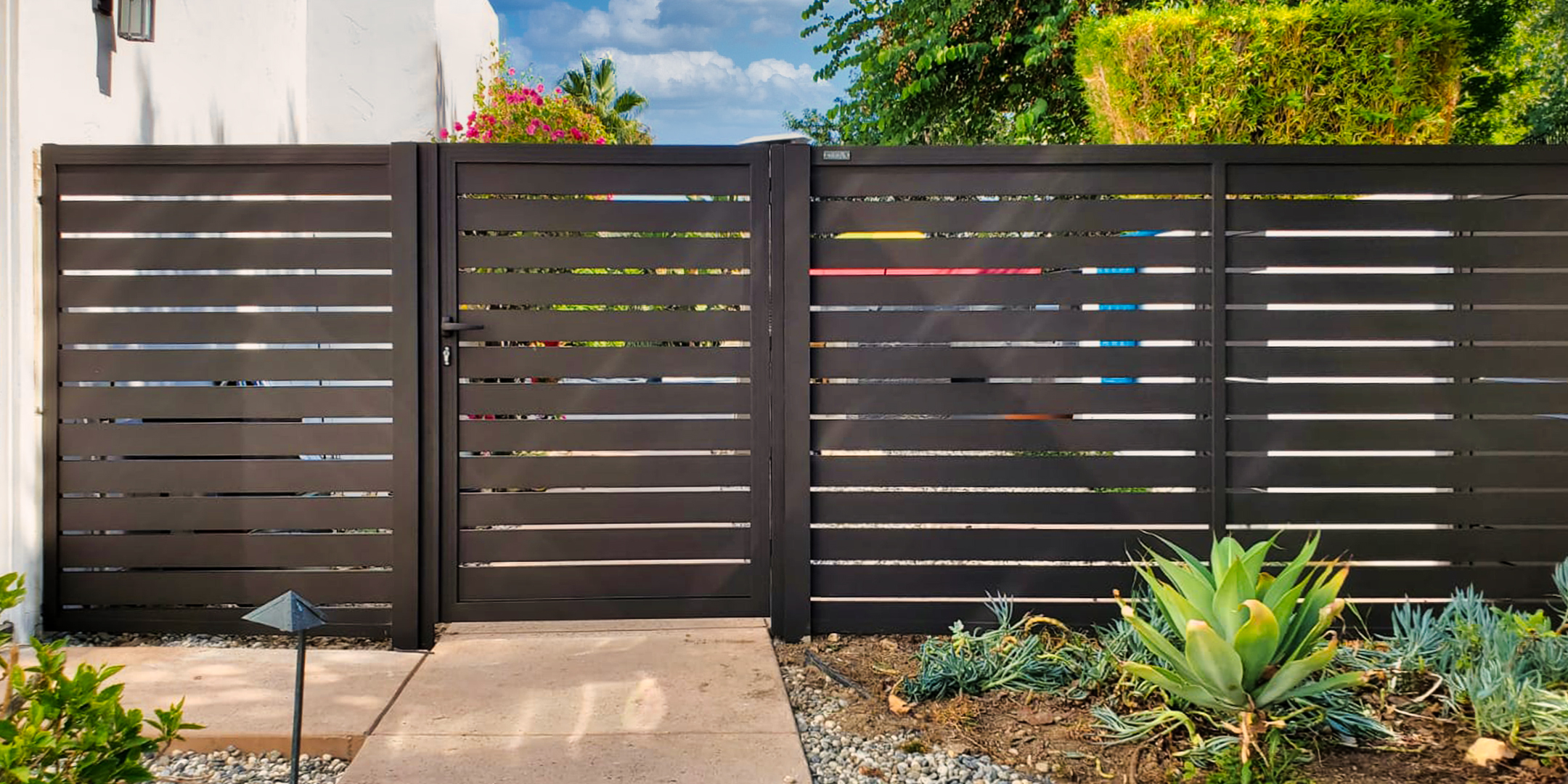
Aluminium Driveway Gates in Sydney: Style, Security, and Coastal Durability
Your driveway gate is the largest moving element on your property’s facade. It’s what visitors see first, what protects your vehicles and home, and — if you choose poorly — what you’ll wrestle with every single day.
In Sydney, where coastal salt spray meets suburban style and Western Sydney heat tests every material, the aluminium driveway gate has emerged as the smart choice. It doesn’t rust. It doesn’t warp. It doesn’t need repainting every few years. And with modern automation, it opens silently at the push of a button while you stay in your air-conditioned car on a 40-degree day.
What Is an Aluminium Driveway Gate?
An aluminium driveway gate is a vehicle-access gate constructed primarily from extruded aluminium sections, typically formed into slats, louvres, panels, or pickets. Unlike steel gates, aluminium gates are lightweight yet strong, naturally corrosion-resistant, and available in a wide range of powder-coated finishes.
Aluminium gates can be manual (opened by hand) or automated with electric motors, remote controls, and safety sensors.
In Sydney, aluminium driveway gates are most commonly installed as:
| Gate Style | Description | Best For |
|---|---|---|
| Sliding gate | Rolls sideways along a track or cantilevered rail | Narrow driveways, sloping blocks, short setbacks |
| Swing gate | Hinged at the sides, opens inward or outward | Wide, flat driveways with clearance space |
| Telescopic gate | Multiple sliding panels that stack into each other | Very tight driveways with extremely limited space |
| Double swing gate | Two leaves opening from the centre | Wide entrances, rural properties |
Why Aluminium? The Material Advantage for Sydney
Sydney’s climate is not kind to outdoor structures. Here is how aluminium compares to other gate materials used across the city.
Aluminium vs Other Gate Materials
| Feature | Aluminium | Steel | Colorbond Steel | Timber |
|---|---|---|---|---|
| Rust resistance | Excellent (naturally) | Poor (needs coating) | Good (zinc-coated) | N/A |
| Weight | Lightweight | Heavy | Moderate | Heavy (depending on species) |
| Maintenance | Very low | Moderate (repainting) | Low | High (painting, sealing) |
| Coastal suitability | Excellent | Poor (rusts quickly) | Good | Poor (warping, rot) |
| Termite resistance | Yes | Yes | Yes | No |
| Customisation | High (extruded profiles) | High (welded) | Low (panel only) | High |
| Lifespan in Sydney | 25+ years | 15-20 years (with care) | 20-25 years | 10-20 years |
| Typical cost | $$$ | $$$-$$$$ | $$-$$$ | $$-$$$ |
| Recyclability | 100% recyclable | 100% recyclable | 100% recyclable | Biodegradable |
Why This Matters for Specific Sydney Locations
| Location | Material Risk | Why Aluminium Wins |
|---|---|---|
| Eastern Suburbs (Bondi, Coogee, Maroubra) | Salt spray corrodes steel within 2-3 years | Aluminium does not rust — even with direct coastal exposure |
| Northern Beaches (Manly, Dee Why, Mona Vale) | Salt + humidity accelerates metal fatigue | Aluminium’s natural oxide layer protects indefinitely |
| Western Sydney (Parramatta, Penrith, Liverpool) | Extreme summer heat (40°C+) causes steel expansion and motor strain | Aluminium’s lighter weight reduces motor load and heat stress |
| Inner West (Balmain, Glebe, Newtown) | Tight driveways need smooth-sliding gates | Aluminium’s light weight makes sliding mechanisms last longer |
| Blue Mountains and Hawkesbury | Bushfire embers and heat | Aluminium is non-combustible and maintains integrity under heat |
Sliding vs Swing Gates — Which One for Your Sydney Driveway?
The single biggest decision for any driveway gate is whether it slides or swings. The choice depends entirely on your driveway layout.
Sliding Gates
A sliding gate moves horizontally along a track or cantilevered rail, disappearing to one side of the driveway opening.
Best for:
Driveways with limited depth (short distance from house to street)
Sloping driveways (a swing gate would drag on an incline)
Narrow driveways under 3 metres wide
Properties where a swing gate would block footpaths or hit parked cars
Requirements:
Space on one side of the driveway equal to the gate’s width (for track systems)
Alternatively, a cantilever system (no track on ground) requires rail length approximately 1.5x gate width
Pros:
Does not intrude into driveway or street
Works on slopes
Safer in windy conditions (less wind load)
Cons:
Requires side clearance
Track systems can collect leaves and debris (a common issue in leafy suburbs)
Generally more expensive than swing gates
Swing Gates
A swing gate opens like a door, hinged on one or both sides of the driveway opening.
Best for:
Wide, flat driveways (minimum 3 metres width)
Rural and acreage properties with no space constraints
Lower budget installations
Requirements:
Clear space for the gate to swing into the property (typically gate width + 500mm)
Level ground at the hinge point
Pros:
Lower initial cost
Simpler mechanism
No track to clean
Cons:
Takes up yard space when open
Does not work well on slopes
Can be caught by wind (stress on hinges and automation)
Sydney Verdict: For most suburban Sydney homes with standard-width driveways (2.4–3.0 metres) and short front setbacks, sliding gates are the preferred choice . Swing gates suit wider properties in areas like the Hills District, Camden, or rural outskirts.
Telescopic Gates — The Tight-Space Specialist
For Sydney driveways that are too short for a standard sliding gate and too narrow for swing gates, telescopic gates offer a third path.
A telescopic gate uses two or three interlocking panels that slide into each other, requiring only half the side clearance of a standard sliding gate.
Example: A 4-metre driveway opening needs only 2 metres of side clearance instead of 4 metres.
Best for:
Terraces in Paddington, Glebe, and Surry Hills with very narrow side lanes
Strata properties with limited boundary space
Any Sydney driveway with less than 3 metres of side clearance
Trade-off: More moving parts = higher initial cost and more potential maintenance points.
Aluminium Slat Gates — The Sydney Favourite
The most popular aluminium driveway gate style across Sydney is the horizontal slat gate. These gates feature evenly spaced aluminium blades (slats) mounted vertically or horizontally across a frame.
Why Slat Gates Dominate Sydney
| Benefit | Why It Matters in Sydney |
|---|---|
| See-through design | Allows breeze through (essential for hot Western Sydney summers) |
| Privacy with visibility | Slats can be angled or spaced for 80-90% privacy while maintaining airflow |
| Modern aesthetic | Suits new developments across North West and South West growth corridors |
| Lightweight | Reduces motor load and extends automation lifespan |
| Customisable spacing | Gaps from 5mm (high privacy) to 50mm (decorative) |
Slat Orientation
| Orientation | Appearance | Best For |
|---|---|---|
| Horizontal | Clean, contemporary, elongates width | Most modern Sydney homes |
| Vertical | Bold, architectural, adds height perception | Narrow driveways, contemporary designs |
| Louvred (adjustable) | Flexible privacy and light control | High-end custom homes |
Popular Slat Spacing in Sydney
| Gap | Privacy Level | Airflow | Best Application |
|---|---|---|---|
| 10mm | 90% | Low | Security-conscious homes, busy streets |
| 20mm | 80% | Moderate | Most suburban driveways (most popular) |
| 30mm | 70% | Good | Front boundaries, corner blocks |
| 50mm | 50% | Excellent | Decorative only, low-security needs |
💡 Pro tip: For a standard suburban driveway in Sydney, 20mm spacing offers the best balance of privacy and airflow.
Colorbond vs Aluminium vs Timber-Look Aluminium
Aluminium driveway gates come in several finish options, each with distinct advantages.
Standard Powder-Coated Aluminium
Appearance: Smooth, uniform, modern
Finish: Matt, satin, or gloss
Durability: 15-20 years before fading
Colours: Any RAL colour, plus popular Australian shades (Monument, Surfmist, Basalt, Dune, Woodland Grey)
Best for: Contemporary homes, new developments
Timber-Look Aluminium
Appearance: Printed timber grain finish that mimics real wood
Finish: Textured to feel like timber
Durability: 15+ years (no painting, no rot, no termites)
Colours: Oak, Merbau, Blackbutt, Teak
Best for: Homes requiring a natural aesthetic without timber maintenance
Colorbond Steel Gates (Comparable Option)
While not aluminium, Colorbond is a common alternative:
Appearance: Pre-painted steel sheets
Pros: Colour-matched to existing Colorbond fences, durable
Cons: Heavier than aluminium, can scratch and rust through scratches
Best for: Matching an existing Colorbond fence line
Sydney verdict: For coastal suburbs, standard powder-coated aluminium is best (no rust risk). For bushfire-prone areas, both aluminium and Colorbond are suitable. For heritage streetscapes, timber-look aluminium offers compliance with aesthetic rules without maintenance headaches .
Cost Guide for Aluminium Driveway Gates in Sydney (2025-2026)
All prices are supply and professional installation including GST. Excludes automation unless noted.
Manual Gates (No Automation)
| Gate Type | Width (Opening) | Style | Approx. Cost |
|---|---|---|---|
| Single swing slat gate | 3.0m – 4.0m | Aluminium slats | 2,000–2,000–3,500 |
| Double swing slat gate | 4.0m – 5.5m | Aluminium slats | 3,000–3,000–5,500 |
| Sliding slat gate | 3.0m – 5.0m | Aluminium slats | 3,500–3,500–6,000 |
| Telescopic sliding gate | 3.0m – 5.0m | Aluminium slats | 5,000–5,000–8,500 |
Automated Gates (Including Motor and Installation)
The cost of automation typically adds 2,000–2,000–5,000 to the gate price, depending on motor quality and features.
| System | Approx. Total Cost (Gate + Motor + Install) |
|---|---|
| Single swing gate automated | 4,000–4,000–7,000 |
| Double swing gate automated | 5,500–5,500–9,000 |
| Sliding gate automated (track) | 6,000–6,000–10,000 |
| Sliding gate automated (cantilever) | 7,500–7,500–12,000 |
| Telescopic gate automated | 8,000–8,000–13,000 |
📊 Industry reference: Basic driveway gates typically range from 1,500–1,500–3,000, with complete automated systems ranging from 3,500–3,500–8,000 . Premium aluminium installations with custom finishes can exceed $15,000 for large openings .
Cost Factors Specific to Sydney
| Factor | Typical Added Cost | Affected Suburbs |
|---|---|---|
| Narrow access (gate sections carried by hand) | +300–300–800 | Inner West, Eastern Suburbs terraces |
| Sloping driveway (custom hinge or rail engineering) | +500–500–1,500 | North Shore, Northern Beaches |
| Rock excavation for post holes | +200–200–500 per hole | Eastern Suburbs (sandstone), North Shore |
| Council development application fees | 300–300–1,500 | Heritage areas, corner blocks |
| Rush order (under 2 weeks) | +20–30% | All Sydney (peak periods before Christmas) |
| Removal of old gate | 200–200–600 | All |
Automation — Motors, Remotes, and Smart Features
Most Sydney homeowners automate their driveway gates. The convenience — and the security — is difficult to overstate.
Popular Automation Brands in Sydney
| Brand | Reputation | Typical Cost (motor only) |
|---|---|---|
| BFT (Italian) | High-end, reliable, excellent support | 1,500–1,500–3,000 |
| FAAC (Italian) | Industry standard, commercial-grade | 1,200–1,200–2,800 |
| ATA (Australian) | Good value, widely available | 800–800–1,800 |
| Nice (Italian) | Smart home compatible, sleek design | 1,000–1,000–2,500 |
Motor Features to Consider
| Feature | Why It Matters for Sydney |
|---|---|
| Thermal overload protection | Prevents motor burnout on 40°C Western Sydney days |
| Soft start/stop | Reduces wear on gate components, quieter operation |
| Battery backup | Keeps gate operational during summer storms (power outages common) |
| Surge protection | Protects control board from lightning strikes (essential during Sydney thunderstorms) |
| Solar compatibility | Reduces electricity costs; popular in acreage properties |
| Smart home integration | Control via smartphone, link to security cameras |
Access Control Options
| Method | Security Level | Convenience | Typical Cost (add-on) |
|---|---|---|---|
| Remote controls (2 included) | Medium | High | Included |
| Keypad entry | Medium | High | 200–200–500 |
| Smartphone app (WiFi/4G) | High | Very high | 300–300–800 |
| Intercom system | High | High | 500–500–2,000 |
| Licence plate recognition | Very high | Very high | 1,500–1,500–4,000 |
| Fingerprint scanner | High | Medium | 400–400–900 |
Council Approval for Driveway Gates in Sydney
One of the most common questions from Sydney homeowners is: Do I need council approval for my driveway gate?
The answer depends on several factors.
When Approval is Generally NOT Required
Gate is behind the building line (not visible from the street)
Gate height is under 1.2 metres (front boundary) or 1.8 metres (side/rear)
Gate is replacing an existing gate of similar dimensions
Property is not in a heritage conservation area
When Approval IS Typically Required
Gate height exceeds 1.5–1.8 metres on front boundary (council dependent)
Property is in a heritage conservation area (style, colour, and height restrictions apply)
Gate changes the street-facing appearance significantly
Property is on a corner block (sightline restrictions for drivers)
Gate is automated with protruding components beyond boundary
Council-Specific Notes
| Council Area | Key Requirements |
|---|---|
| City of Sydney | Strict heritage controls; gate style must match period; DA required for most front gates |
| Northern Beaches | Maximum 1.2m for street-facing gates; 1.8m for side/rear; no approval for most replacements |
| The Hills Shire | 1.2m front boundary limit; sliding gates encouraged over swing gates for narrow driveways |
| Willoughby | Heritage areas (Castlecrag, North Willoughby) have specific gate guidelines |
| Camden | Rural properties have fewer restrictions; but “stock-proof” gates required on rural boundaries |
| Liverpool | New developments often have covenants requiring specific gate styles |
How to Check
Visit your council’s website and search for “Development Control Plan (DCP) — fencing”
Call council’s duty planner with your property address
For automated gates, also check AS 60335-2-95 (safety standards for automatic gates)
⚠️ Important: Installing a non-compliant gate can result in a 1,500–1,500–5,500 fine and an order to remove or modify the gate at your expense .
Safety Requirements for Automatic Gates in Sydney
Automatic driveway gates are considered “machinery” under Australian law. They must comply with strict safety standards.
Critical Safety Features (AS 60335-2-95)
| Feature | Requirement | Why It Matters |
|---|---|---|
| Photoelectric sensors (photo beams) | All automated gates | Stop and reverse gate if beam is broken (detects person or vehicle) |
| Edge sensors | Required for high-traffic gates | Stop gate on contact with obstruction |
| Force limiting | All automated gates | Motor stops if resistance exceeds set limit |
| Manual release | All automated gates | Allows gate to be opened manually during power failure |
| Warning signage | Required on automated gates | Alerts people to automatic operation |
| Emergency stop button | Required for commercial installations | Immediate halt of gate movement |
Common Safety Violations in Sydney
| Violation | Risk | Fix |
|---|---|---|
| No photo beams | Child or pet could be crushed | Install beam sensors at 150mm and 500mm heights |
| Force limiter set too high | Gate won’t reverse on contact | Professional recalibration |
| Pinch points at hinges | Fingers caught | Finger-safe hinge guards |
| No warning signage | Visitors unaware of automation | Install compliant signs on both sides |
📌 Licensed installer requirement: In NSW, automatic gate installation must be carried out by a licensed electrician or certified gate technician. DIY automation is not legal for connection to mains power.
Installation Process — What Sydney Homeowners Should Expect
A professional aluminium driveway gate installation typically follows this timeline.
Phase 1: Site Assessment (1-2 hours)
Measure driveway width, slope angle, and side clearance
Locate underground services (Dial Before You Dig — mandatory)
Determine gate type (sliding/swing/telescopic)
Discuss automation, colours, and access control
Phase 2: Fabrication (2–4 weeks)
Custom gate manufactured in Sydney workshop
Powder coating applied (baked-on finish)
Quality control inspection
Phase 3: Installation (1–3 days)
Day 1: Excavate post holes, set posts in concrete, allow to cure
Day 2: Mount gate, install track (sliding) or hinges (swing), fit automation
Day 3: Wiring, sensor alignment, testing, programming remotes, handover
Phase 4: Compliance and Handover
Safety testing (force limiter, photo beams, obstacle detection)
Demonstration of manual release operation
Remote controls and instruction manuals provided
Certificate of compliance (for automated gates)
Maintenance for Sydney Conditions
An aluminium gate requires far less maintenance than timber or steel — but it does require some attention.
Quarterly (every 3 months)
Lubricate moving parts: Silicone spray on hinges, rollers, and track (not WD-40 — it attracts dust)
Clean photo beam sensors: Dust and spiderwebs cause false triggers
Sweep track (sliding gates): Remove leaves, stones, and debris
Bi-Annually (before summer and winter)
Check gate alignment: Look for sagging or dragging
Inspect powder coating: Touch up any scratches (prevents corrosion)
Test safety features: Photo beams, force limiter, manual release
Clean gate surface: Mild detergent and soft cloth
Annually
Professional service for automated gates: Motor check, battery test, wiring inspection
Tighten all bolts and screws: Vibration loosens hardware over time
Check post stability: Any movement requires re-concreting
Signs Your Gate Needs Immediate Attention
| Sign | What It Means | Action |
|---|---|---|
| Grinding noise during operation | Debris in track or worn rollers | Clean track; if persists, call technician |
| Gate stops mid-travel | Obstacle detected or motor strain | Check sensors and track clearance |
| Motor housing very hot | Overload or failing component | Call technician immediately |
| Gate drifts when stationary | Roller wear or track damage | Professional inspection |
| Rust spots on aluminium | Unlikely; may be from steel fixings | Replace fixings with stainless steel |
Seasonal Considerations for Sydney
| Season | Risk | Preventative Action |
|---|---|---|
| Summer (Dec–Feb) | Motor overheating; leaf debris | Clean track weekly; ensure thermal protection works |
| Winter (Jun–Aug) | Moisture in control box | Check seal; surge protection recommended |
| Storm season (Oct–Mar) | Power surges; lightning damage | Surge protector on control board |
| Bushfire season (Oct–Mar) | Embers entering gaps | Adjustable slats should be closed in high-risk days |
Warranty and Lifespan Expectations
| Component | Typical Warranty | Expected Lifespan |
|---|---|---|
| Aluminium gate frame | 5–10 years (manufacturer) | 25+ years |
| Powder coating | 5–10 years (fading/chipping) | 15–20 years before repainting |
| Automation motor | 2–5 years | 8–12 years (with annual service) |
| Remote controls | 1 year (batteries excluded) | 3–5 years |
| Photo beam sensors | 1–2 years | 5–8 years |
| Track and rollers | 1–2 years | 5–10 years (depending on use) |
💡 Pro tip: Book your annual service before summer (October–November). Technicians are busiest from December to February .
Finding a Reputable Aluminium Gate Installer in Sydney
Questions to Ask Before Hiring
“Do you fabricate gates in Sydney or import pre-made systems?” (Local fabrication allows custom sizing and faster repairs)
“What automation brands do you install?” (Look for BFT, FAAC, ATA, or Nice — avoid unbranded imports)
“Are you licensed to install automatic gates?” (Requires electrician or certified gate technician)
“Do you provide a certificate of compliance for automation?” (Essential for insurance and resale)
“What warranty do you offer on the gate and motor?” (Minimum 5 years on gate, 2 years on motor)
“Can you provide local references from the last 6 months?”
Red Flags to Avoid
“No council approval needed” without checking your specific address (every suburb differs)
“We use 304 stainless steel hardware” for coastal suburbs (must be 316 marine grade)
Cash-only, no ABN (no warranty, no compliance certificate)
Quotes significantly cheaper than market (likely imported thin-gauge aluminium or non-compliant automation)
“We don’t need photo beams” (illegal and dangerous)
Recommended Process
Measure your driveway – Width, slope, side clearance
Check council rules – Call or email duty planner
Get 3 written quotes – Compare materials, brands, warranties
Visit a completed job – Ask installer for a local address to see finished work
Read contract carefully – Payment schedule, warranty terms, completion date
Aluminium Driveway Gate vs Other Entry Options
| Feature | Aluminium Sliding | Aluminium Swing | Timber | Steel Fabricated | Colorbond Panel |
|---|---|---|---|---|---|
| Rust resistance | Excellent | Excellent | N/A | Poor (coastal) | Good |
| Weight | Light | Light | Heavy | Heavy | Moderate |
| Maintenance | Very low | Very low | High | Moderate | Low |
| Cost | $$$ | $$-$$$ | $$ | $$$$ | $$-$$$ |
| Aesthetic range | Wide (slats, louvres, pickets) | Wide | Traditional | Industrial/classic | Basic |
| Automation ease | Excellent | Good | Moderate | Good | Good |
| Privacy | Customisable (slat spacing) | Customisable | Full (solid panels) | Moderate | Full |
| Airflow | Yes (slatted designs) | Yes | No (solid) | Yes (wrought iron) | No |
| Best Sydney applications | Most suburban homes | Wide, flat driveways | Heritage areas | High-security | Matching existing fences |
Final Verdict for Sydney Homeowners
An aluminium driveway gate represents a significant investment — typically 4,000–4,000–10,000 for a fully automated system . But for Sydney’s challenging climate, the value proposition is clear.
Choose aluminium if:
You live within 10km of the coast (salt spray will destroy steel)
You want low maintenance (no painting, no rust treatment, no termite inspections)
Your driveway has limited space (aluminium’s light weight suits sliding and telescopic designs)
You value modern aesthetics (slat and louvre designs suit contemporary Sydney homes)
You plan to automate (lighter gates mean smaller motors and longer lifespan)
Consider steel or Colorbond if:
You are matching existing Colorbond fencing exactly
Your budget is under $3,000 (manual timber or basic Colorbond may suit)
You require very high security (steel is harder to cut than aluminium)
You prefer a solid, non-see-through panel (though aluminium can be solid sheet too)
Consider timber if:
Your property is in a heritage conservation area that mandates timber
You want the warmth of natural wood and are willing to maintain it
Your budget is tight but you have DIY skills
Final Thought
Your driveway gate operates every single day. It welcomes you home after work, keeps your children and pets safe, and frames your property’s street presence. In Sydney’s climate — with salt, heat, humidity, and storms — choosing the right material is not a stylistic luxury. It is a practical necessity.
Aluminium is not the cheapest option on the market. But it is the option that will still be opening smoothly — without rust, without warping, without sagging — when your neighbour is replacing their steel gate for the second time.
And on a hot January afternoon in Parramatta, when your aluminium gate slides silently open on the first click of the remote, you will know the investment was worth it.