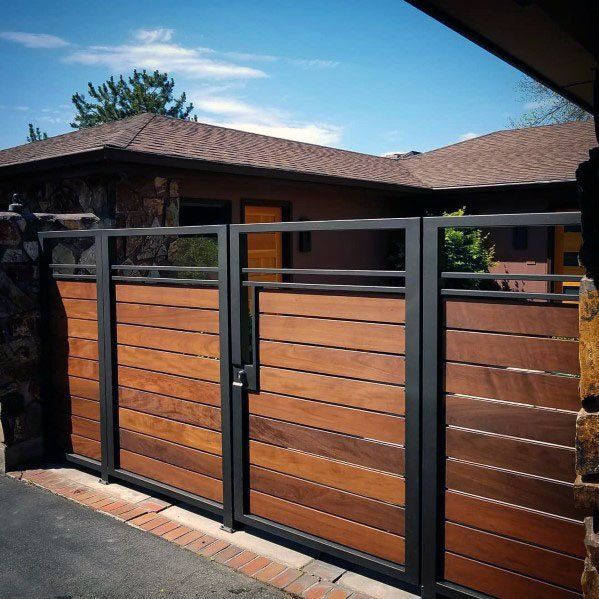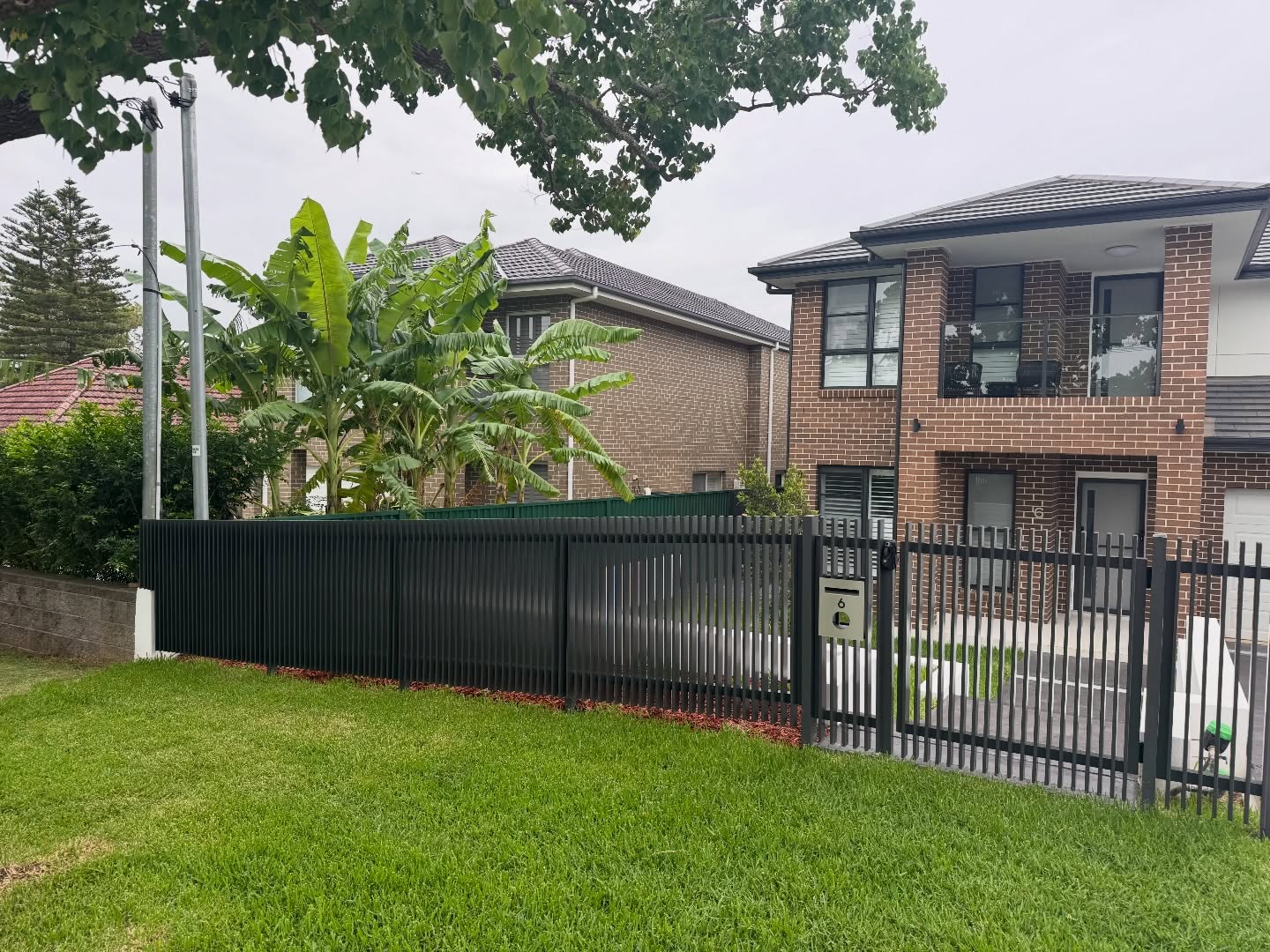
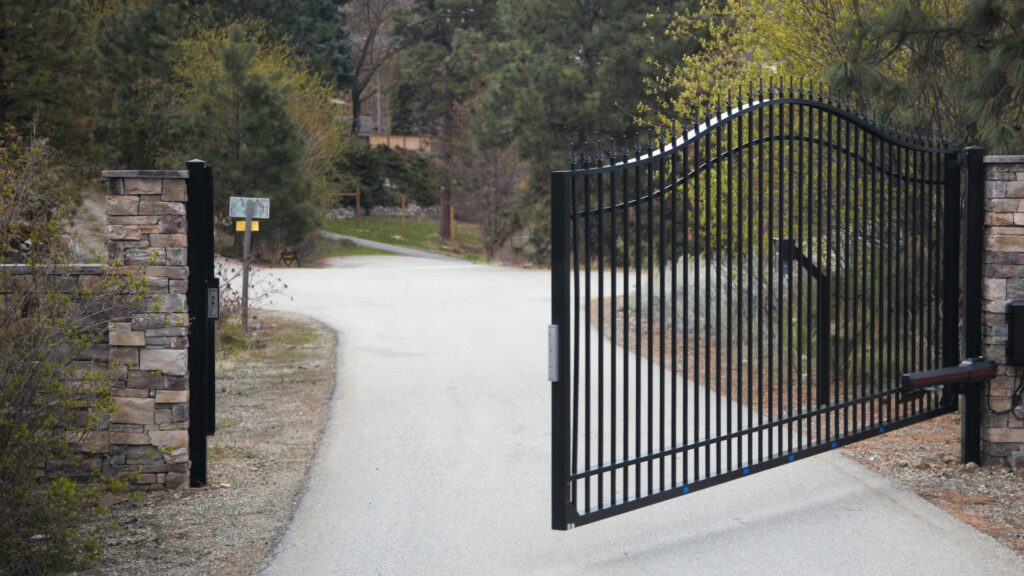
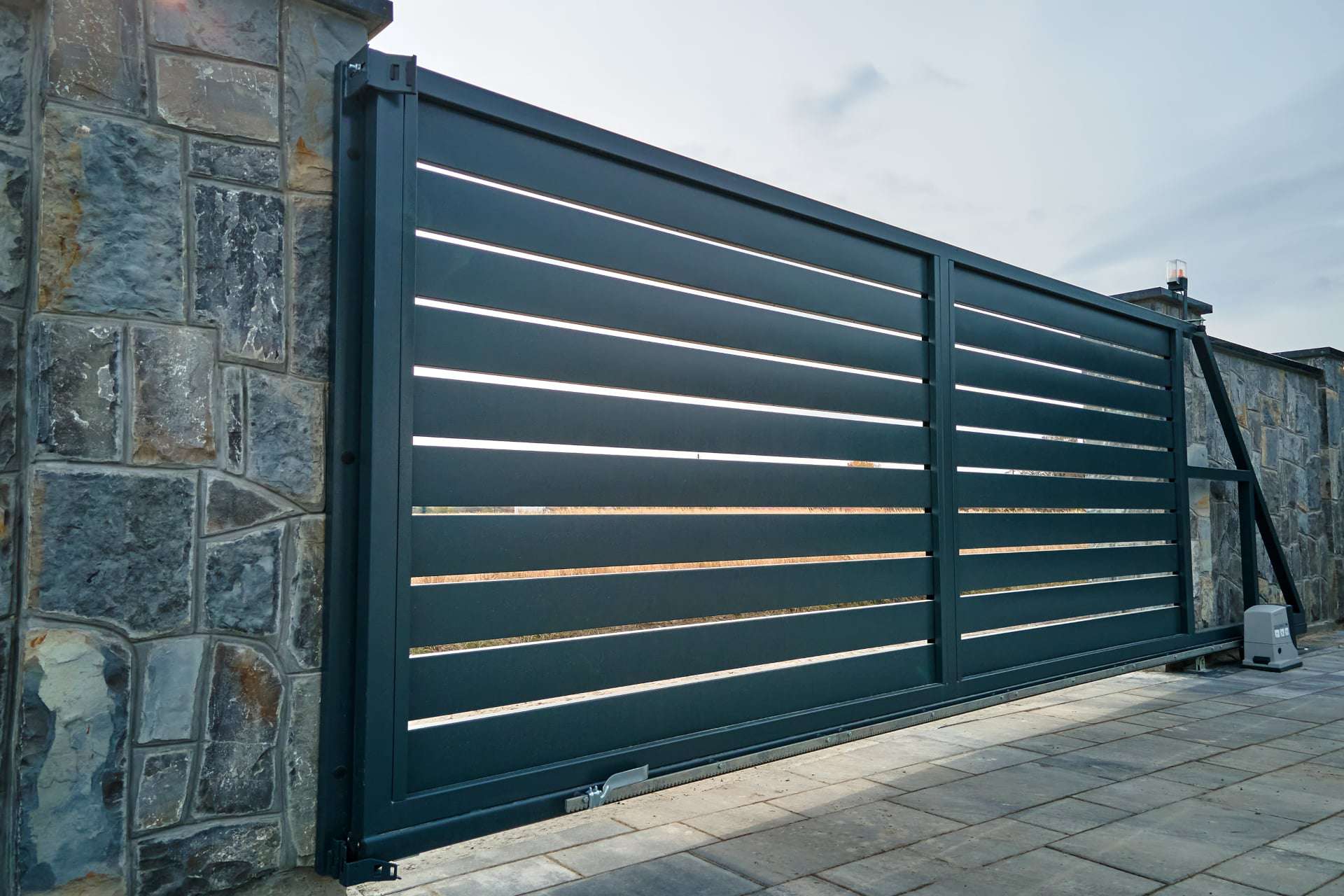
Automatic gate (single swing)
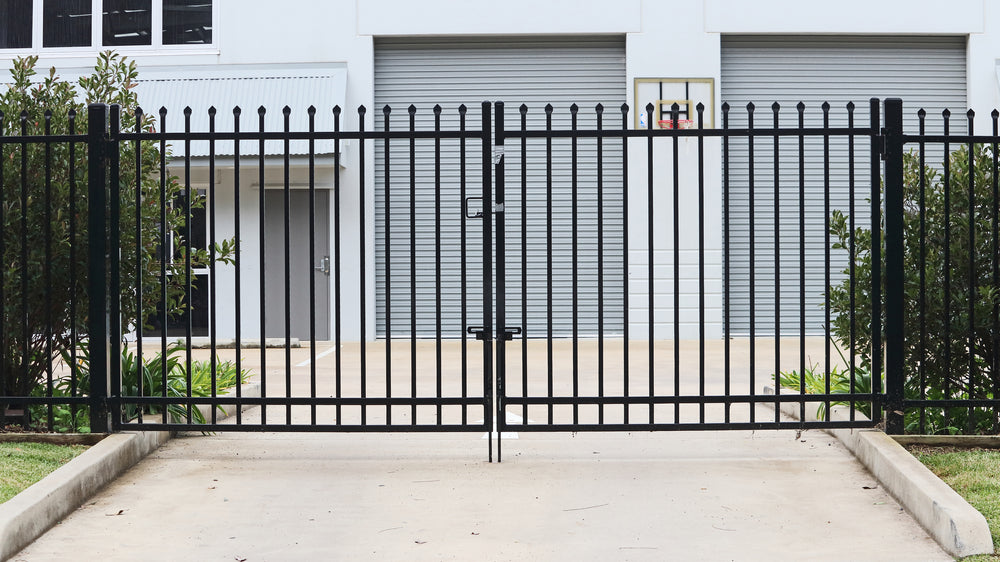
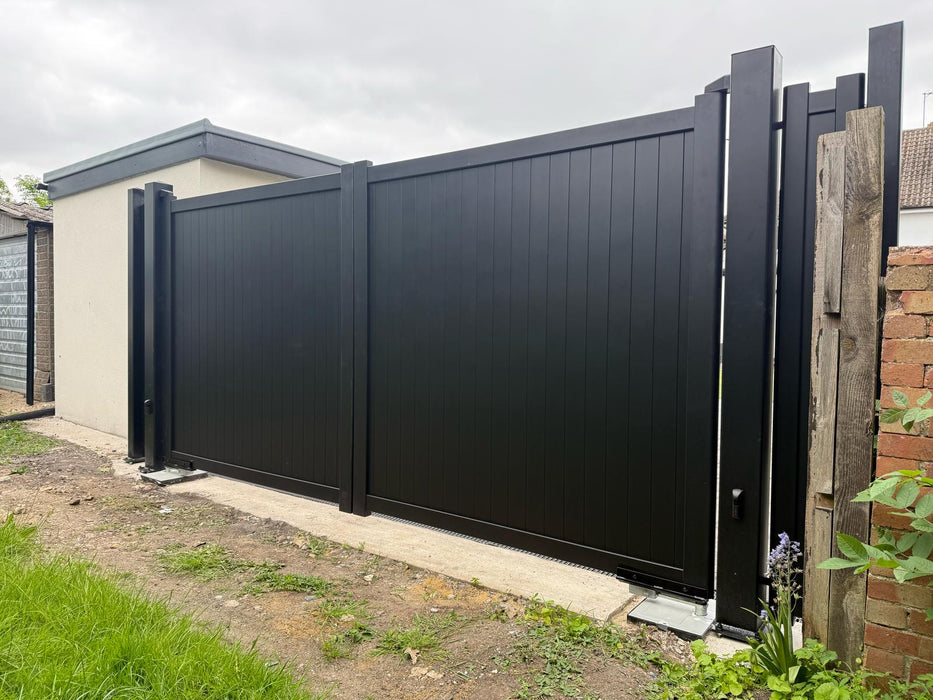
Automatic gate (double swing)
Automatic Swing Gates in Sydney: Single vs Double — Which One Is Right for Your Driveway?
There is a moment, usually on a rainy Sydney evening or a scorching summer afternoon, when every homeowner with a manual gate wishes they had an automatic one. You sit in your car, waiting for the gate to swing closed behind you — or worse, getting out to open it in the downpour.
Automatic swing gates solve that problem. With the press of a button on a remote control, smartphone app, or keypad, your gate swings open. You drive through. It swings closed behind you. You never leave the comfort of your car.
In Sydney, swing gates come in two main configurations: single swing and double swing (also called dual swing). Each suits different driveway layouts, budgets, and aesthetic preferences.
This guide covers both types in detail — including costs, motor options, safety requirements, and what works best in Sydney’s unique climate.
What Is an Automatic Swing Gate?
An automatic swing gate is a hinged gate fitted with an electric motor (gate operator) that opens and closes the gate automatically. Unlike sliding gates, which move horizontally, swing gates rotate on hinges — just like a standard door, but much larger and heavier.
Single Swing Gate
A single swing gate uses one gate leaf that swings open in one direction (typically into the property). The gate covers the entire driveway opening by itself.
Best for:
Driveways up to 3–4 metres wide
Properties with space on one side of the driveway for the gate to swing into
Narrower driveways where a double gate would look cramped
Budget-conscious installations (one motor instead of two)
Double Swing Gate
A double swing gate uses two gate leaves that meet in the centre of the driveway and swing open in opposite directions (like double doors). Each leaf is typically half the width of the total opening.
Best for:
Driveways 4–6 metres wide or wider
Properties with limited space on either side (each leaf needs less individual clearance)
Grand entrances and larger homes
Situations where a single gate leaf would be too heavy or long
Single Swing vs Double Swing — Key Differences at a Glance
| Feature | Single Swing | Double Swing |
|---|---|---|
| Number of gate leaves | 1 | 2 |
| Maximum driveway width | 3–4 metres (up to 5m with heavy-duty motors) | 4–6 metres+ (up to 8–10m with commercial motors) |
| Number of motors | 1 | 2 |
| Side clearance needed | Full gate width (e.g., 3.5m) on one side | Half gate width on each side (e.g., 1.75m per side) |
| Opening speed | Slower (one large leaf moves) | Faster (two smaller leaves move simultaneously) |
| Installation cost | Lower (one motor, simpler setup) | Higher (two motors, more wiring) |
| Aesthetic | Asymmetrical, practical | Symmetrical, formal, grand |
| Weight per leaf | Heavy (entire gate weight) | Lighter (half the total weight) |
| Typical motor type | Single arm or underground operator | Two arms or two underground operators |
| Common in Sydney suburbs | Most standard homes | Large blocks, acreage, Hills District, North Shore |
How Automatic Swing Gates Work
Both single and double swing gates use the same basic components. The difference is simply the number of leaves and motors.
Core Components of an Automatic Swing Gate System
| Component | Function | Notes |
|---|---|---|
| Gate operator (motor) | Powers the gate to open and close | One for single swing; two for double swing |
| Control board | Manages motor operation, safety features, and remote signals | Central “brain” of the system |
| Remote controls | Sends wireless signal to open/close gate | Usually 2 included; up to 20+ can be programmed |
| Safety photo beams | Detects obstacles; stops/reverses gate if beam broken | Legally required in Australia |
| Manual release key | Allows gate to be opened manually during power failure | Essential for safety and compliance |
| Hinges | Mount gate to posts | Heavy-duty rated for gate weight |
| Power supply | Connection to mains electricity (or solar/battery) | Requires licensed electrician |
How the Motor Works — Arm vs Underground
Swing gate motors come in two main types:
| Motor Type | How It Works | Appearance | Best For |
|---|---|---|---|
| Arms (articulated or telescopic) | Motor unit mounted on post; arm pushes/pulls gate open | Visible, industrial | Most residential swing gates — most common in Sydney |
| Underground (buried) | Motor installed in ground below gate hinge; invisible when closed | Invisible (no visible hardware) | High-end homes, heritage properties, where aesthetics are critical |
Sydney verdict: Arm operators are the standard choice for most homes. They are reliable, easier to service, and significantly less expensive than underground systems. Underground operators are reserved for premium installations where a clean, hardware-free look is essential — often in luxury homes in Vaucluse, Mosman, or Point Piper.
Automation Brands Available in Sydney
Several reputable brands supply swing gate automation systems across Sydney. Here is what local installers typically offer.
Leading Brands
| Brand | Origin | Reputation | Typical Single Swing Kit Cost | Typical Double Swing Kit Cost |
|---|---|---|---|---|
| BFT | Italy | High-end, durable, excellent support | 1,200–1,200–2,500 | 2,500–2,500–5,000 |
| FAAC | Italy | Industry standard, commercial-grade | 1,000–1,000–2,200 | 2,200–2,200–4,500 |
| CAME | Italy | Reliable, long warranty (3 years), good for heavy gates | 900–900–2,000 | 1,800–1,800–4,000 |
| Nice | Italy | Smart home compatible, sleek design | 800–800–1,800 | 1,600–1,600–3,500 |
| ATA (Australian Technology) | Australia | Good value, widely available, easy to service | 600–600–1,500 | 1,200–1,200–3,000 |
| Centurion | South Africa | Robust, popular for rural and heavy-duty | 700–700–1,600 | 1,400–1,400–3,200 |
Motor Suitability by Gate Weight and Length
When choosing a motor, the key specifications are maximum gate length and maximum gate weight.
| Motor Model | Type | Max Gate Leaf Length | Max Gate Leaf Weight | Best For |
|---|---|---|---|---|
| BFT Phobos | Swing arm | 3m | 250kg | Standard residential single swing |
| BFT Phobos BT A | Swing arm | 3.5m | 300kg | Heavier gates, wider openings |
| FAAC 415 | Swing arm | 3m | 250kg | Popular standard choice |
| CAME ATI | Swing arm | 3m (ATI3000) to 5m (ATI5000) | 300–500kg | Large, heavy gates |
| CAME AXO | Swing arm | 5m+ | 500kg+ | Very large gates, commercial |
| ATA EasySwing | Swing arm | 3m | 250kg | Budget-friendly residential |
| Nice Wingo | Swing arm | 2.5m | 200kg | Compact, lightweight gates |
Choosing the Right Motor
💡 Critical advice: Always overspec your motor slightly. A motor rated for 3m gates will struggle with a 3m gate made of heavy hardwood. Leave a margin of at least 10-15% on both length and weight ratings.
For Sydney conditions — particularly hot summers where motors work harder — selecting a motor with adequate power is essential .
Cost Guide for Automatic Swing Gates in Sydney (2025-2026)
All prices are supply and professional installation including GST. These are estimates and vary based on site conditions, gate material, and motor brand.
Automation Only (Existing Manual Gate)
If you already have a manual swing gate and want to add automation:
| Configuration | Approx. Cost (Supply & Install) | Includes |
|---|---|---|
| Single swing automation | 1,400–1,400–2,500 | Motor kit, control board, 2 remotes, photo beams, wiring, installation |
| Double swing automation | 2,200–2,200–4,500 | Two motor kits, control board, 2 remotes, photo beams, wiring, installation |
Full Gate + Automation Package
If you need both a new gate and automation:
| Configuration | Gate Material | Approx. Total Cost (Gate + Automation + Install) |
|---|---|---|
| Single swing (3.0–3.5m) | Aluminium slat | 3,500–3,500–6,000 |
| Single swing (3.0–3.5m) | Colorbond steel | 3,000–3,000–5,500 |
| Single swing (3.0–3.5m) | Timber (treated pine) | 2,800–2,800–5,000 |
| Double swing (4.0–5.0m total) | Aluminium slat | 5,500–5,500–9,000 |
| Double swing (4.0–5.0m total) | Colorbond steel | 5,000–5,000–8,500 |
| Double swing (4.0–5.0m total) | Timber (treated pine) | 4,500–4,500–8,000 |
Premium and Large Gate Installations
| Configuration | Gate Material | Approx. Total Cost |
|---|---|---|
| Single swing (4–5m, heavy-duty) | Steel / Hardwood | 6,000–6,000–12,000 |
| Double swing (5–7m total) | Steel / Hardwood | 9,000–9,000–18,000+ |
| Underground motors (single) | Any | Add 2,000–2,000–4,000 |
| Underground motors (double) | Any | Add 4,000–4,000–8,000 |
Optional Add-Ons
| Feature | Approx. Cost |
|---|---|
| Additional remote controls (2-pack) | 50–50–150 |
| Smartphone app control (WiFi/4G) | 200–200–600 |
| Wireless keypad | 150–150–400 |
| Solar panel + battery backup | 600–600–1,200 |
| Intercom system (audio) | 300–300–800 |
| Intercom system (video) | 800–800–2,500 |
| Surge protector for control board | 100–100–250 |
| Extended warranty (beyond standard 2-3 years) | 200–200–500 |
Cost Factors Specific to Sydney
| Factor | Typical Added Cost | Affected Suburbs |
|---|---|---|
| Power connection distance (if far from house) | +300–300–1,500 | Acreage properties, large blocks |
| Rock excavation for post holes | +200–200–500 per hole | Eastern Suburbs (sandstone), North Shore |
| Narrow access (manual handling of materials) | +300–300–800 | Inner West, terraces, Paddington |
| Sloping driveway (custom hinge engineering) | +500–500–1,500 | North Shore, Northern Beaches, Blue Mountains |
| Heritage area compliance (special approvals) | +500–500–2,000 | Glebe, Balmain, Woollahra, Mosman |
| Council DA fees (if required) | 300–300–1,500 | Heritage areas, corner blocks |
| Removal and disposal of old gate | 150–150–500 | All |
Installation Process for Automatic Swing Gates
A professional installation typically follows this timeline.
Phase 1: Site Assessment (1-2 hours)
Measure driveway width and gate opening
Check ground slope and level at hinge points
Assess side clearance for gate swing
Locate underground services (Dial Before You Dig — mandatory)
Determine power source location (mains, solar, or battery)
Discuss gate material, motor brand, and access control preferences
Phase 2: Fabrication (2–4 weeks)
Gate custom-fabricated to measured size
Powder coating (aluminium/steel) or treatment (timber)
Quality control inspection
Phase 3: Installation (2–4 days)
| Day | Tasks |
|---|---|
| Day 1 | Excavate post holes, set posts in concrete, allow to cure |
| Day 2 | Mount hinges, hang gate(s), check swing clearance and level |
| Day 3 | Install motor(s), control board, run wiring, mount photo beams |
| Day 4 | Programming (limits, force, remote controls), safety testing, handover |
Phase 4: Compliance and Handover
Safety testing (force limiter, photo beams, obstacle detection)
Demonstration of manual release operation
Remote controls and instruction manuals provided
Certificate of compliance (for automated gates)
Safety Requirements for Automatic Swing Gates (AS 60335-2-95)
Automatic driveway gates are regulated under Australian Standard AS 60335-2-95. Compliance is not optional — it is the law.
Mandatory Safety Features
| Feature | Requirement | Why It Matters |
|---|---|---|
| Photoelectric sensors (photo beams) | Required on all automated gates | Stop and reverse gate if beam is broken (detects person, child, pet, or vehicle) |
| Force limiting | Required on all automated gates | Motor stops if resistance exceeds set limit (prevents crushing) |
| Manual release | Required on all automated gates | Allows gate to be opened manually during power failure or emergency |
| Warning signage | Required on automated gates | Alerts people to automatic operation (must be visible on both sides) |
| Obstacle detection | Required | Gate must reverse upon contact with obstruction |
| Pinch point protection | Required | Hinges and moving parts must be guarded |
Safety Violations to Avoid
| Violation | Risk | Fix |
|---|---|---|
| No photo beams | Child or pet could be crushed between gate and post | Install beam sensors at 150mm and 500mm heights |
| Force limiter set too high | Gate won’t reverse on contact | Professional recalibration |
| Pinch points at hinges | Fingers caught | Install finger-safe hinge guards |
| No warning signage | Visitors unaware of automation | Install compliant signs on both sides |
| Gate swings over footpath | Public safety hazard | Reconfigure to swing inward only |
📌 Licensed installer requirement: In NSW, automatic gate installation must be carried out by a licensed electrician or certified gate technician. DIY automation connected to mains power is not legal .
Council Approval for Automatic Swing Gates in Sydney
When Approval is Generally NOT Required
Gate is behind the building line (not highly visible from street)
Gate height is under 1.2 metres (front boundary) or 1.8 metres (side/rear)
Gate replaces an existing gate of similar dimensions
Property is not in a heritage conservation area
When Approval IS Typically Required
Gate height exceeds 1.5–1.8 metres on front boundary (council dependent)
Property in heritage conservation area (style, colour, height restrictions apply)
Gate changes street-facing appearance significantly
Property on corner block (sightline restrictions for drivers)
Council-Specific Notes
| Council Area | Key Requirements |
|---|---|
| City of Sydney | Strict heritage controls; swing gate style must match period; DA required for most front gates |
| Northern Beaches | Maximum 1.2m for street-facing gates; swing gates must not obstruct footpaths |
| The Hills Shire | 1.2m front boundary limit; double swing gates encouraged for wide driveways |
| Willoughby | Heritage areas (Castlecrag, North Willoughby) have specific gate guidelines |
| Camden | Rural properties have fewer restrictions |
How to Check
Visit your council’s website — search for “Development Control Plan (DCP) — fencing”
Call council’s duty planner with your property address
For corner blocks, request specific sightline distance requirements
⚠️ Important: Installing a non-compliant gate can result in a 1,500–1,500–5,500 fine and an order to remove or modify the gate at your expense.
Summer Heat and Automatic Gates in Sydney
Sydney summers present unique challenges for automatic gates. Heat causes metal expansion, increases motor friction, and can trigger thermal overload protection .
Common Summer Problems
| Problem | Cause | Solution |
|---|---|---|
| Gate stops mid-travel | Motor overheating | Let cool; ensure thermal protection works |
| Slow operation | Expanded rails/wheels increase friction | Clean track; professional adjustment |
| Photo beam false triggers | Direct sunlight on sensors | Install sun shields or reposition sensors |
| Gate drifts when stationary | Roller wear or track expansion | Professional inspection |
| Motor housing very hot | Overload or failing component | Call technician immediately |
Summer Maintenance Checklist for Swing Gates
Do these checks before summer (October–November):
Clean and lubricate hinges (silicone spray — not WD-40)
Check motor housing for debris and ventilation blockages
Test photo beams for sun glare interference
Run 2–3 full cycles to confirm smooth operation
Check manual release key is accessible and functional
Verify thermal protection is working (consult manual)
Book annual professional service before December rush
Storm and Rain Protection for Automatic Gates
Sydney’s storm season (October–March) can damage automatic gates through water ingress, power surges, and corrosion .
How to Protect Your Automatic Swing Gate
| Protection Measure | What It Does | Estimated Cost |
|---|---|---|
| Surge protector on control board | Prevents lightning/power surge damage | 100–100–250 |
| Waterproof motor cover | Diverts rain from motor housing | 50–50–150 |
| Sealed cable entry points | Prevents water wicking into control box | Professional service |
| Raised mounting plate | Keeps motor above pooling water | Included in professional install |
| Weatherproof remote (SLH rated) | Resists rain damage | 50–50–100 each |
| Wireless keypad (sheltered location) | Backup access during remote failure | 150–150–400 |
When to Call a Technician
Motor housing feels very hot after a single cycle
Gate stops mid-travel or reverses without obstacle
Burning smell near control unit
Gate shakes or pulls to one side during movement
Water has entered motor housing or control box
Single Swing vs Double Swing — Which One for Your Sydney Home?
Choose Single Swing If:
Your driveway is 3–4 metres wide (standard Sydney suburban width)
You have adequate side clearance (at least full gate width on one side)
You are on a tighter budget (one motor costs less)
Your property has a modern or asymmetrical design (single gate suits clean lines)
You don’t need a formal, symmetrical entrance
Choose Double Swing If:
Your driveway is 4 metres or wider
You have limited clearance on either side (each leaf needs half the space)
You want a grand, symmetrical entrance (common for larger homes)
You have a heritage or federation home (double gates look period-appropriate)
You have acreage or rural property (wide entrances for farm vehicles)
Speed matters (two leaves open faster than one large leaf)
Sydney Suburb Suitability Guide
| Suburb Type | Typical Driveway Width | Recommended Gate |
|---|---|---|
| Inner West terraces (Glebe, Newtown, Balmain) | 2.5–3.0m | Single swing (if space permits) or sliding gate |
| Eastern Suburbs (Bondi, Coogee, Maroubra) | 3.0–3.5m | Single swing |
| North Shore (Chatswood, Lindfield, Roseville) | 3.5–5.0m | Either; depends on block |
| Hills District (Castle Hill, Baulkham Hills) | 3.5–5.0m | Double swing popular |
| Western Sydney (Parramatta, Blacktown, Liverpool) | 3.0–4.0m | Single swing common |
| Southern Highlands / acreage | 4.5–6.0m+ | Double swing preferred |
Maintenance Schedule for Automatic Swing Gates
Monthly
Listen for unusual noises during operation (grinding, clicking, straining)
Clean photo beam sensors (dust causes false triggers)
Check gate swings freely without resistance
Quarterly
Lubricate hinges (silicone spray)
Check all bolts and screws for tightness
Test manual release operation
Clear debris from around motor and hinges
Annually (Professional Service)
Motor inspection and calibration
Force limiter and safety sensor testing
Battery backup check (if applicable)
Wiring and control board inspection
Gate alignment and hinge adjustment
Signs Your Gate Needs Immediate Attention
| Sign | Action |
|---|---|
| Gate won’t open or close via remote | Check power; test manual release; call technician |
| Gate reverses for no reason | Clean sensors; check for obstructions; call technician |
| Grinding noise during operation | Stop using; call technician immediately |
| Motor runs but gate doesn’t move | Stripped gears or disconnected arm; call technician |
| Gate swings too easily (no resistance) | Broken hydraulic lock or gearbox; call technician |
Finding a Reputable Automatic Gate Installer in Sydney
Questions to Ask Before Hiring
“Do you use Australian-standard compliant motors from brands like BFT, FAAC, CAME, Nice, or ATA?”
“Are your technicians licensed electricians or certified gate installers?”
“Do you provide a certificate of compliance for automation?” Essential for insurance and resale
“What warranty do you offer on motors and workmanship?” Minimum 2 years on motors, 1 year on labour
“Do you handle council approvals if required?” Not always, but should advise
“Can you provide local references from the last 6 months?”
Red Flags to Avoid
“No photo beams needed” — Illegal and dangerous
“DIY automation is fine” — Not legal for mains-powered systems in NSW
Cash-only, no ABN — No warranty, no compliance certificate
Quotes significantly cheaper than market — Likely used, imported, or non-compliant equipment
“We use 304 stainless hardware” for coastal suburbs — Must be 316 marine grade within 5km of coast
Single Swing vs Double Swing — Final Comparison
| Feature | Single Swing | Double Swing |
|---|---|---|
| Number of motors | 1 | 2 |
| Installation cost | 1,400–1,400–2,500 (auto only) | 2,200–2,200–4,500 (auto only) |
| Full system cost | 3,000–3,000–6,000 | 5,000–5,000–9,000+ |
| Side clearance needed | Full gate width (e.g., 3.5m) on one side | Half gate width (e.g., 1.75m) per side |
| Max driveway width | 3–4m (up to 5m with heavy-duty) | 4–6m+ (up to 10m commercial) |
| Opening speed | Slower (one large leaf) | Faster (two smaller leaves) |
| Motor load | Higher (entire gate weight) | Lower per motor (half weight each) |
| Aesthetic | Asymmetrical, practical | Symmetrical, grand, formal |
| Redundancy | If motor fails, whole gate is manual | If one motor fails, gate may still operate partially |
| Typical Sydney application | Standard suburban homes | Large blocks, acreage, grand entrances |
Final Verdict for Sydney Homeowners
Choose Single Swing If:
Your driveway width is under 4 metres
You have adequate space on one side for the gate to swing fully open
You want the most cost-effective automatic gate solution
Your home has a modern, contemporary, or asymmetrical design
Choose Double Swing If:
Your driveway is 4 metres or wider
You have limited clearance on both sides of the driveway
You want a symmetrical, formal entrance
You own a larger home, acreage property, or heritage-style house
Speed of operation matters to you
No Matter Which You Choose:
Always use a licensed professional installer — automatic gates are regulated for safety
Install photo beam sensors — they are legally required and save lives
Book annual maintenance before summer — heat is the #1 killer of gate motors in Sydney
Keep manual release keys accessible — for power failures and emergencies
Choose 316 marine-grade stainless steel hardware if you live within 5km of the coast
Final Thought
Your driveway gate operates every single day — often multiple times. It is the most frequently used moving element on your property. Automating it is not a luxury; for many Sydney homes, it is a practical necessity that improves security, convenience, and property value.
Whether you choose a single swing gate for its simplicity and value, or a double swing gate for its symmetry and grandeur, invest in quality components and professional installation. A well-specified automatic swing gate will operate smoothly for 10–15 years — through Sydney’s heatwaves, storms, and everything in between.
And on that rainy evening when you press a button and your gate swings open without leaving your car — you will know it was worth every dollar.