
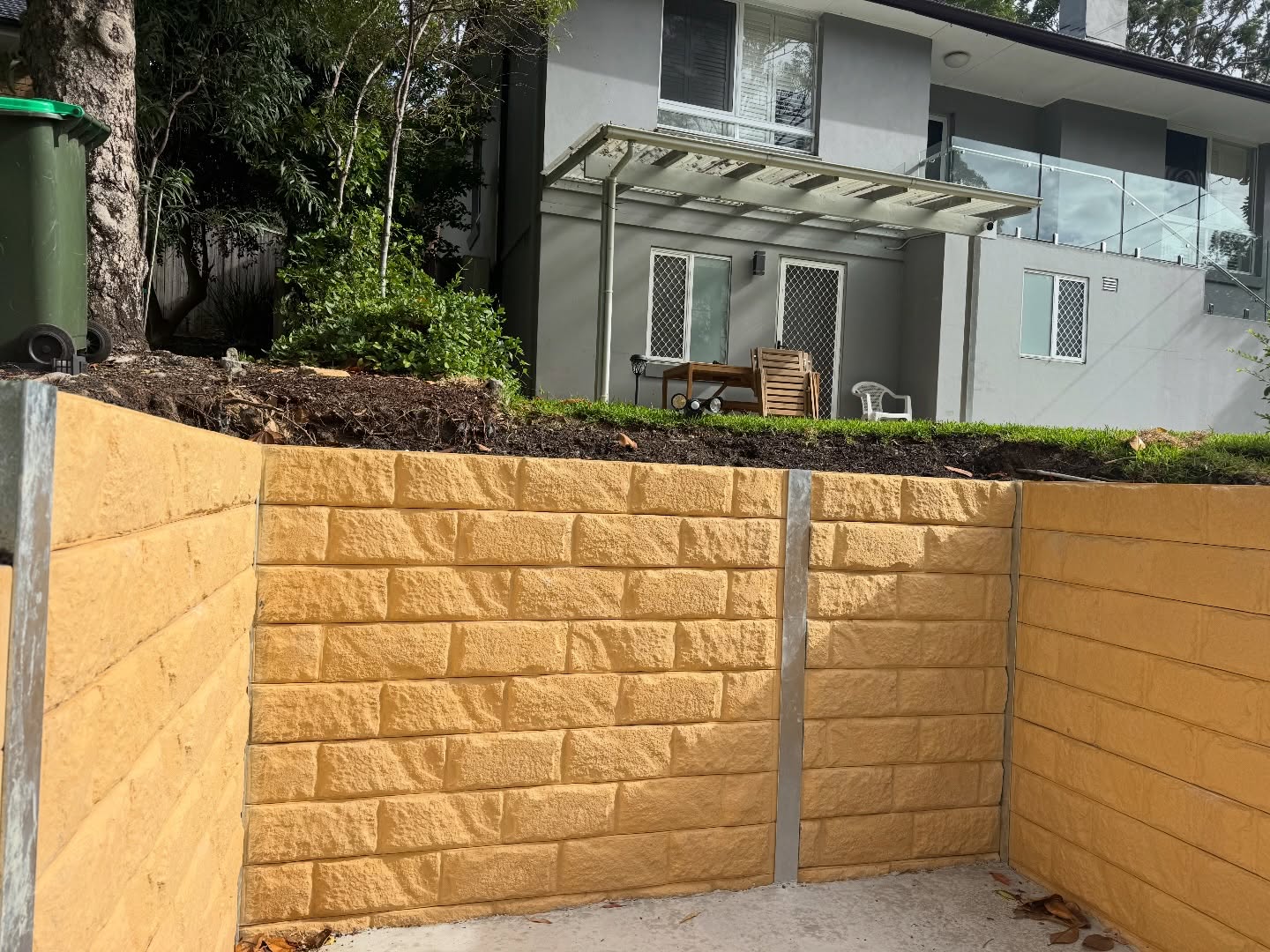


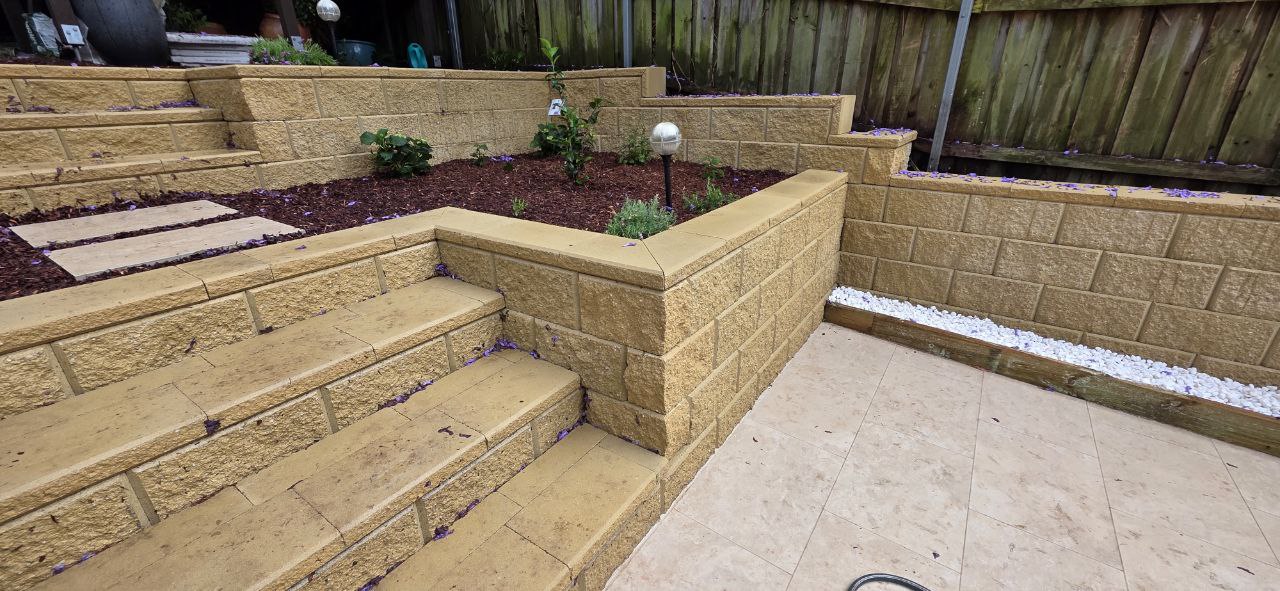
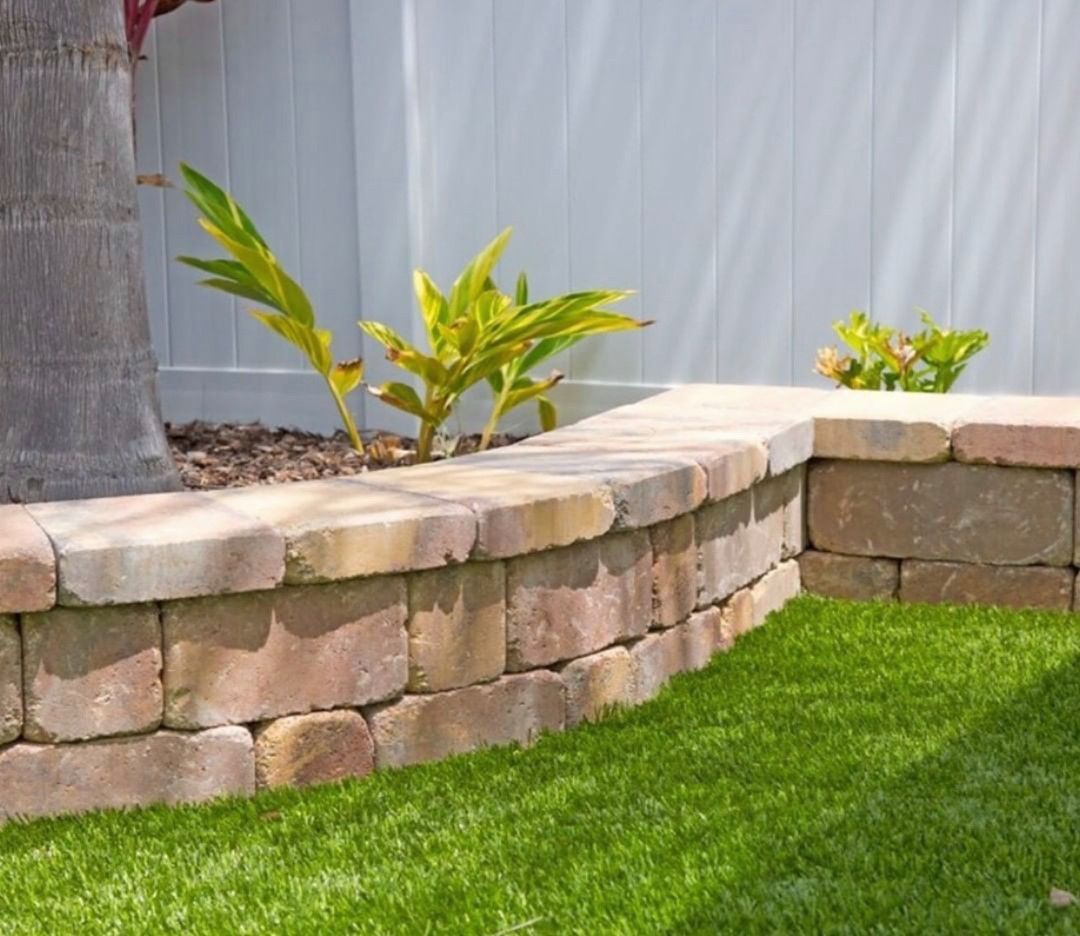
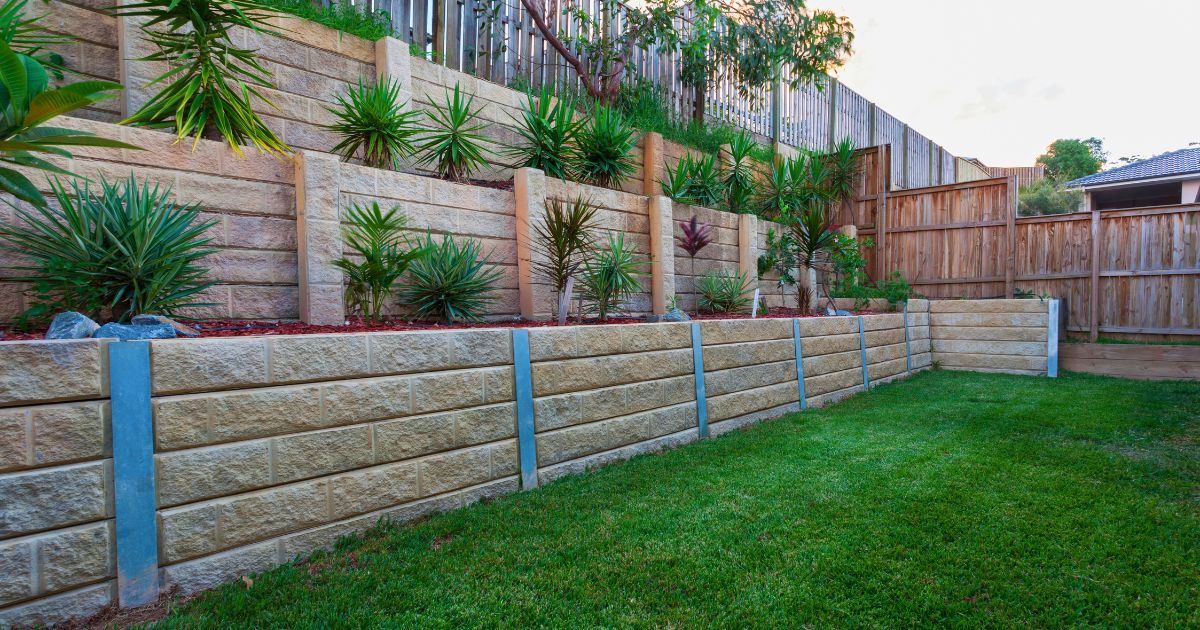


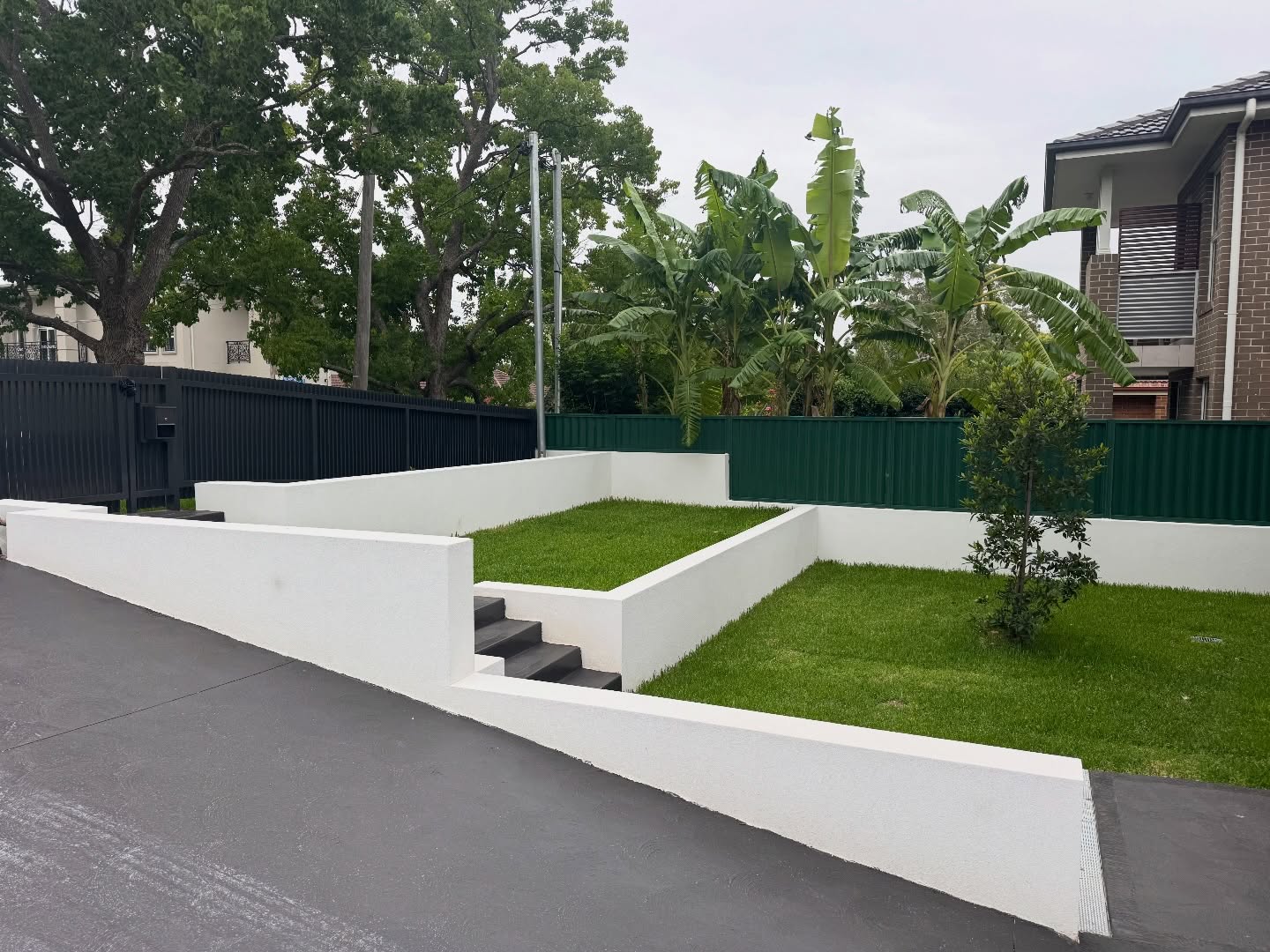


Inexpensive, cheap retaining wall ideas
It is a load-bearing masonry structure built from clay bricks or concrete bricks, laid in mortar, with the brick face left completely exposed as the finished surface. The wall may be left as raw brickwork or sealed with a clear masonry sealer.
Key Characteristics
Aesthetic: Classic, textural, and timeless. Bricks offer warm, earthy tones (reds, browns, ochers, or whites) with inherent colour variations.
Texture: The rough or smooth face of the brick is visible, along with tooled mortar joints (e.g., raked, flush, weather-struck, or tuckpointed).
Bond Patterns: The visual interest comes from the brick pattern – Stretcher bond (simplest), Flemish bond (alternating headers and stretchers), English bond (alternating rows of headers and stretchers), or Running bond (common for curved small retaining wall ideas).
Structural Classifications (Plain Brick)
| Type | How It Works | Max Typical Height | Best Use |
|---|---|---|---|
| Gravity Wall | Relies on its own weight (mass) to resist soil pressure. Thick base, narrower top. | 0.6m – 1.2m | Garden beds, low terracing |
| Reinforced Brick Wall | Contains vertical steel bars grouted into hollow cores or vertical cavities, tied to a concrete footing. | 1.2m – 2.0m | Driveway retention, split-level homes |
| Cavity Wall (with drainage) | Two separate brick skins with a gap (cavity) between them. The cavity contains drainage aggregate and weep holes. | Up to 1.8m | Wet climates, poor drainage sites |
Critical Components for Plain Brick
Because brick is porous and mortar can crack under lateral soil pressure, plain brick retaining walls require specific engineering details:
Concrete Footing: Must be below frost line (if applicable) and at least as wide as the wall thickness × 1.5.
Weep Holes: Open vertical joints every 600–900mm along the bottom course to allow water to escape.
Drainage Aggregate: 150–300mm of clean gravel directly behind the wall, wrapped in geotextile fabric.
Expansion Joints: Vertical gaps filled with flexible sealant every 6–9 meters to prevent thermal cracking.
Brick Types for Plain Retaining Walls
| Brick Type | Pros | Cons |
|---|---|---|
| Clay Face Brick | Beautiful color, frost-resistant, durable | Expensive, requires skilled labor |
| Clay Common Brick | Affordable, classic look | Less uniform, may effloresce (white salt stain) |
| Concrete Brick | Consistent sizing, strong, affordable | Can appear sterile, prone to chipping |
| Reclaimed / Salvaged Brick | Unique patina, sustainable | Variable strength, may crumble under load |
Pros & Cons (Plain Brick)
| Pros | Cons |
|---|---|
 Extremely durable (50–100+ years) | ✘ Heavy – requires a strong footing |
| No ongoing painting or coating | ✘ Labor-intensive to build (masonry skills required) |
| Fireproof, rot-proof, termite-proof | ✘ Mortar can crack from soil pressure |
| Classic aesthetic that increases property value | ✘ Efflorescence (white salt deposits) can appear |
| Breathes naturally (allows moisture vapor to escape) | ✘ Hard to modify or add drainage later |
Maintenance (Plain)
Annually: Inspect for cracked mortar, bulging, or leaning. Re-point (re-mortar) cracked joints.
As needed: Remove efflorescence using a specialized masonry cleaner (not acid, which damages bricks).
Sealing: Optional – apply a breathable siloxane sealer to reduce water absorption without trapping moisture.
2. Brick Retaining Wall (Rendered / Plastered)
A Rendered Brick retaining wall starts as a standard brick masonry wall, but is then coated with one or more layers of cement-based render (plaster) to create a smooth, seamless, or textured monolithic finish. The brick becomes a structural substrate, not a visible finish.
What Is a Rendered Brick Wall?
It is a brick retaining wall covered with a render coat – typically a mixture of cement, sand, lime, and water, applied in 2–3 layers (scratch coat, levelling coat, finish coat). Once cured, it may be painted, left natural, or textured.
Key Characteristics
Aesthetic: Modern, clean, minimalist. No visible brick joints or color variations – a uniform surface that reads as a solid mass.
Texture Options: Smooth (troweled), textured (sponged or rolled), bagged (rough burlap finish), or patterned (stamped or scored to look like stone or blockwork).
Color: Rendered walls can be left as natural cement grey, tinted in the render mix, or painted any color after curing.
Render Types & Suitability for Retaining Walls
| Render Type | Composition | Best For | Durability |
|---|---|---|---|
| Traditional Cement Render | Cement + sand + lime | General use, affordable | Good (cracks possible) |
| Acrylic Render | Acrylic polymers + cement | Flexibility, crack resistance | Very good |
| Polymer-modified Render | High polymer content | High-moisture areas, below grade | Excellent |
| Lime Render | Hydraulic lime + sand | Period restorations, breathability | Moderate |
Critical Construction Steps (Rendered)
Build the Brick Wall (as per plain rules): Footing, weep holes, drainage, reinforcement if required.
Allow Brick to Cure: Wait 7–28 days for mortar to fully harden and shrink.
Prepare Surface: Clean off dust and loose mortar. Dampen bricks to prevent rapid water absorption from the render.
Apply Scratch Coat (8–12mm): First rough coat, scratched with a comb or rake to create a key for the next layer.
Apply Leveling Coat (6–10mm): Straightens the wall surface. Allow to cure.
Apply Finish Coat (3–6mm): Texture as desired (smooth, stippled, sand float, etc.).
Cure Properly: Keep damp for 5–7 days (cover with plastic or mist regularly) to prevent shrinkage cracks.
Seal or Paint: Apply a breathable masonry paint or clear water repellent.
Weep Holes in Rendered Walls – A Critical Detail
Do not cover weep holes with render. They must remain open. Options include:
Inserting small PVC pipes through the render at weep hole locations.
Using weep hole guards (small plastic grilles) that are masked off before rendering.
Creating a gravel drainage channel at the base of the wall that daylights at the ends (for very long walls).
Pros & Cons (Rendered Brick)
| Pros | Cons |
|---|---|
| Modern, seamless aesthetic | ✘ Render can crack from soil movement |
| Hides imperfections in brickwork | ✘ Requires skilled renderer for quality finish |
| Can be any color (painted or tinted render) | ✘ Cracked render traps water against bricks |
| Easier to clean than exposed brick | ✘ May blister or delaminate if applied poorly |
| Adds an extra waterproofing layer | ✘ Higher upfront cost than plain brick |
Common Rendered Wall Failures (And Prevention)
| Problem | Cause | Prevention |
|---|---|---|
| Hairline cracks | Shrinkage or minor soil movement | Use polymer-modified render; add control joints |
| Blistering / bubbling | Trapped moisture vapor | Ensure weep holes and drainage are working |
| Efflorescence on render | Salts migrating from brick | Use low-salt render mix; seal properly |
| Delamination (render peeling) | Poor bond or freeze-thaw | Dampen bricks before rendering; use bonding agent |
Maintenance (Rendered)
Every 1–2 years: Inspect for cracks. Fill small cracks with flexible filler. Monitor larger cracks for movement.
Every 5–10 years: Repaint if painted (use breathable elastomeric paint). Re-seal if sealed.
Ongoing: Keep soil and plants away from the base to prevent moisture wicking up behind the render.
Quick Reference: Plain vs. Rendered Brick
| Feature | Plain Brick | Rendered Brick |
|---|---|---|
| Initial cost | $$ – $$$ (brick dependent) | $$$ – $$$$ |
| Installation complexity | High (masonry skills) | Very high (masonry + rendering) |
| Aesthetic | Traditional, warm, textural | Modern, smooth, minimalist |
| Color options | Limited to brick and mortar color | Unlimited (paint or tinted render) |
| Hides imperfections? | No – highlights them | Yes – completely hides brickwork |
| Repair ease | Easy – replace individual bricks | Difficult – must match texture & color |
| Breathability | Excellent | Reduced (can trap moisture) |
| Lifespan (properly built) | 50–100+ years | 30–60 years (render may need redo) |
| Best height (unreinforced) | ≤ 1.0m (gravity only) | ≤ 1.0m (gravity only) |
| Best height (reinforced) | ≤ 2.0m | ≤ 2.0m |
Cost Comparison (Per Square Meter – Approximate)
| Component | Plain Brick | Rendered Brick |
|---|---|---|
| Footing & excavation | 80–150 | 80–150 |
| Brickwork + mortar (labor & materials –Best Materials for Retaining Walls in Sydney ) | 150–300 | 150–300 |
| Weep holes + drainage | 20–40 | 20–40 |
| Render (2–3 coats, labor & materials) | N/A | 60–120 |
| Painting / sealing | 0–15 (optional) | 15–30 |
| Total approx. | 250–505 | 325–640 |
Note: Prices vary significantly by region, labor rates, and brick type.
Final Recommendation
Choose Plain Brick if: You love traditional craftsmanship, want a timeless garden wall, are building under 1 meter in height, or need a breathable wall in a damp climate.
Choose Rendered Brick if: You want a modern, seamless look, need to match an existing rendered house facade, want the ability to change colours later, or are building within a contemporary landscape design.