
Budget-Friendly Backyard Upgrades for Sydney Homes
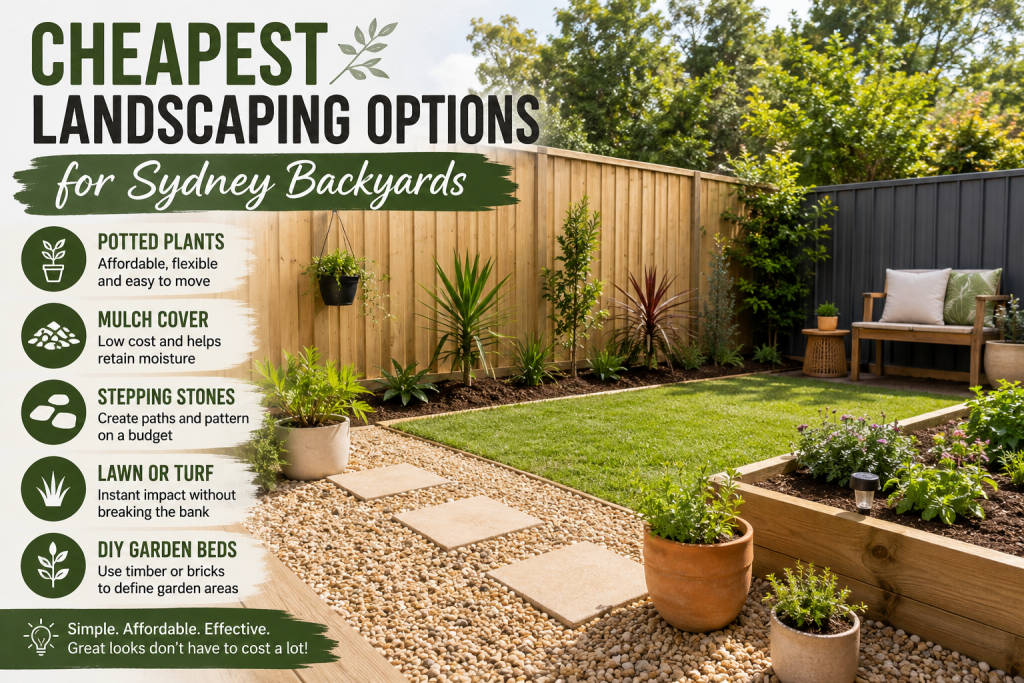
If you want your backyard looking sharp without blowing the budget, stick to garden beds, small repairs, and cosmetic touches. Skip the earthworks, retaining walls for small spaces, and full rebuilds; that’s where the money disappears. Under $1,500 gets you fresh mulch, native planting, tidy edging, and a repainted fence. Working with $500 or less? Put it all into mulch and a handful of tube-stock plants. The aim is maximum visual payoff without disturbing your soil or slopes.
Six Low-Cost Ideas Worth Doing First
No excavator, no council paperwork, just a weekend or two of effort.
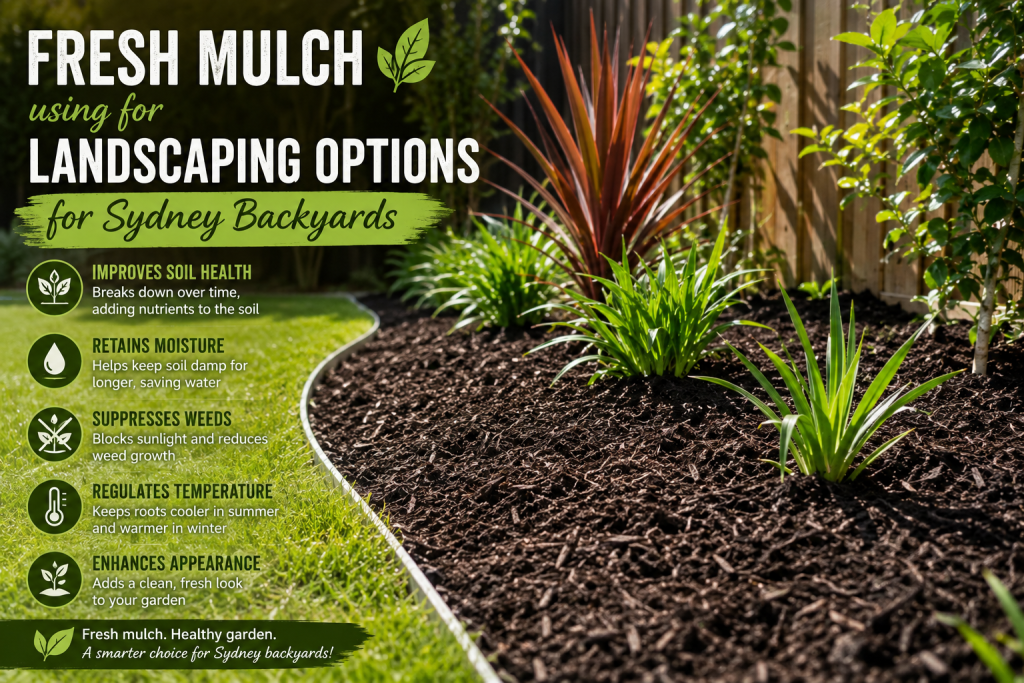
1. Mulch — your best dollar-for-dollar investment
Cost: $60–$150 for an average yard
A 5–8cm layer of mulch tidies a garden instantly, chokes out weeds, and holds moisture through Sydney’s dry stretches. Buy in bulk from a landscape supplier instead of bagged mulch at the hardware store, you’ll pay roughly half. Stick with coarse bark or leaf mulch rather than the cheap dyed stuff.
How: clear visible weeds, spread evenly, keep it clear of stems and trunks.
2. Native tube stock over advanced plants
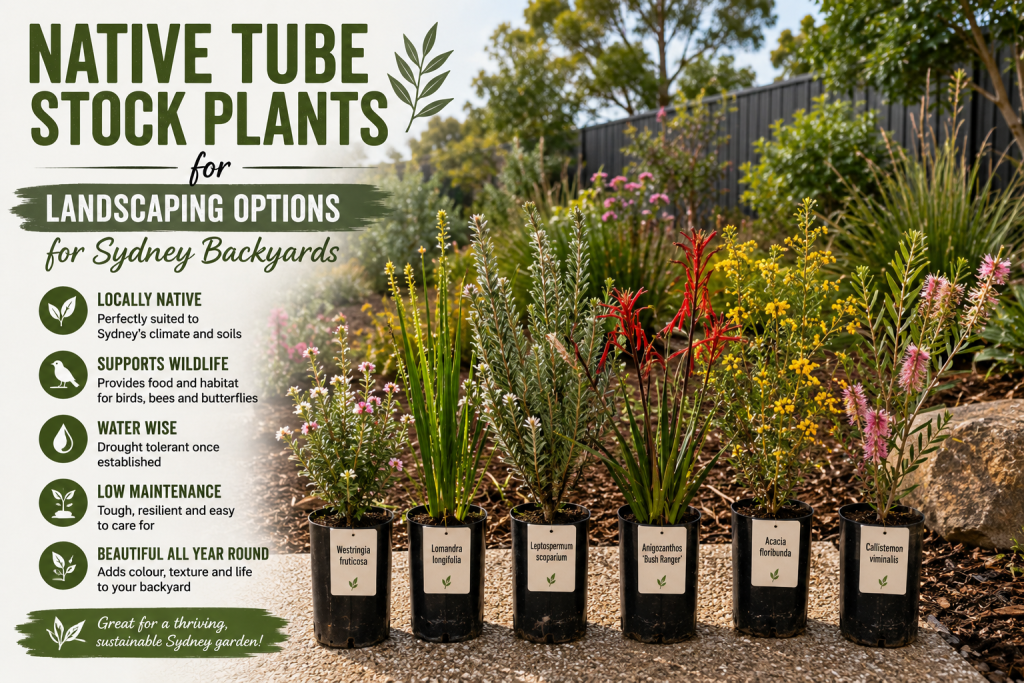
Cost: $3–$8 per plant vs. $25–$50 for larger pots
Most people overspend on plants that are already big. Tube stock, the small seedlings, costs a fraction and actually catches up within 12–18 months, since it skips the transplant shock that slows down bigger specimens. Go for tough natives like Westringia, Lomandra, Grevillea, or Dianella; they cope with Sydney’s clay and dry summers without constant watering.
How: dig a hole twice the width of the tube, backfill with compost blended into your existing soil, water thoroughly, then mulch.
3. DIY garden edging
Cost: $30–$100 with recycled or budget materials
A clean edge turns a scrappy garden into something that looks deliberate. Skip pricey steel or brick; recycled bricks (often free on Facebook Marketplace), cut pine sleepers, or a simple trench edge (a V-cut between lawn and bed) all work.
How: mark the line with a hose or spray paint, cut it cleanly with a flat spade, strip grass from the bed side, install your material.
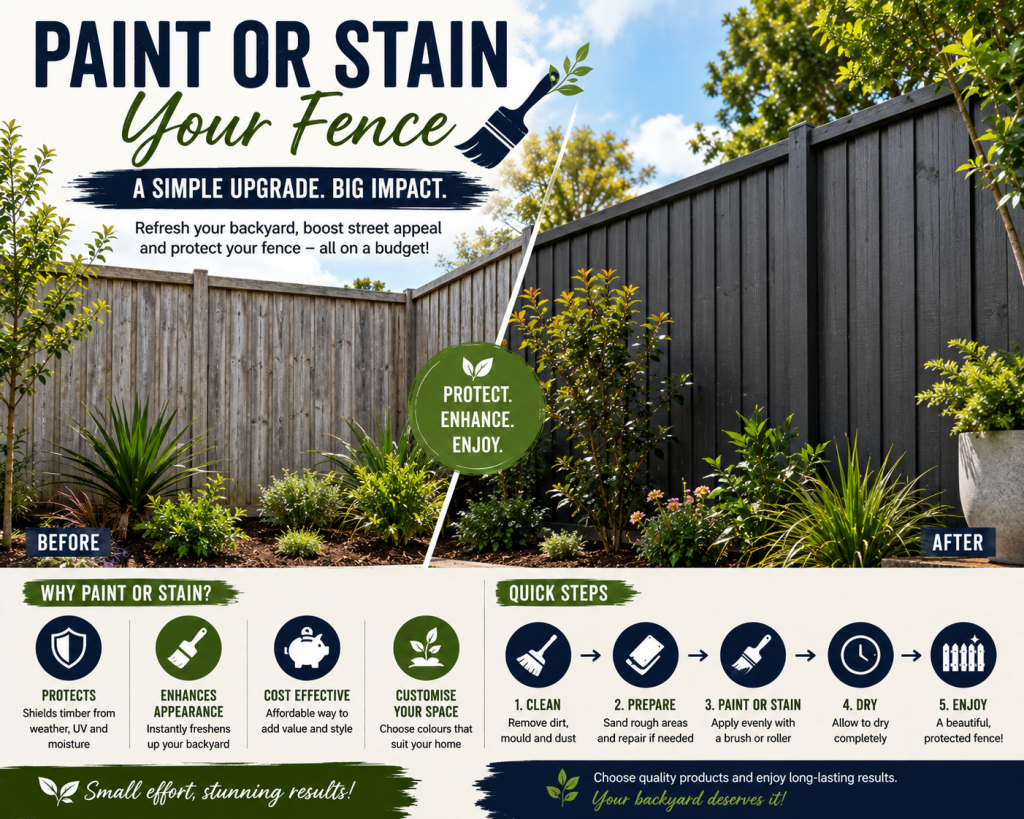
4. Repaint or stain the fence
Cost: $80–$250 for paint and a weekend
A weathered fence drags down even a freshly planted garden. One coat of exterior paint, a neutral like Monument or off-white, lifts the whole yard instantly, and in coastal suburbs it also guards timber against salt damage.
How: hose the fence down, let it dry a full day, roll the flat sections and brush the gaps. One person can finish a standard boundary fence in a weekend.
5. Solar lights
Cost: $40–$120 for 6–12 lights
No wiring, minimal cost, and they transform how the garden reads after dark. Line a path with them, tuck a few near feature plants, or angle one up into a small tree. Newer solar LEDs are far brighter than older models.
How: push them into the soil; no tools needed. Just make sure they get direct sun during the day to charge.
6. Tidy the lawn edges and pull weeds
Cost: nothing
The cheapest fix of all: clean up what’s already there. Hand-pull dandelions and clover after rain, when the soil gives easily. Recut lawn edges with a spade or whipper snipper where they meet paths or beds, and sweep the hard surfaces. Small effort, noticeable difference.
Why Earthworks Blow the Budget and How to Sidestep Them
Earthworks, reshaping your land by levelling, cutting into slopes, or filling low spots, is consistently the priciest part of any Sydney landscaping job, for three reasons:
- Machinery hire: a small excavator runs $400–$800 a day, plus delivery.
- Soil disposal: removing soil from site isn’t cheap; waste levies and transport often add $50–$100 per tonne.
- Council approval: reshaping ground levels or building retaining walls over 600mm typically triggers a DA or CDC, adding $1,000–$2,500 in engineering and application costs.
How to avoid it:
Push retaining walls to a later stage. Plant and mulch now; save and budget for the wall separately.
Work with the slope you’ve got; terrace it with no-dig garden beds instead of flattening it.
Use raised beds (recycled timber or corrugated iron) instead of cutting and filling; they sit on top of the ground with no digging required.
Plant for the soil you have. Heavy clay? Choose clay-tolerant natives rather than paying to swap the soil out.
3. DIY Garden Edging
Estimated cost: $30–$100 using recycled or budget materials
Clean edges make a messy garden look intentional. You don’t need expensive steel or brick edging. Use recycled bricks (free on Facebook Marketplace), untreated pine sleepers cut to size, or simple trench edging (a clean V‑shaped cut between lawn and garden bed).
How to do it: Mark your edge with a hose or spray paint, use a flat spade to cut a clean line, remove grass from the garden side, and install your chosen material.
4. Paint or Stain Your Fence
Estimated cost: $80–$250 for paint, brush, and a weekend
An old, weathered fence makes even a new garden look neglected. A single coat of exterior fence paint (choose a neutral colour like Monument or off‑white) instantly lifts the entire backyard. In Sydney’s coastal suburbs, this also protects timber from salt damage.
How to do it: Hose down the fence, let it dry for 24 hours, apply paint with a roller for flat sections and a brush for gaps. One person can do a standard boundary fence in a weekend.
5. Solar Garden Lights
Estimated cost: $40–$120 for a set of 6–12 lights
Solar lights are cheap, require no wiring, and completely change how your garden feels at night. Place them along pathways, near feature plants, or pointing up into a small tree. Modern solar LEDs are much brighter than older versions.
How to do it: Push them into the soil. No tools required. Position lights where they get direct sun during the day to charge properly.
6. Refresh Your Lawn Edges and Remove Weeds (Zero Dollars)
Estimated cost: Free
The cheapest improvement costs nothing: tidy what you already have. Hand‑pull broadleaf weeds (dandelions, clover) after rain when the soil is soft. Use a spade or whipper snipper to recut the edges where the lawn meets the pavement or the garden beds. Sweep paths and patios. These small actions make the whole garden look cared for.
Why Earthworks Is the Most Expensive Part (And How to Avoid It)
Earthworks means changing the shape of your land, levelling slopes, cutting into hillsides, filling hollows, or removing soil. In Sydney, earthworks are the most expensive part of any landscaping project for three reasons:
- Machinery hire: A small excavator costs $400–$800 per day plus delivery.
- Soil removal: Taking soil away from a Sydney property is expensive due to waste levies and transport fees (often $50–$100 per tonne).
- Potential council approval: Changing natural ground levels or building retaining walls over 600mm requires a DA or CDC, adding engineering and application fees ($1,000–$2,500).
How to avoid earthworks on a budget:
- Work with your existing slope. Don’t try to flatten a sloping backyard; turn it into terraced garden beds using no‑dig techniques.
- Use raised garden beds instead of cut‑and‑fill. A raised bed made from recycled timber or corrugated iron sits on top of the existing ground and needs no excavation.
- Choose plants that suit your soil as it is if you have heavy clay, plant clay‑tolerant natives rather than paying to remove and replace soil.
- Leave retaining walls for later. If your slope needs a wall, postpone that part of the project. Do the planting and mulching now. Save for the wall as a separate stage.
The golden rule for budget landscaping: do not move dirt unless you absolutely have to.
Comparison Table: Cheap Ideas vs. Cost vs. Visual Impact (Cheapest Landscaping Options for Sydney Backyards)
| Idea | Estimated Cost (Sydney 2026) | Visual Impact | DIY Difficulty |
|---|---|---|---|
| Fresh mulch (bulk) | $60–$150 | High (instant tidy look) | Very easy |
| Native tube stock plants | $3–$8 each | Medium (improves over time) | Easy |
| DIY garden edging | $30–$100 | Medium–High | Easy |
| Paint fence | $80–$250 | Very High (transforms the whole backyard) | Medium (requires a day of work) |
| Solar lights | $40–$120 | Medium (night impact only) | Very easy |
| Weeding + lawn edges | $0 | Medium (cleaner look) | Very easy |
Highest value for under $100: Mulch plus weeding. Do these two things first.
Budget-Friendly Backyard Landscaping for Sydney Homes
Final Thoughts (And When to Call Us)
A tight budget doesn’t mean a boring backyard. Start with mulch, native tube stock, clean edges, and a painted fence. These four things alone will change how your garden looks and feels for under $500.
When you’re ready to do more—like fixing drainage, building a retaining wall, or paving a patio- that’s the time to call a professional. But for now, enjoy the weekend projects you can do yourself.
If you’re planning and want advice on a bigger future project, contact Sydney Landscaping Pty Ltd for a no‑pressure site visit. We’ll tell you what makes sense to do now, what can wait, and what you should never DIY. Honest advice from a team that knows Sydney soil, slopes, and budgets.