
Get the latest Retaining Wall Cost in New South Wales for 2026. Sydney Landscaping Pty Ltd breaks down material prices, labour, and site factors. Includes an FAQ and a retaining wall cost guide for New South Wales.
If you are planning a landscaping project on the sloping blocks common in New South Wales, understanding the investment required for a retaining wall is crucial. Whether you are in the Eastern Suburbs, the Hills District, or the Central Coast, the cost to stabilise your soil and create usable space varies significantly based on your site conditions.
At Sydney Landscaping Pty Ltd, we believe in radical transparency. In this guide, we provide a comprehensive retaining wall cost guide for New South Wales for 2026, helping you budget accurately for your project without any hidden surprises.
Why Retaining Wall Costs Vary in 2026
Before looking at specific materials, it is essential to understand that the price on a quote is the sum of several parts. In 2026, the market has stabilised somewhat post-pandemic, but labour shortages and fuel costs continue to influence the final invoice.
The primary drivers of Retaining Wall Cost include material selection, wall height, site accessibility, and drainage requirements. For example, a simple sleeper wall in an accessible backyard in Penrith will be priced very differently from a complex engineered block wall on a tight, sloping site in Northbridge.
Updated 2025–2026 Retaining Wall Prices – Real Market Data
The prices below reflect actual quoted and completed projects by Sydney Landscaping Pty Ltd between July 2025 and April 2026, adjusted for current labour, material, and fuel costs.
Retaining wall pricing across Sydney has continued to shift through 2025 into 2026, driven by fluctuations in material supply, labour availability, and increasingly stringent compliance requirements under local council and NSW building regulations.
Market data reflects a widening gap between basic unengineered garden walls and structurally certified retaining systems, with the latter commanding a premium due to mandatory engineering sign-off, soil testing, and adherence to AS 4678 for earth-retaining structures.
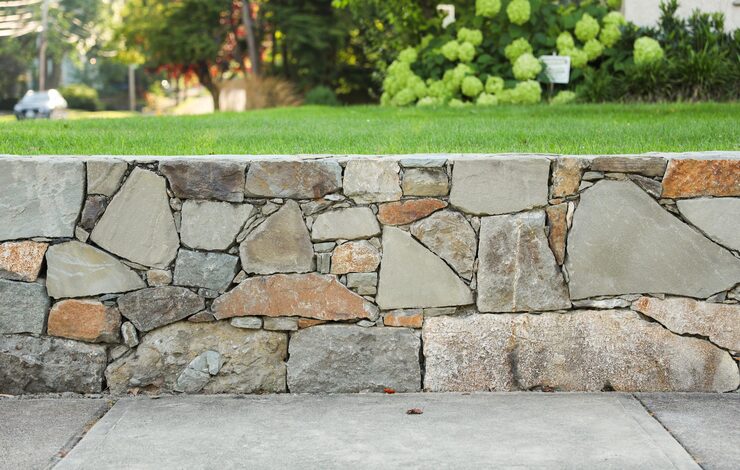
Material costs remain a key differentiator, with timber sleeper walls generally positioned at the more accessible end of the market, segmental block and reinforced concrete sitting in the mid-to-upper range, and natural sandstone or engineered masonry walls reflecting the highest investment due to sourcing, weight, and installation complexity.
Sydney’s geological variability continues to influence real-world pricing more than in many other capital cities, with sandstone bedrock across the North Shore and eastern suburbs often requiring rock breaking or specialised excavation equipment, while reactive clay soils in western Sydney frequently necessitate deeper footings and enhanced drainage provisions to prevent long-term wall failure. Labour rates across the Sydney metro area have also trended upward in line with broader construction industry demand, particularly for contractors holding current structural certification and council liaison experience.
Given the extent of these regional and structural variables, current market data should be treated as an indicative guide only, with property owners encouraged to obtain an updated, site-specific quote from a licensed Sydney retaining wall contractor to reflect real-time material and labour costs.
Price Adjustments by Wall Height
Wall height is the single biggest cost multiplier. Use this table to estimate your project:
| Wall Height Category | Relative Cost Level | Engineering/Approval Requirements | Typical Construction Notes |
|---|---|---|---|
| Low (garden edging height) | $ (Low) | Generally exempt from engineering certification in most Sydney council areas | Minimal footing depth, standard material sections, simple drainage |
| Low–Medium | $$ (Low–Mid) | May require basic engineering advice depending on site/soil conditions | Slightly deeper footings, standard drainage provisions |
| Medium | $$$ (Mid) | Engineering certification typically required under AS 4678 | Reinforced footings, geogrid or tie-back systems may apply |
| Medium–High | $$$$ (Mid–High) | Council development approval often mandatory; engineering mandatory | Deeper/wider footings, enhanced drainage, possible shoring during excavation |
| High (boundary/structural retaining) | $$$$$ (Premium) | Full structural engineering, council DA, and potentially geotechnical report required | Significant excavation, reinforced concrete or engineered block systems, specialist labour |
As wall height increases, cost escalation in Sydney is driven less by material volume alone and more by the compounding effect of engineering certification, council approval pathways, deeper footing requirements, and site-specific challenges such as sandstone rock breaking or reactive clay management. Because these thresholds and requirements can vary between local government areas, property owners should confirm current height-based approval triggers with their local council and obtain a site-specific structural assessment before budgeting for a taller retaining wall.
Why the multiplier? Taller walls require:
- Deeper footings (more concrete, more excavation)
- Geogrid reinforcement or steel rebar
- Increased drainage capacity
- Engineering certification (over 1m typically)
NSW Council Fees & Approval Requirements (2025–2026)
Council fees vary dramatically across Sydney. Below is a comparison table for major councils, based on current fee schedules (verified April 2026).
| Council Area | Wall Height Requiring Approval | Development Application (DA) Fee (approx.) | Complying Development Certificate (CDC) Fee (approx.) | Engineering Certification (required for >1m) | Typical Processing Time |
|---|---|---|---|---|---|
| City of Sydney | Over 600mm on boundary; over 1.2m internal | 1,950–3,200 | 880–1,200 | Yes – 800–1,500 | 6–10 weeks (DA); 2–4 weeks (CDC) |
| Northern Beaches | Over 600mm if affecting drainage; over 900mm generally | 1,780–2,900 | 750–1,100 | Yes | 8–12 weeks (DA); 3–5 weeks (CDC) |
| Parramatta | Over 800mm | 1,650–2,700 | 690–990 | Yes (over 1m) | 6–8 weeks (DA); 2–3 weeks (CDC) |
| Hills Shire | Over 600mm (strict enforcement) | 1,850–3,000 | 800–1,150 | Yes (over 800mm recommended) | 8–10 weeks (DA); 3–4 weeks (CDC) |
| Canterbury Bankstown | Over 800mm | 1,520–2,500 | 650–900 | Yes (over 1m) | 6–9 weeks (DA); 2–4 weeks (CDC) |
| Sutherland Shire | Over 900mm (unless on sandstone slope – then 600mm) | 1,700–2,800 | 720–1,050 | Yes (over 1m) | 7–10 weeks (DA); 3–5 weeks (CDC) |
| Blacktown | Over 800mm | 1,550–2,600 | 680–950 | Yes (over 1m) | 5–7 weeks (DA); 2–3 weeks (CDC) |
| Central Coast | Over 900mm (but 600mm if near watercourse) | 1,480–2,500 | 640–920 | Yes (over 1m) | 6–9 weeks (DA); 3–4 weeks (CDC) |
| Willoughby | Over 600mm (very strict on boundaries) | 1,900–3,100 | 850–1,200 | Yes (over 800mm) | 8–12 weeks (DA); 3–5 weeks (CDC) |
| Liverpool | Over 800mm | 1,550–2,600 | 680–950 | Yes (over 1m) | 5–8 weeks (DA); 2–3 weeks (CDC) |
| Campbelltown | Over 900mm | 1,450–2,500 | 650–900 | Yes (over 1.2m) | 5–7 weeks (DA); 2–3 weeks (CDC) |
Additional fees to budget for:
- Private certifier (if using CDC): 800–1,500 (includes inspections)
- Structural engineer’s drawings: 800–2,500 depending on complexity
- Geotechnical report (for walls over 1.5m or reactive clay sites): 1,200–3,000
- Council inspection fees (for DA projects): 250–500 per inspection (usually 2–3 inspections)
Retaining Wall Cost by Material Type
Choosing the right material is a balance between aesthetics, longevity, and budget. Here is a breakdown of the most popular options for Retaining Walls Cost in Sydney in 2026.
Treated Pine Sleepers
Treated pine remains a popular choice for budget-conscious projects.
- Cost Range: $300 – $600 per square metre (m²) installed.
- Pros: Lower upfront cost, readily available, and quick to install.
- Cons: Shorter lifespan (15-20 years); susceptible to rot and termites over time. Requires diligent drainage to prevent movement.
Concrete Sleepers
This is the workhorse of the Sydney market, offering a great balance of strength and modern aesthetics.
- Cost Range: $550 – $950 per m² installed.
- Pros: Extremely durable (50+ years), low maintenance, clean modern look. Handles reactive clay soils well when installed correctly.
- Cons: Heavier and may require machinery for installation, which adds to the cost if access is tight.

Segmental Concrete Blocks (e.g., Besser Blocks or Interlocking)
Block systems are often specified for taller walls or where curves are required.
- Cost Range: $650 – $1,100 per m² installed.
- Pros: High structural integrity, ideal for curves and terraced gardens, excellent for long-term value.
- Cons: Labour-intensive installation requires a proper concrete footing, increasing base costs .
Dincel Wall System
Commonly used for larger structural projects and basements, this is a high-strength option.
- Cost Range: Highly variable, but generally from $800 – $1,300+ per m² installed. As noted in recent industry analysis, labour for complex walls like lift shafts can significantly increase the Retaining Wall Cost in Nsw Sydney 2026 due to slower installation rates .
- Pros: Superior strength, perfect for waterproofing in below-ground applications.
- Cons: Requires specialised installers and engineering design.
Sandstone or Natural Stone
For high-end landscaping where aesthetics are paramount.
- Cost Range: $900 – $1,500+ per m² installed.
- Pros: Unbeatable natural look that blends perfectly with Sydney’s bushland settings.
- Cons: Premium material cost; requires skilled stonemasons.

Breaking Down the Total Cost
To give you a clearer picture, here is what a reputable contractor like Sydney Landscaping Pty Ltd includes in a comprehensive quote:
- Excavation and Site Prep: Before any block is laid, the site must be excavated. This can cost anywhere from $400 to over $2,000, depending on the volume of soil and whether rock is encountered. Soil removal (spoil) adds further costs, often calculated per cubic metre.
- Foundations and Footings: A wall is only as good as its footing. Concrete footings for block walls are a significant cost driver, influenced by the depth required for the wall height.
- The Wall Structure: This covers the actual materials (sleepers, blocks, etc.) and the labour to install them.
- Drainage System: This is non-negotiable. A proper drainage system, including an aggregate backfill and an agricultural (ag) pipe, is critical for longevity. Skimping on drainage is the number one cause of wall failure in NSW. This typically adds $100 – $250 to the project, depending on length.
- Council Fees and Engineering: For walls over 600mm-800mm high (rules vary by council) or those that support a load (like a driveway), you will need council approval and engineered drawings. Engineering fees can range from $800 to $2,500.
The Hidden Factor: Sydney’s Challenging Sites
One of the reasons the Retaining Wall Cost in Sydney can be higher than in other regions is the geography. Many of our suburbs are built on sandstone or heavy clay.
- Rock Excavation: If your project requires digging into sandstone, a rock hammer or even specialist sawing is required, which can add thousands to the excavation budget.
- Access Issues: In suburbs like Mosman or Balmain, getting a mini-excavator down a narrow side passage takes time and skill, increasing labour hours compared to a site with full machinery access.
Does a Retaining Wall Actually Pay You Back? ROI in Sydney’s Market
Sydney’s terrain is the reason this question comes up so often. A huge share of the metro area — the Hills District escarpments, the Northern Beaches headlands, the North Shore’s sandstone ridges, and the Inner West’s old quarry land — sits on a slope. That means a retaining wall isn’t a discretionary landscaping add-on the way a fire pit or a pergola might be; it’s frequently the difference between a block being usable and being wasted space. That distinction matters for return on investment.
Property analysts generally treat retaining walls as a structural improvement rather than a cosmetic one, and the return reflects that. Unlike a kitchen reno, which buyers evaluate on taste, a retaining wall is evaluated on function: does it stop the yard from eroding, does it create flat, usable land, and does it look like it was engineered properly rather than thrown together. Real estate commentary on hardscaping consistently frames well-built retaining structures as adding to resale appeal by expanding usable outdoor space and removing a buyer’s biggest hesitation on a sloped block — the fear of a future engineering bill.
The flip side is just as important for a cost-conscious homeowner: a poorly built or ageing wall can actively reduce your sale price. Visible leaning, cracking, or drainage staining signals a buyer (or their building inspector) that there’s a five-figure repair bill hiding behind the fence line, and that gets priced into any offer. In a market where Sydney buyers are already stretched, a dodgy retaining wall is one of the easier reasons to walk away or renegotiate.
Indicative ROI by scenario
| Scenario | Typical ROI Range | Why |
|---|---|---|
| Structural wall unlocking unusable sloped land (new flat lawn, driveway, or entertaining area) | Highest — often cited alongside patios/walkways at 50–75%+ of cost recovered in added value | Converts dead land into functional living space, which buyers pay a premium for |
| Replacing a failing/non-compliant wall before sale | Protective rather than value-adding | Avoids price chips from building inspections; can prevent a much larger negotiation loss |
| Cosmetic upgrade of an already-functional wall (e.g. timber sleeper to rendered block) | Lower, more aesthetic-driven | Improves presentation and street appeal but doesn’t unlock new usable area |
| Boundary wall shared with a neighbour, built to minimum compliance only | Lowest | Functional necessity rather than a value-adding feature |
These figures are indicative, drawn from property and hardscaping industry commentary rather than a single audited Sydney-specific study — actual uplift depends on your suburb, the wall’s visibility from the street or living areas, and how the rest of the property presents. Treat this as a directional guide for prioritising spend, not a guaranteed return.
What tips a wall from “cost” to “investment”
- It’s engineered and compliant. A wall built to Australian Standards with council sign-off (where required) reassures buyers there’s no hidden liability. An uncertified wall over 600mm–1m can actually spook a purchaser’s conveyancer.
- It has proper drainage. Ag-pipe and gravel behind the wall isn’t optional — it’s the single biggest factor in whether a wall lasts 10 years or 50. A wall without visible weep holes or drainage provision reads as a future problem to any buyer who knows what to look for.
- It creates usable space, not just holds back a bank. A wall that produces a new flat lawn, terrace, or driveway pad adds more perceived value than one that simply stops erosion on an inaccessible slope.
- It suits the streetscape. Sandstone reads differently in Mosman than it does in a 1990s Hills District estate. Matching material to the suburb’s existing character tends to perform better on resale than the cheapest compliant option.
Financing Your Retaining Wall Project
A $12,000–$40,000+ wall (which is a realistic range for a mid-sized, engineered Sydney retaining wall once excavation, drainage, and council fees are factored in) isn’t always sitting in a homeowner’s savings account. Most Sydney households financing a project like this use one of the following routes.
| Option | Typical Amount | How It Works | Best For |
|---|---|---|---|
| Unsecured personal loan | ~$5,000–$75,000, varies by lender | Fixed or variable rate, 1–7 year terms, no property security needed, funds released as a lump sum | Homeowners who want funds fast and don’t want to touch their mortgage |
| Home loan redraw | Limited to extra repayments already made | Draws down on additional payments you’ve already made above your minimum mortgage repayments | Homeowners who’ve been ahead on their mortgage — usually the cheapest option since there’s no new borrowing |
| Home equity loan / mortgage top-up | Larger amounts, based on available equity | Increases your mortgage balance, generally at a lower rate than an unsecured personal loan | Larger or multi-stage landscaping projects bundled with other works |
| Landscaper payment plan / staged deposits | Project-dependent | Many Sydney landscaping firms (including us) split payment across deposit, progress, and completion stages rather than requiring the full amount upfront | Managing cash flow without taking on formal debt |
A few things worth knowing before you commit to any of these:
- Get your quote finalised before applying for finance. Lenders and personal loan calculators need a firm number, and retaining wall quotes can shift once a site inspection reveals rock, poor access, or drainage complications — all common across Sydney’s sandstone and clay geology.
- Build in a 10–15% buffer. This is standard advice across renovation finance guides, and it’s particularly relevant to retaining walls because unexpected excavation conditions (hitting sandstone shelf, unmarked services, or unstable fill) are one of the most common sources of cost blowouts on Sydney sites.
- Tax treatment differs for investment properties. If the wall is on a rental or investment property, some of the cost may be depreciable or deductible over its effective life — but this needs to go through a quantity surveyor or registered tax agent, not a general online guide. It’s not typically deductible for an owner-occupied home.
- Compare comparison rates, not headline rates. Establishment fees, account-keeping charges, and early repayment terms vary a lot between lenders and can meaningfully change the true cost of a loan for a project this size.
This is general information, not financial advice — talk to a lender or financial adviser about what suits your circumstances.
Sydney Project Examples
The following are illustrative examples based on typical project profiles we see across Sydney, used here to show how the cost factors above play out in practice — not verified individual case studies.
Example 1 — Northern Beaches sloped block, concrete sleeper wall
A typical Northern Beaches property with a steep rear slope down to a reserve needed a wall to create a usable flat lawn and deck footing. Concrete sleepers were chosen over timber for longevity given the site’s exposure to salt air, which accelerates timber decay. Because the block had narrow side access, materials had to be craned or hand-carried in sections, which is a common and often underestimated cost driver on Northern Beaches sites. Council referral was required due to the wall height exceeding the exempt development threshold, adding several weeks to the timeline for engineering sign-off.
Illustrative cost shape: mid-to-high end of the concrete sleeper range, with access difficulty and council/engineering fees as the two biggest additions over the base per-metre rate.
Example 2 — Hills District battleaxe block, segmental block wall
A Hills District property on a battleaxe (rear) block needed a series of terraced block walls to manage a step in ground level between the driveway and the house pad. Segmental block was chosen for its ability to be built in curved and stepped runs without the joinery complexity of sleepers, and for a more contemporary finish that suited the newer estate streetscape. Multiple shorter terraced walls, rather than one tall wall, kept each section under the height threshold that triggers mandatory engineering certification — a common cost-control strategy on stepped sites.
Illustrative cost shape: mid-range per square metre, with the terracing (multiple shorter walls vs. one tall wall) keeping engineering costs down despite the total retained height being substantial.
Example 3 — North Shore heritage-adjacent property, sandstone wall
A North Shore property in a heritage conservation area needed a low front boundary wall replaced after the original sandstone wall began to lean and shed mortar. Sandstone was retained as the material both for heritage/streetscape compliance and because DA approval in these overlay areas often specifically requires materials sympathetic to the area’s original built character. Sandstone’s higher material and skilled-labour cost was offset by not needing engineering certification, since the wall height stayed under 600mm.
Illustrative cost shape: highest per-metre material cost of the three examples, but with DA/heritage assessment fees (rather than structural engineering fees) as the dominant “hidden” cost.
Retaining Wall Material Options Compared
Sydney homeowners face a unique set of retaining wall options and cost challenges when it comes to retaining walls. From the reactive clay soils of the Hills District to the stubborn sandstone of the Eastern Suburbs and the waterlogged conditions of the Northern Beaches, no two properties are the same. A retaining wall is not merely a landscape feature; it is a structural necessity that, when built correctly, shapes how water moves, how loads transfer, and how usable your outdoor space becomes.
This comprehensive guide compares 27 retaining wall material options available to Sydney homeowners in 2026. For each option, we provide detailed cost ranges, lifespan expectations, and best-use scenarios, drawing on current market data and our team’s hands-on experience across Sydney’s diverse suburbs.
Cost Calculator
💰 Retaining Wall Cost Estimator 2026
Estimate your wall cost in seconds
As a licensed and experienced landscaping company serving Sydney and the surrounding areas, Sydney Landscaping Pty Ltd has designed and installed hundreds of retaining walls. We understand what works—and what fails—in Sydney’s specific conditions.

How Retaining Wall Costs Are Calculated in Sydney
Before diving into the 27 material options, it is important to understand how retaining wall pricing works in the Sydney market. Most professional quotes are provided per linear metre, not per square metre, because wall height is the single biggest cost driver.
The table below shows typical Sydney price ranges across material categories:
| Material Category | Typical Cost Range (per linear metre) | Typical Lifespan |
|---|---|---|
| Treated Timber Sleepers | 300–700 | 15 – 25 years |
| Concrete Sleepers | 400–750 | 40 – 60+ years |
| Concrete Block (Besser) | 500–2,000+ | 50+ years |
| Sandstone Block | 700–1,800+ | Effectively unlimited |
| Natural Stone | 1,000–1,800+ | 50+ years |
| Gabion | 350–1,500 | 50 – 100+ years |
| Poured / Architectural Concrete | $1,500+ | 50+ years |
Note: All prices are estimates as of 2026 and include supply and installation for standard site conditions. Excavation, drainage, engineering, and council approvals will add to the final cost.
See our retaining wall installation pricing
Section 1: Timber Retaining Walls (Options 1–6)
Timber retaining walls remain the most budget-friendly option for Sydney homeowners, particularly for garden-scale retaining walls under 800mm in height. However, the type of timber you choose dramatically affects both cost and longevity.
Option 1: Treated Pine Sleepers
Cost: 250–250–450 per linear metre
Lifespan: 15 – 20 years
Treated pine is pressure-impregnated with preservatives to H4 grade for ground contact. It is the most economical retaining wall material available and is quick to install. Best suited for low garden beds, lawn edges, and informal settings on rear boundaries. However, treated pine is susceptible to warping and will eventually rot despite treatment.
Option 2: Hardwood Sleepers
Cost: 350–350–550 per linear metre
Lifespan: 20 – 25 years
Hardwood species such as Ironbark, Tallowwood, or Spotted Gum offer greater natural durability than treated pine. These dense timbers resist termites better and have a warmer, more premium appearance. The higher density makes installation more labour-intensive. Ideal for bush block settings and native garden styles where timber blends naturally with the environment.
Option 3: Recycled Timber Sleepers
Cost: 300–300–500 per linear metre
Lifespan: Varies (15 – 25+ years)
Reclaimed hardwood from old bridges, wharves, or industrial buildings offers unique character and environmental credentials. Each piece is unique, creating a wall with genuine history and patina. However, supply is inconsistent, and quality varies significantly. Best for eco-conscious projects and heritage-style gardens seeking an authentic aged appearance.
Option 4: Railway Sleepers (New)
Cost: 400–400–700 per linear metre
Lifespan: 20 – 30 years
New railway-grade hardwood sleepers are larger and heavier than standard landscaping sleepers (typically 200mm × 100mm or larger). They offer a chunky, substantial appearance and excellent structural capacity for low-to-mid height walls up to 1.2 metres with proper engineering. Suitable for rural-style properties and feature walls where the timber itself is the focal point.
Option 5: H4 Treated Round Posts (Vertical Log Walls)
Cost: 350–350–600 per linear metre
Lifespan: 15 – 20 years
Vertical log walls use treated round timber posts set tightly together, creating a rustic “stockade” appearance. This style is less common in metropolitan Sydney but suits larger properties and acreages. Installation requires deep post holes and concrete footings for each log. Best for very informal, bushland settings.
Option 6: CCA vs ACQ Treated Timber
Cost variation: Minimal within each category
Copper Chrome Arsenate (CCA) and Alkaline Copper Quaternary (ACQ) are the two primary treatment types. CCA is being phased down but remains available for ground contact use. ACQ is the modern alternative, but is more corrosive to galvanised steel fasteners. Either way, ensure your timber is correctly graded—H4 for ground contact, H5 for in-ground applications in wet conditions.
Key Timber Limitation: Timber retaining walls are generally not recommended for heights above 1.2 metres without significant engineering, nor for structural applications under buildings, driveways, or boundary loads.
Section 2: Concrete Sleeper Retaining Walls (Options 7–12)
Concrete sleepers have become the most popular choice across Sydney for good reason; they are strong, low-maintenance, and available in a wide range of finishes that mimic natural stone or timber without the decay risk.
Option 7: Standard Concrete Sleepers (Smooth Finish)
Cost: 400–400–600 per linear metre
Lifespan: 40 – 60 years
Standard reinforced concrete sleepers offer clean, consistent lines. They are installed between galvanised steel H-posts set in concrete footings. The smooth grey finish is utilitarian but functional, often specified for rear boundaries or areas where appearance is secondary to performance. Best for walls 600mm – 1.5 metres.
Option 8: Textured Concrete Sleepers
Cost: 500–500–700 per linear metre
Lifespan: 40 – 60 years
Textured or patterned concrete sleepers feature timber-grain or stone-effect finishes moulded into the surface during manufacturing. This eliminates the need for separate cladding while providing a more visually interesting appearance. Popular for family homes where the retaining wall is visible from living areas.
Option 9: Coloured Concrete Sleepers
Cost: 480–480–680 per linear metre
Lifespan: 40 – 60 years
Pigments added to the concrete mix during production create sleepers in earthy tones—charcoal, terracotta, sandstone, or olive. Coloured concrete does not require painting and maintains its hue for decades. Best for matching house brickwork or complementing surrounding landscape materials.
Option 10: Lightweight Fibre Cement Sleepers
Cost: 350–350–550 per linear metre
Lifespan: 30 – 40 years
Fibre cement sleepers use cement reinforced with cellulose fibres rather than steel rebar. They are lighter than traditional concrete sleepers, making them suitable for sites with limited access where heavy materials cannot be brought in. However, they have lower structural capacity and are best suited for garden beds under 800mm.
Option 11: Precast Concrete Sleepers (Custom Sizes)
Cost: 600–600–900 per linear metre
Lifespan: 50+ years
Custom-precast sleepers are manufactured to specific dimensions, allowing for non-standard heights, thicknesses, or shapes. This option is more expensive but offers design flexibility for architectural projects. Best for contemporary homes where the retaining wall is a design feature rather than a purely functional element.
Option 12: Reinforced Concrete Sleepers for High Loads
Cost: 650–650–900+ per linear metre
Lifespan: 50+ years
Heavy-duty sleepers with additional steel reinforcement and thicker profiles (typically 150mm or more) are engineered for walls up to 2 metres or for supporting driveways, buildings, or other surcharge loads. These require professional engineering certification and deeper footings.
See our retaining wall installation pricing
Section 3: Concrete Block (Besser) Walls (Options 13–17)
Concrete masonry blocks—commonly known as Besser blocks after a major manufacturer—are the structural workhorse of Sydney retaining. These hollow blocks are laid in courses, reinforced with vertical steel bars through the cores, and filled with structural concrete.
Option 13: Standard 200mm Besser Blocks (Rendered)
Cost: 500–500–800 per linear metre
Lifespan: 50+ years
The standard Sydney solution for walls 600mm to 1.5 metres. After installation, the wall is rendered to provide a smooth, paintable finish. This is a cost-effective balance of strength and appearance. However, render finishes require maintenance every 10–15 years. Best for driveways, pool surrounds, and boundary retaining where appearance matters.
Option 14: Split-Face Concrete Blocks
Cost: 700–700–1,000 per linear metre
Lifespan: 50+ years
Split-face blocks are manufactured with a fractured, stone-like texture on one or more faces, eliminating the need for rendering. They offer a more natural, premium appearance than standard blocks. Best for contemporary homes where the blockwork itself is left exposed.
Option 15: 300mm Wide Blocks (Heavy Duty)
Cost: 800–800–1,400 per linear metre
Lifespan: 50+ years
Wider blocks (300mm rather than 190mm or 200mm) provide greater mass and structural capacity for taller walls or those supporting significant surcharge loads. They also allow for larger reinforcing bars and more concrete fill. Best for walls above 1.5 metres or below major structures.
Option 16: Stone-Clad Concrete Blocks
Cost: 900–900–1,500 per linear metre
Lifespan: 50+ years
A composite approach: a structural concrete block core faced with natural stone veneer (sandstone, bluestone, or slate). This delivers the strength of concrete with the beauty of natural stone at a lower cost than solid stone blocks. Best for high-end residential projects and heritage-adjacent properties.
Option 17: Decorative Capped Block Walls
Cost: Add 50–50–150 per linear metre to base block cost
Lifespan: 50+ years
Precast concrete capping stones installed on top of a finished block wall provide a clean, finished edge and protect the wall core from water ingress. Capping is available in flat, pitched, or bullnose profiles and can be colour-matched to the render. This is an upgrade worth considering for any visible wall.

Section 4: Sandstone Retaining Walls (Options 18–21)
Sandstone is the quintessential Sydney retaining material. Hand-cut from local quarries, sandstone blocks offer a beautiful natural finish that improves with age and adds significant property value. For heritage homes in suburbs like Mosman, Hunters Hill, and Killara, sandstone is often the expected standard.
Option 18: Hand-Cut Sydney Sandstone (Random Rubble)
Cost: 700–700–1,200 per linear metre
Lifespan: Effectively unlimited
Irregular, hand-dressed sandstone blocks laid in a “random rubble” pattern with mortar joints. This is the most authentic and affordable sandstone option, using offcuts and varied shapes to create a rustic, character-filled wall. Best for heritage homes, front yard retaining, and character projects.
Option 19: Dimensional Sandstone (Cut Blocks)
Cost: 1,200–1,200–1,800+ per linear metre
Lifespan: Effectively unlimited
Sawn, dimensional sandstone blocks with consistent sizing and dressed faces. This is the premium option—every block is uniform, allowing for precise coursing and a refined, architectural finish. Best for high-end new builds, prominent front fences, and walls requiring a formal appearance.
Option 20: Dry-Stacked Sandstone
Cost: 800–800–1,400 per linear metre
Lifespan: Effectively unlimited
Sandstone blocks are laid without mortar, relying on the weight and precise fitting of each stone for stability. Dry-stacked walls drain freely through the gaps and have a distinctive, rugged appearance. Installation requires highly skilled stonemasons. Best for retaining up to 1 metre in informal, naturalistic settings.
Option 21: Sandstone Facing (Over Concrete Core)
Cost: 900–900–1,400 per linear metre
Lifespan: 50+ years (stone veneer permanent)
A cost-saving alternative to solid sandstone: a structural concrete block or poured concrete wall receives a 50–100mm thick sandstone facing. This delivers the appearance of sandstone for approximately 30% less than solid dimensional stone. Best for large walls where solid sandstone would be prohibitively expensive.
Section 5: Natural Stone Walls (Options 22–24)
Beyond Sydney sandstone, other natural stone types offer distinct aesthetics and performance characteristics. These are generally premium options suitable for feature walls and high-end residential projects.
See our retaining wall installation pricing
Option 22: Bluestone Block Walls
Cost: 1,000–1,000–1,600 per linear metre
Lifespan: Effectively unlimited
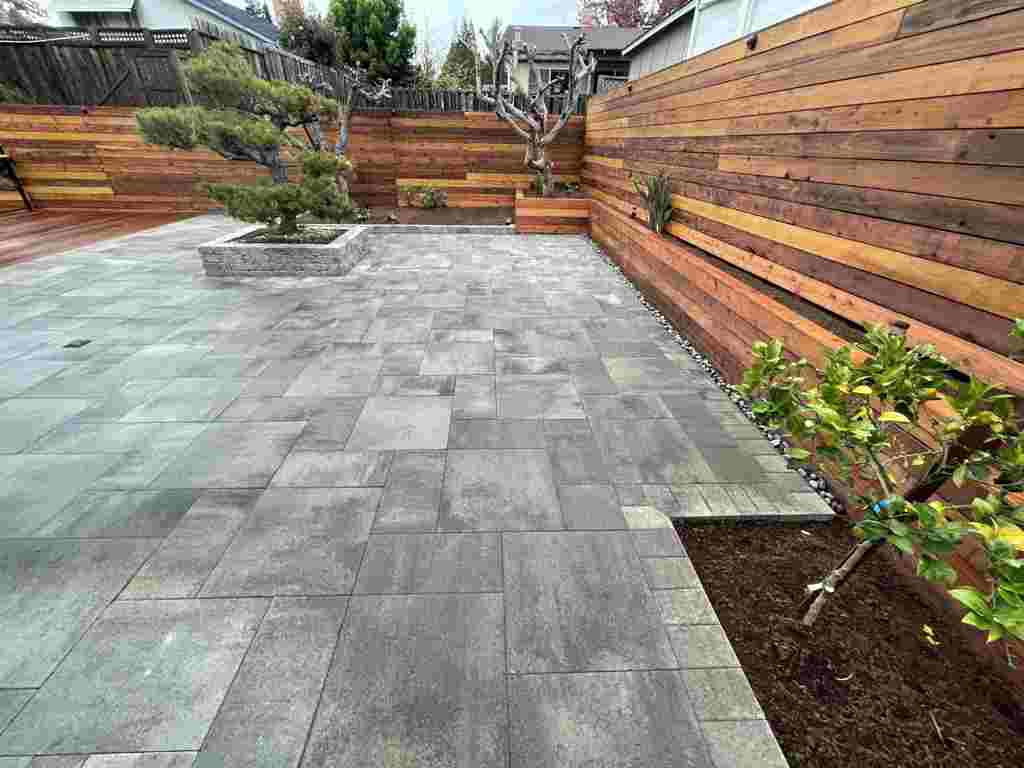
Dense, blue-grey basalt—commonly called bluestone—is harder and less porous than sandstone. It offers a contemporary, cool-toned aesthetic that complements modern architecture. Best for contemporary homes, pool surrounds, and coastal properties where a darker, sleeker finish is desired.
Option 23: Granite Block Walls
Cost: 1,200–1,200–1,800+ per linear metre
Lifespan: Effectively unlimited
Granite is one of the hardest natural stones available, available in speckled greys, pinks, and whites. It is extremely durable and resistant to weathering. However, it is difficult to cut and shape, driving up installation costs. Best for high-end feature retaining, where longevity and uniqueness justify the premium.
Option 24: Quartzite Walls
Cost: 1,300–1,300–2,000+ per linear metre
Lifespan: Effectively unlimited
Metamorphic quartzite offers striking colour variations (whites, golds, purples, greens) and exceptional hardness. It is highly resistant to chemical weathering and acid rain. A truly premium option for architectural statement walls—rare in Sydney residential applications due to cost and limited local supply.
Section 6: Gabion and Modular Wall Systems (Options 25–27)
Modern retaining solutions offer design flexibility, excellent drainage, and distinctive aesthetics. These options are growing in popularity for 2026.
Option 25: Standard Gabion Baskets (Filled with Local Stone)
Cost: 350–350–800 per linear metre
Lifespan: 50 – 100+ years
Galvanised steel wire cages filled with stone, typically local sandstone, blue metal, or recycled concrete. Gabion walls drain freely through the stone fill, eliminating hydrostatic pressure issues. They have a wide footprint (requiring space) and a distinctive industrial/naturalistic appearance. Best for contemporary landscapes, eco-friendly projects, and walls requiring excellent drainage.
Option 26: Recycled Material Gabion
Cost: 300–300–700 per linear metre
Lifespan: 50+ years
Gabion baskets filled with recycled materials, crushed concrete, brick rubble, recycled glass, or even urbanite (broken concrete from site demolition). This is the most environmentally sustainable retaining option and can be the most economical if free fill is available on site. Best for eco-conscious homeowners and projects with existing demolition materials.
Option 27: Modular Concrete Block Systems (Interlocking)
Cost: 500–500–900 per linear metre
Lifespan: 50+ years
Proprietary interlocking concrete block systems (such as Adbri Masonry’s Keystone or similar) are designed for gravity retaining without mortar or reinforcement for moderate heights. Blocks are dry-stacked and rely on their own mass and interlocking geometry. These systems are faster to install than traditional block walls, but are less common in Sydney. Best for mid-height walls (1–1.5 metres) where speed of construction is a priority.
Section 7: Beyond Materials—The Hidden Costs That Shape Your Final Quote
The material cost is only part of your retaining wall investment. Several site-specific factors can shift the final quote by 30–50% or more.
Wall Height (The Primary Cost Driver)
A wall at 400mm requires minimal engineering and basic footings. A wall at 1.2 metres needs deeper posts, drainage provisions, and often an engineer’s design. Every additional 200mm of height adds structural complexity and cost. A 1.5m wall does not cost twice as much as a 750mm wall—it can cost 2.5 to 3 times more.
Excavation and Spoil Removal
Excavating for footings and benching the slope behind the wall adds 50–200 per linear metre, depending on soil type and access. Removing and disposing of excavated material is an additional cost.
Drainage Systems
Every retaining wall requires drainage. A basic ag-pipe and gravel drainage system is included in most professional quotes. However, if your site has a high water table or poor natural drainage, additional stormwater management may be required, adding 30–80 per linear metre. Failure to provide proper drainage is the most common cause of retaining wall failure in Sydney.
Engineering Certification
Walls over 600mm in height generally require engineering certification in NSW. For walls 600mm–1.5m, engineering adds 500–1,500. For walls over 1.5m, full structural engineering is mandatory and may cost 1,500–3,000+.
See our retaining wall installation pricing
Council Approvals (DA / CDC)
Under 600mm: Generally exempt. 600mm–900mm: May qualify for a Complying Development Certificate (CDC) through a private certifier. 900mm–1.5m: Almost always requires engineering and CDC or DA. Over 1.5m: Full Development Application required with council—allow 8–16 weeks and 2,000–5,000 in fees .
Site Access
Properties with narrow side access (common in Sydney’s Inner West and Eastern Suburbs) require hand-digging and manual material handling, increasing labour costs by 30–50% compared to open blocks in Western Sydney or the Hills District.
Section 8: Decision Framework—Which Material Is Right for Your Sydney Home?
Use this decision matrix to narrow down your options based on your specific priorities.
| Priority | Recommended Materials | Cost Range | Lifespan |
|---|---|---|---|
| Lowest upfront cost | Treated pine sleepers | 250–450 / m | 15 – 25 years |
| Best value for longevity | Concrete sleepers or rendered block | 500–800 / m | 40 – 60 years |
| Heritage / character homes | Hand-cut sandstone | 700–1,200 / m | Unlimited |
| Contemporary / modern | Textured concrete or gabion | 500–900 / m | 50+ years |
| Tall walls (1.5m – 2m) | Engineered concrete block or poured concrete | 1,200–2,000+ / m | 50+ years |
| Eco-friendly / sustainable | Recycled timber or gabion | 300–700 / m | 20 – 100+ years |
| Poor drainage / wet sites | Gabion or dry-stacked stone | 350–1,400 / m | 50+ years |
| Maximum property value | Dimensional sandstone | 1,200–1,800+ / m | Unlimited |
Key questions to ask yourself :
- How tall does the wall need to be? (Under 600mm, 600mm–1m, 1m–1.5m, or over 1.5m?)
- What aesthetic suits your home? (Heritage, contemporary, native, or modern family?)
- What is your budget? (Economy, mid-range, or premium?)
- How long do you need the wall to last? (15–20 years acceptable, or 50+ years required?)
- What are the site conditions? (Soil type, drainage, access, slope gradient?)
Section 9: Why Choose Sydney Landscaping Pty Ltd for Your Retaining Wall?
At Sydney Landscaping Pty Ltd, we bring over a decade of licensed, local experience to every retaining wall project. Our approach is simple: understand your site’s specific conditions first, then recommend materials and designs that will perform for decades.
What sets us apart:
- Licensed and Qualified: Our team holds NSW Fair Trading licensing for structural landscaping, ensuring your wall meets all regulatory requirements.
- Sydney-Specific Expertise: We have worked extensively across Sydney—from the clay soils of the Hills District to the sandstone of the Eastern Suburbs and the drainage challenges of the Northern Beaches. We know what fails and what lasts.
- Integrated Design: Retaining walls are rarely standalone features. We design them together with paving, drainage, planting, and level changes so the finished landscape feels coherent.
- Smart Drainage Integration: Beyond just holding back soil, we incorporate hidden aggline drains, weep holes, and permeable gravel backfills into every wall design, solving Sydney’s stormwater challenges proactively.
- Sustainable Practices: We use environmentally friendly materials and techniques wherever possible, including recycled fill, FSC-certified timber, and locally sourced stone.
- Fixed-Price Quotes: We provide detailed, itemised quotes that separate material costs from excavation, drainage, engineering, and approvals. No surprises.
See our retaining wall installation pricing
Conclusion
Choosing the right retaining wall material is a balancing act between upfront cost, desired lifespan, aesthetic preferences, and site-specific conditions. Sydney’s unique geology, weather patterns, and regulatory environment demand professional attention to detail.
For low garden walls under 600mm where budget is the priority, treated timber sleepers remain a cost-effective choice. For the majority of Sydney homes needing walls between 600mm and 1.5 metres, concrete sleepers or rendered Besser blocks offer the best balance of strength, lifespan, and value. For heritage homes and premium properties where appearance and property value are paramount, hand-cut Sydney sandstone remains the gold standard.
Whatever your needs, Sydney Landscaping Pty Ltd is here to help you navigate the options, navigate council approvals, and build a retaining wall that will stand the test of time.
Contact Sydney Landscaping Pty Ltd today for a site assessment and fixed-price quote.
*Disclaimer: All prices and estimates are current as of 2026 and are provided as general guidance only. Final costs depend on site-specific conditions, material availability, and market fluctuations. Always obtain a detailed, site-specific quote before commencing work. Contact us today to book your consultation
Frequently Asked Questions
Here are some common questions we receive about retaining walls in 2026.
Conclusion
Investing in a retaining wall is an investment in your property’s value and safety. While the Retaining Wall Cost in New South Wales can seem significant, a well-built wall with proper drainage will provide decades of reliable service. By understanding the factors outlined in this retaining wall cost guide for New South Wales, you are now equipped to have informed conversations with potential contractors.
For a detailed, fixed-price quote tailored to your specific site, contact Sydney Landscaping Pty Ltd today. We serve clients across the greater Sydney metropolitan area.