
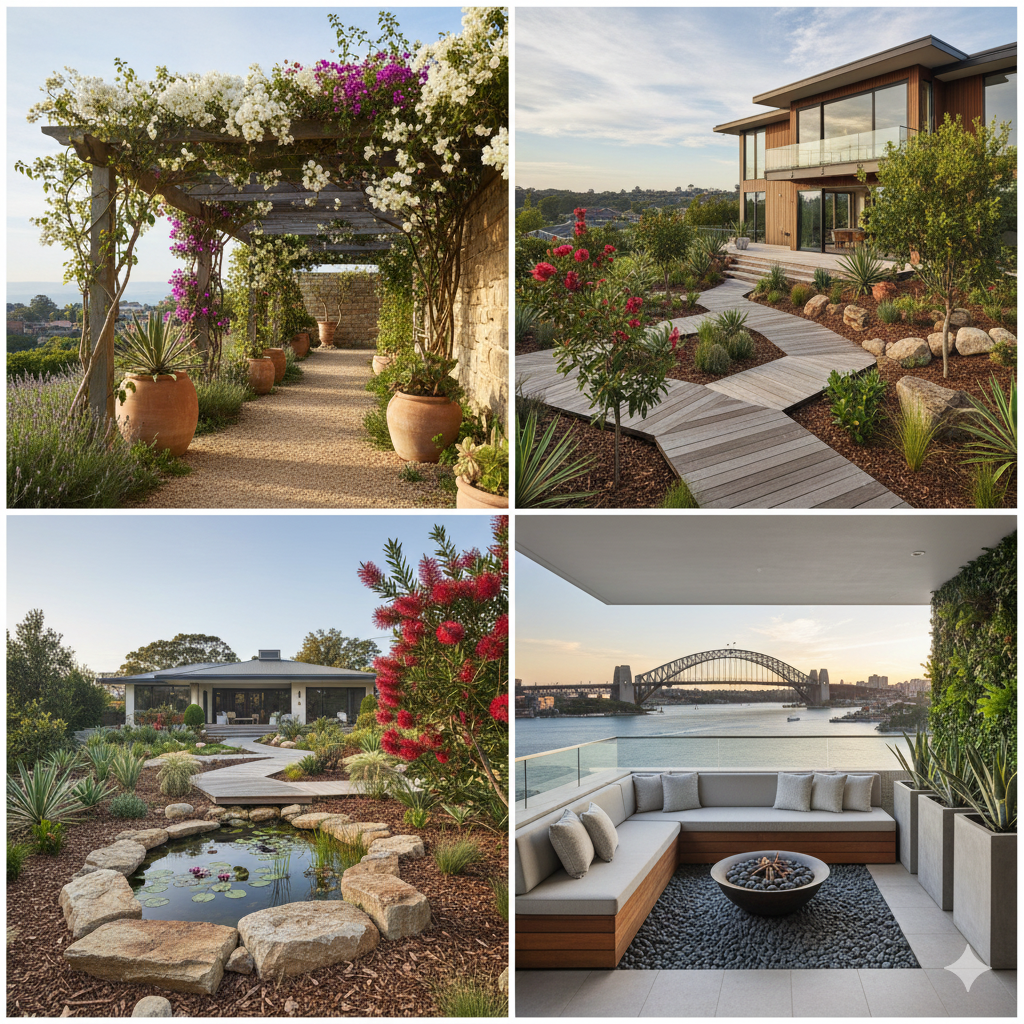
True Sydney climate landscaping works with the environment to solve problems creatively. For sun-baked north-facing aspects, build a shaded pergola clad with deciduous vines, offering summer shade and winter sun. In fire-prone areas, create ‘green zones’ close to the home with low-flammability plants like succulents and deciduous trees. For erosion control on slopes, use deep-rooted native grasses and creeping groundcovers. Embrace the coastal vibe in beachside suburbs with hardy, salt-tolerant species like Coastal Rosemary and Pig Face. The goal is to see each climatic challenge as a design opportunity, resulting in a garden that is uniquely suited to its place.
Sydney Climate Landscaping Ideas
Sydney’s climate is a dynamic and generous gift to gardeners, but it comes with its own detailed set of instructions. Characterised by warm, humid summers, mild but sometimes surprisingly crisp winters, and periods of intense rainfall followed by brilliant, drying sun, it demands a landscape that can dance gracefully between these extremes. The key to success lies not in fighting the elements with constant watering, pruning, and chemical intervention, but in embracing them with intelligent design, resilient plant choices, and a deep respect for natural rhythms. From the salty ocean breezes of the coast to the drier, more extreme temperatures of the western suburbs, creating an outdoor space that is both breathtakingly beautiful and inherently sustainable is entirely within reach. This guide delves into the principles that will transform your patch into a true Sydney sanctuary.
Best Plants for Sydney Weather: Embracing Endemic Excellence
The golden rule for Sydney gardening is to choose plants that are partners in the local ecology. While exotic species have their place, native and endemic Australian species are the unsurpassed champions, having evolved over millennia to thrive in the local conditions with minimal intervention. Start with hardy structural plants like the iconic Lilly Pilly (Syzygium smithii) for dense, glossy hedging that provides privacy and fruit for birds, or the graceful, spider-flowered Grevillea, available in forms from groundcover to tree, for a year-round nectar buffet. For stunning, water-wise floral displays, consider the drought-tolerant Bottlebrush (Callistemon) with its fiery red brushes, or the architectural Kangaroo Paw (Anigozanthos) in hues of red, yellow, and green.
Don’t overlook the understorey. In shadier spots, native ferns like the Maidenhair or the robust Bird’s Nest Fern, combined with strappy Lomandra grasses, provide lush, cooling texture. For sandy coastal soils, embrace Saltbush (Atriplex), Pig Face (Carpobrotus glaucescens) for vibrant groundcover, and the hardy Coastal Rosemary (Westringia fruticosa). These plants don’t just survive; they flourish, dramatically reducing water needs, resisting local pests and diseases, and actively supporting the ecosystem of native birds, insects, and pollinators.
Low-Maintenance Gardening in Australia’s Climate: Working Smarter, Not Harder
A sustainable, low-maintenance garden is the ultimate goal for the modern Sydney household, freeing up time to enjoy the outdoors rather than labour in it. The foundation of this is water-smart design. Install a drip-irrigation system or soaker hoses connected to a rainwater tank to efficiently deliver moisture directly to roots, making the most of captured summer storms. The choice of mulch is critical; apply generous, 7-10cm layers of organic mulch like woodchip or sugar cane to retain soil moisture, suppress weeds, regulate root temperature, and slowly improve soil fertility as it breaks down.
Sydney hardscaping is your steadfast ally. Incorporate permeable paving, gravel pathways, and decorative stone or pebble features to reduce thirsty lawn areas and create year-round structure with zero watering needs. By grouping plants with similar water, sun, and soil requirements—a practice called hydrozoning—you streamline care, prevent over or under-watering, and conserve vital resources effortlessly. Finally, adopt a “right plant, right place” philosophy. A sun-loving Banksia will struggle and require coddling in a shady corner, becoming a high-maintenance burden. When placed correctly, it becomes a resilient, zero-fuss feature.

Sub Tropical Garden Design in Sydney: Engineering Lushness
While Sydney is not fully tropical, its long, humid summer months allow you to brilliantly capture that lush, layered, sub-tropical aesthetic. The secret lies in strategic vertical layering to mimic a rainforest edge. Start by creating a canopy with taller, broad-leaf plants like the native Cabbage Tree Palm (Livistona australis) or the exotic but well-suited Frangipani for dappled shade and architectural form.
Beneath this, introduce the drama of the mid-level with plants celebrated for their bold foliage—think Bird of Paradise (Strelitzia reginae), the sculptural Philodendron ‘Xanadu’, or the dramatic, paddle-shaped leaves of the Elephant’s Ear (Alocasia). For texture and movement, incorporate clumping bamboos (choose non-invasive clumping varieties like Bambusa or Fargesia) or large ferns.
Thriving in the Sun and Rain: The Ultimate Guide to Sydney Landscaping
Sydney Landscaping, at ground level, create a deep green carpet with mass plantings of Liriope, Aspidistra (Cast Iron Plant), or the native Kidney Weed (Dichondra repens). The colour palette should be a rich tapestry of greens, with vibrant splashes provided by flowering gingers, bromeliads in their rosette forms, or the fiery red of Clivia miniata in shadier spots. This dense design not only looks luxuriously immersive but also creates its own cool, humid microclimate, reducing soil evaporation and protecting more delicate plants.
Sydney Climate Landscaping Ideas: Creative Solutions for Local Challenges
True Sydney climate landscaping is about proactive problem-solving, using the environment itself to create beautiful and functional outcomes. For sun-baked north and west-facing aspects, build a shaded pergola clad with deciduous vines like a vigorous Wisteria or a prolific Grapevine, offering summer shade and allowing precious winter sun to penetrate. In fire-prone areas on the city’s fringes, create defensible ‘green zones’ close to the home using low-flammability plants like succulents, agapanthus, and deciduous trees, and maintain a strict regime of clearing dry leaf litter.
For erosion control on slopes, use a matrix of deep-rooted native grasses like Poa and Weeping Grass (Microlaena stipoides) combined with creeping groundcovers like Myoporum or Hardenbergia. Embrace the coastal vibe in beachside suburbs with hardy, salt- and wind-tolerant species in naturalistic, sculpted layouts that bend with the sea breeze. Furthermore, consider creating a dedicated “rain garden” or swale in low-lying areas that collect runoff. Plant these depressions with water-loving species like Sedges (Carex) and River Mint (Mentha australis) to filter water, reduce localised flooding, and create a biodiverse habitat. This approach sees each climatic challenge not as a setback, but as a unique design opportunity, resulting in a garden that is profoundly and poetically suited to its place.
Creating a Resilient and Enjoyable Outdoor Space: The Living Room Beyond the Walls
The final, most rewarding step is seamlessly integrating your climate-smart garden into your daily life. Think beyond planting beds and create defined, functional outdoor rooms—a paved dining area under a deciduous pergola for summer lunches, a gravel-lined fire pit zone with sturdy seating for cool winter nights, or a quiet green nook with a bench surrounded by fragrant herbs and Lavender for morning coffee. Ensure good airflow through strategic planting to manage summer humidity and deter fungal issues.
Material choices are paramount. Select outdoor furniture and structures made from durable, sustainably harvested hardwoods (like Spotted Gum), powder-coated aluminium, or quality synthetic rattan that can withstand Sydney’s potent UV rays and, where applicable, salt air. With the heavy lifting of survival handled by your thoughtful plant selection and intelligent design, your garden transforms from a high-need project into a true extension of your home: a resilient, vibrant, and private oasis. It becomes a space that delivers deep joy and constant interest in every season, from the brilliant, buzzing mornings of summer to the crisp, clear, and flower-filled days of a Sydney winter.