
When securing your property or creating a private outdoor oasis, your budget is often the primary concern. For homeowners across the country, finding the cheapest fencing option in Australia is a top priority.
The Straight Talk on the Cheapest Fencing Option in Australia
Let’s cut to the chase: fencing can be expensive. Whether you’re securing a new property, tidying up an old one, or just trying to keep the dog in, the cost can quickly add up. But if your primary goal is pure, unadulterated affordability, there is a clear winner.
So, what is the absolute cheapest fencing option in Australia?
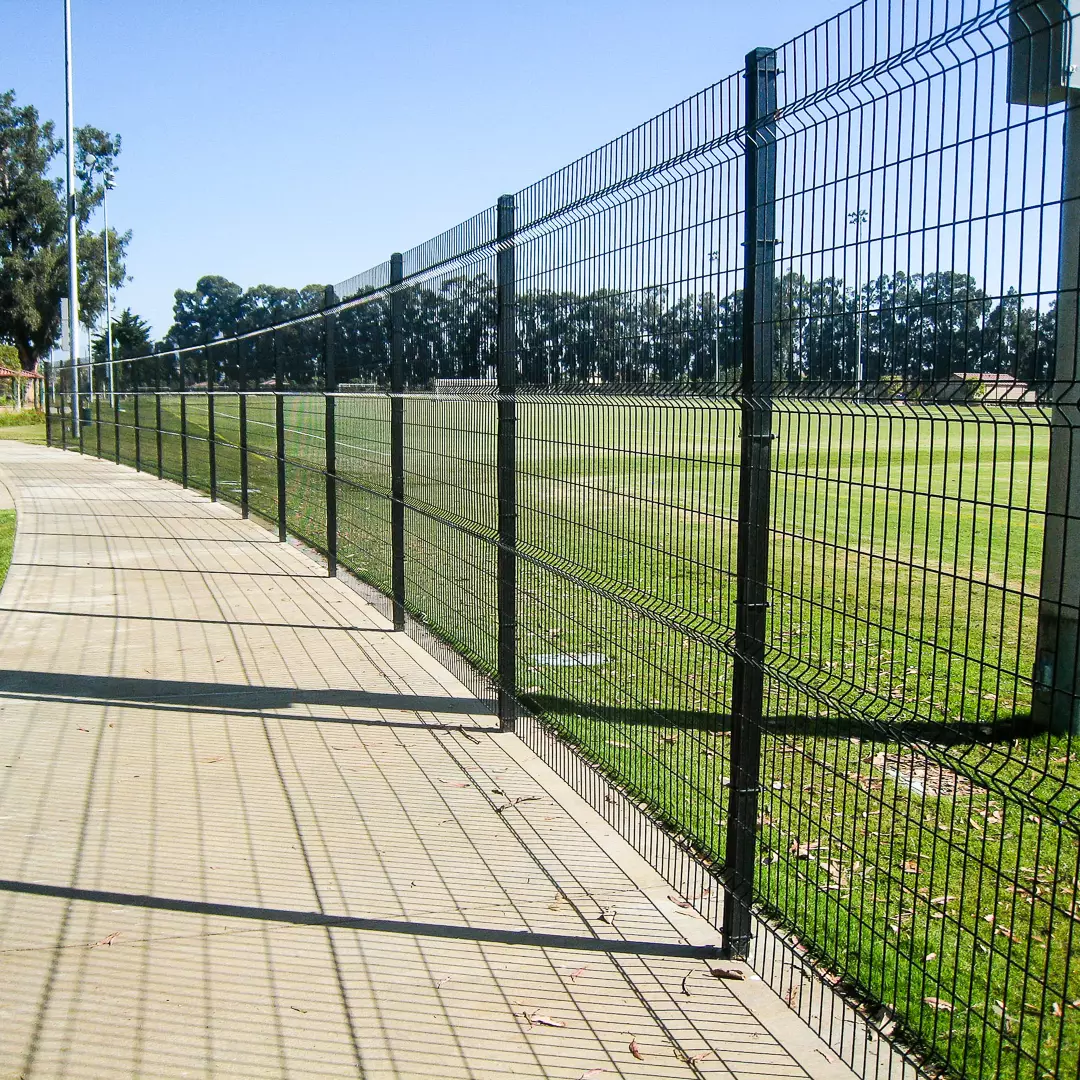
For most situations, the answer is Wire Mesh (often called ‘Chain Wire’ or ‘Chain Link’) with Steel Posts.
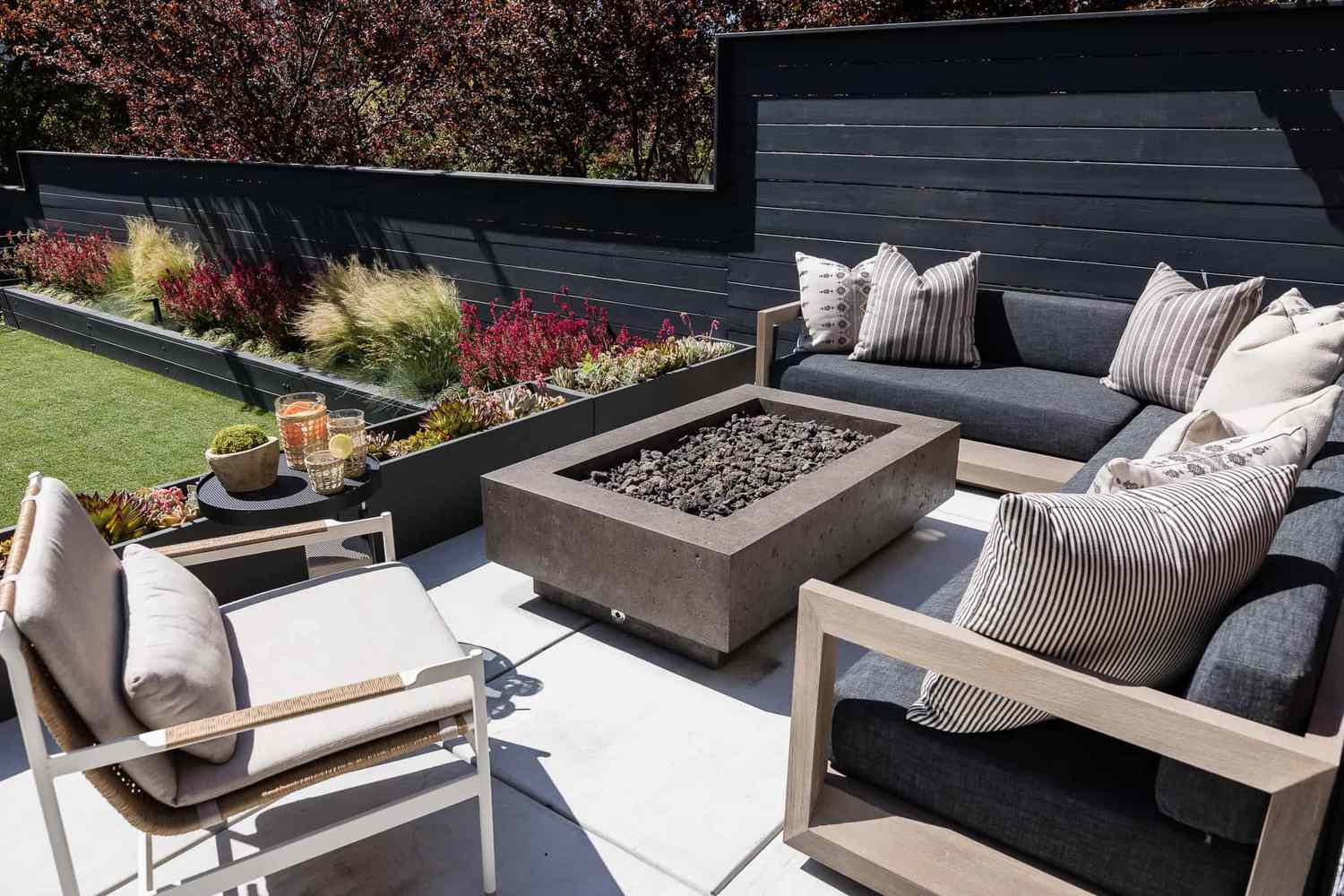
While options like treated pine or corrugated iron can be cheap for materials, they often require more labour or additional components. Wire mesh fencing provides the most metre-for-metre value for a fully installed, functional fence. Here’s a breakdown of why it’s the budget champion and a look at other low-cost contenders.
1. The Budget Champion: Wire Mesh & Steel Post Fencing
This is the workhorse of affordable fencing, commonly seen in rural, industrial, and backyard applications.
-
Why It’s the Cheapest: The materials are mass-produced and inexpensive. Galvanised steel posts and rolls of wire mesh are fundamentally cheaper than timber, Colorbond, or PVC panels. The installation is also relatively straightforward, saving on labour costs if you’re hiring a pro, or making it a viable DIY project.
-
The Look: Utilitarian and transparent. It’s not about privacy; it’s about defining a boundary and providing security.
-
Best For: Backyard chicken coops, dog runs, garden protection, large properties where cost-per-metre is critical, and situations where you don’t want to block light or views.
-
The Catch: It offers zero privacy and has a very “functional” aesthetic. It can also be susceptible to rust over many years if the galvanisation is damaged.
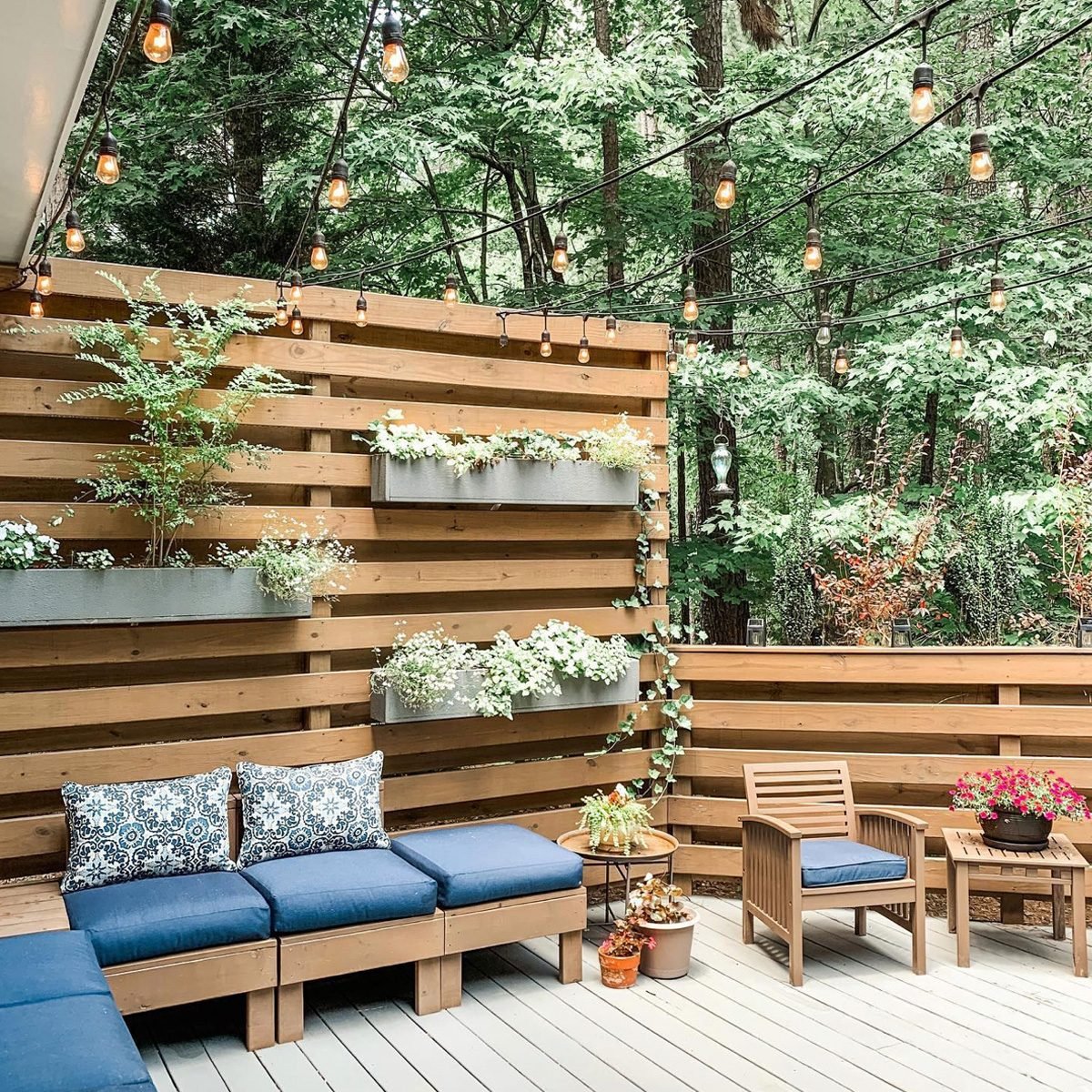
The Contender for the Cheapest Fencing Option in Australia
2. The Classic Contender: Treated Pine Slat Fences
A traditional pick that balances cost with a more finished look.
-
Why It’s Budget-Friendly: Treated pine is a readily available, sustainable, and low-cost timber. A basic, spaced-slat design (like a standard ‘paling fence) uses less timber than a solid wall, keeping material costs down.
-
The Look: A classic Australian backyard look. It can be left to weather to a silvery-grey or painted/stained to match your home.
-
Best For: Homeowners who want a more traditional, “suburban” fence that provides some visual screening without the cost of a solid panel.
-
The Catch: Requires ongoing maintenance. It will need re-staining or re-painting every few years to look its best and prolong its life against the elements.
3. The DIY Darling: Corrugated Iron/Steel Sheets
If you can source materials cleverly, this can be a very cheap and rugged option.
-
Why It Can Be Cheap: Second-hand or “off-cut” corrugated steel sheets can be found for a song at salvage yards or through demolition sites. When used with simple hardwood or treated pine posts, the total cost can be very low.
-
The Look: Rural, industrial, and rustic. It’s a solid, durable barrier that screams “Aussie shed.”
-
Best For: Rural properties, side alleys, or anyone going for a specific industrial/bush aesthetic. It provides full privacy and is highly durable.
-
The Catch: Sourcing enough second-hand sheets for a full fence can be challenging. New sheets will increase the cost significantly. It can also be noisy in the wind and gets very hot in the sun.
4. The Natural & Free (But Temporary) Option: Living Fences/Hedges
Your cost is essentially zero if you have patience and gardening skills.
-
Why It’s the Cheapest: The cost is in the plants (which can be cheap seedlings or cuttings) and your time. A hedge of fast-growing natives like Lillipillies or Bottlebrush is incredibly cost-effective long-term.
-
The Look: Lush, green, beautiful, and eco-friendly. It softens the landscape and provides habitat for birds and insects.
-
Best For: Garden enthusiasts who aren’t in a rush and want a beautiful, natural boundary.
-
The Catch: This is not an instant fence. It can take years to grow to an effective height and requires regular watering, feeding, and trimming to maintain.
NSW Council Rules & Boundary Fencing: Hidden Costs of Going Cheap
Before choosing the cheapest fencing option in Australia, Sydney homeowners must understand NSW fencing regulations under the Dividing Fences Act 1991. A seemingly low-cost wire mesh fence may violate local council aesthetic rules, especially in heritage conservation areas like The Rocks, Paddington, or parts of Parramatta. Many councils mandate minimum height standards (1.2m for front boundaries, 1.8m for rear) and restrict materials like plain chain wire on street-facing boundaries. Additionally, if your neighbour disagrees with your budget choice, you could end up in a NSW Civil and Administrative Tribunal (NCAT) dispute, potentially forced to upgrade at your own expense.
The cheapest way to build a fence legally? Always issue a Form 1 – Notice to Fence to your adjoining neighbour and secure a written agreement before installation. For shared driveways or battle-axe blocks, consider boundary cost sharing: you pay for a basic timber or wire fence, and the neighbour contributes 1,000 toward a Colorbond upgrade. This hybrid approach keeps your out-of-pocket low while maintaining street appeal and legal compliance.
Colorbond vs. Budget Materials: Long-Term Value Analysis
Many homeowners ask: “Is Colorbond fencing worth the extra cost compared to wire or pine?” The answer depends on your time horizon. A standard Colorbond steel fence (from 150 per metre installed) costs roughly double a wire mesh fence (70 per metre). However, Colorbond offers zero maintenance, a 20+ year warranty against corrosion, and 100% privacy benefits that wire mesh cannot match. For rental properties or short-term holdings, the cheapest fencing option in Australia (wire mesh) makes financial sense. But for your family home, a durable Colorbond fence adds resale value and eliminates recurring costs of painting, staining, or replacing rotten timber posts, saving 2,000 to 4,000over 15 years.
A clever, cheapest way to build a privacy fence is to mix materials: install Colorbond panels on visible boundaries (street-facing or neighbour sides) and cheaper wire mesh along rear bushland or utility areas. This zoned fencing strategy gives you the best of both worlds: curb appeal where it counts, budget savings where it doesn’t. For those set on timber, treated pine paling fences (around 110 per metre) sit in the middle: cheaper than Colorbond but require re-staining every 3–5 years. Always factor the 10-year total cost of ownership, not just the upfront quote, when comparing cheap fence options.
The Real Cost of a Cheap Fence in Sydney
When hunting for the cheapest fencing option in Australia, remember to factor in more than just the upfront price tag:
-
Durability: A wire fence might last 15-20 years, while a poorly maintained pine fence may need replacing in 10.
-
Maintenance: A timber fence costs you time and money every few years. A Colorbond fence (a more expensive initial option) costs you nothing in maintenance.
-
DIY vs. Pro: Your biggest saving is always in labour. If you’re handy, even a more complex fence becomes cheaper. If you’re not, a simple wire mesh fence will be the most affordable to have installed.
The Cheapest Way to Build a Privacy Fence
Transforming an inexpensive wire fence or building a private barrier from scratch on a budget is entirely possible. The cheapest way to build a privacy fence often involves a hybrid DIY approach.
If your question is strictly “what is the cheapest fencing option in Australia for a functional, immediate boundary?” the answer is overwhelmingly wire mesh and steel posts.
However, the “best” cheap fence for you depends on your priorities: Is it instant privacy? A specific aesthetic? Or is it purely the absolute lowest number on the initial quote?
Still unsure which budget-friendly option is right for your Sydney property? Contact Sydney Landscaping for a no-obligation chat. We can help you weigh the pros and cons and find the perfect fence that fits your needs and your budget.
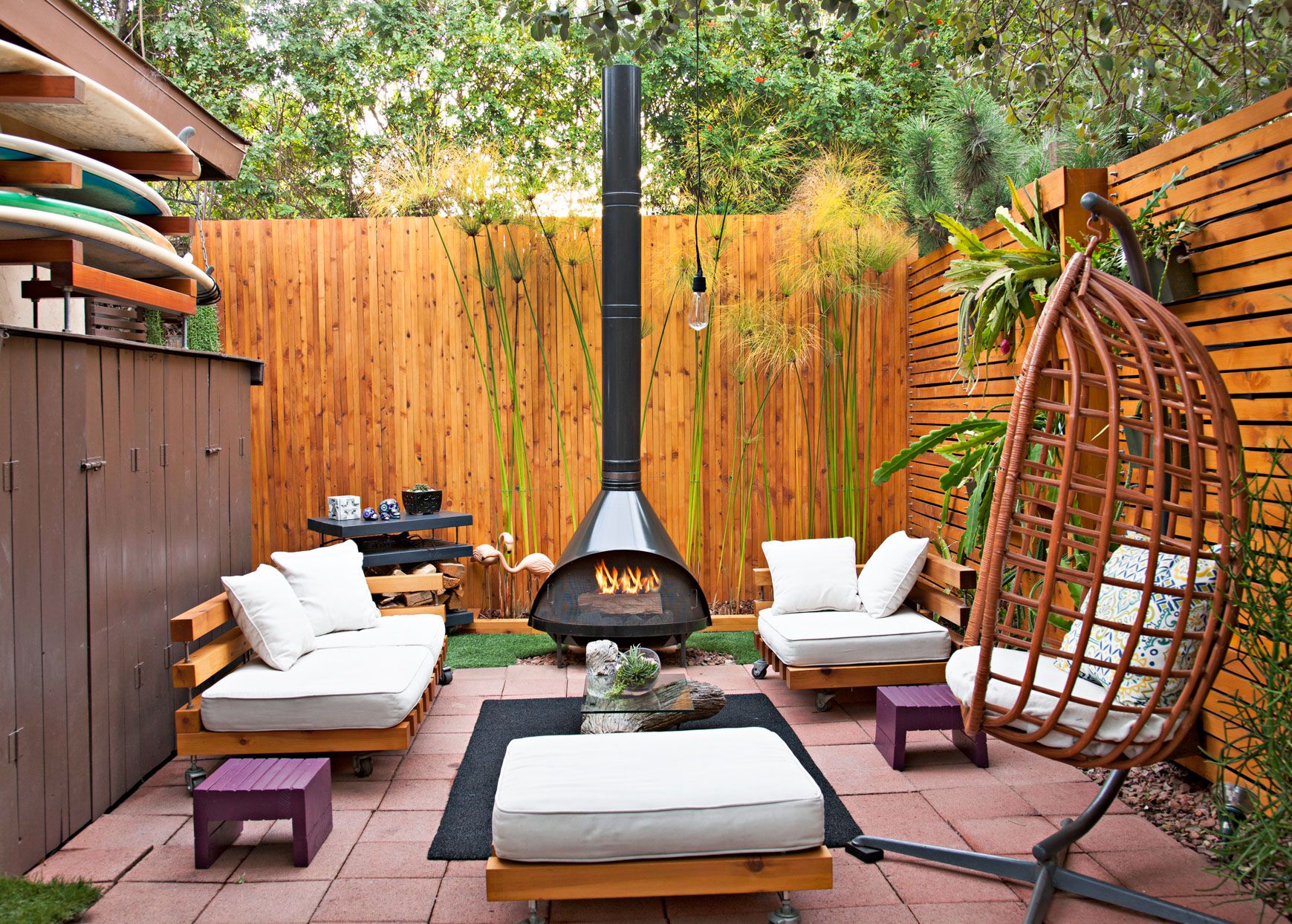
Inexpensive Privacy Fence Ideas Australia Homeowners Love
Beyond the standard lapped timber panel, there are creative and affordable Fence Ideas for Backyard Spaces that enhance privacy and style.
-
Bamboo Screening
-
Lattice and Creepers
-
Corrugated Iron
Fence Ideas for Backyard Spaces on a Budget
Your backyard fence doesn’t have to be a bland wall. Here’s how to add character without adding cost:
-
Paint it: A fresh coat of paint or stain is the most transformative and cost-effective update. Choose a colour that complements your home’s exterior.
-
Add Planter Boxes: Attach simple timber planter boxes to your fence posts and fill them with colourful native flowers or herbs. This adds depth and life to the boundary.
-
Create Patterns: If using timber, consider a simple design like a horizontal or chevron pattern instead of the standard vertical. It uses the same amount of material but creates a modern, custom look.
Mixed Material Fencing: Combining Wood, Metal, and Stone for a Unique Look
Elevate Your Boundary: The Art of Mixed Material Fencing
Tired of choosing between a classic timber look and a modern metal finish? You don’t have to. The most striking and personalised fences today are breaking the rules by blending materials. Mixed material fencing is the ultimate way to create a boundary that is not just a divider, but a defining feature of your home’s architecture.
By combining textures, you can achieve a unique look that boosts curb appeal, maximises functionality, and adds serious character to your Sydney property. Let’s explore some of the most compelling combinations.
Sydney mixed-material fencing
A mixed-material fence does more than just mark a boundary; it creates a dynamic architectural statement that enhances your home’s character. By thoughtfully combining textures, you can guide the eye and create a sense of movement and depth in your landscape. Imagine the journey of a viewer’s gaze: starting with the rugged, organic warmth of a timber panel, transitioning to a sleek metal frame that defines the structure, and culminating in a delicate metalwork screen that offers a teasing glimpse of the garden beyond. This layered approach transforms a simple barrier into a captivating feature that adds curb appeal and tells a visual story, blending the built environment with the natural one.
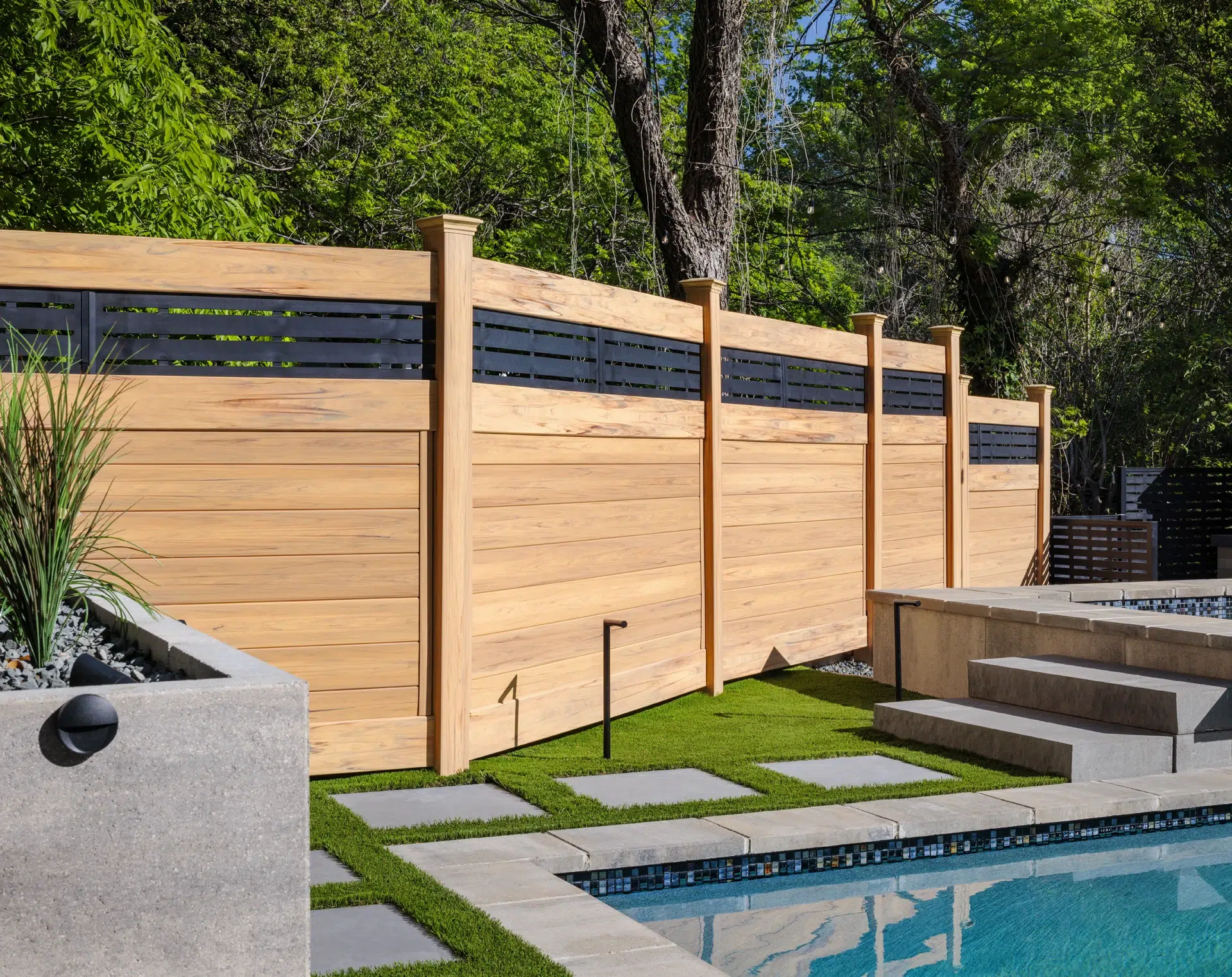
Beyond the visual impact, the strategic combination of materials is a masterclass in practical problem-solving, allowing you to leverage the inherent strengths of each element. You can position durable, weather-resistant metal panels or posts at the base where moisture and soil contact cause the most decay, while using the natural beauty of wood for the upper sections where it remains more protected. This hybrid approach not only extends the lifespan of the entire structure but can also target specific functional needs, using solid materials for maximum privacy and security in one area, while incorporating laser-cut metal insets or horizontal wires elsewhere to filter wind, create playful shadow patterns, and support climbing plants.
The Appeal of Mixed Material Fencing
Mixed material fencing is about combining textures, colours, and materials to form a balanced, attractive design that complements your home. By blending materials like wood, metal, and stone, we can create fencing that not only marks property boundaries but also adds a dynamic, personalised element to your outdoor space. Here’s why mixed material fencing is increasingly popular:
- Versatility
- Durability
- Aesthetic Appeal
Key Materials for Mixed Material Fencing
1. The Modern Classic: Timber & Horizontal Metal Lines
This is the superstar of contemporary design, and for good reason.
-
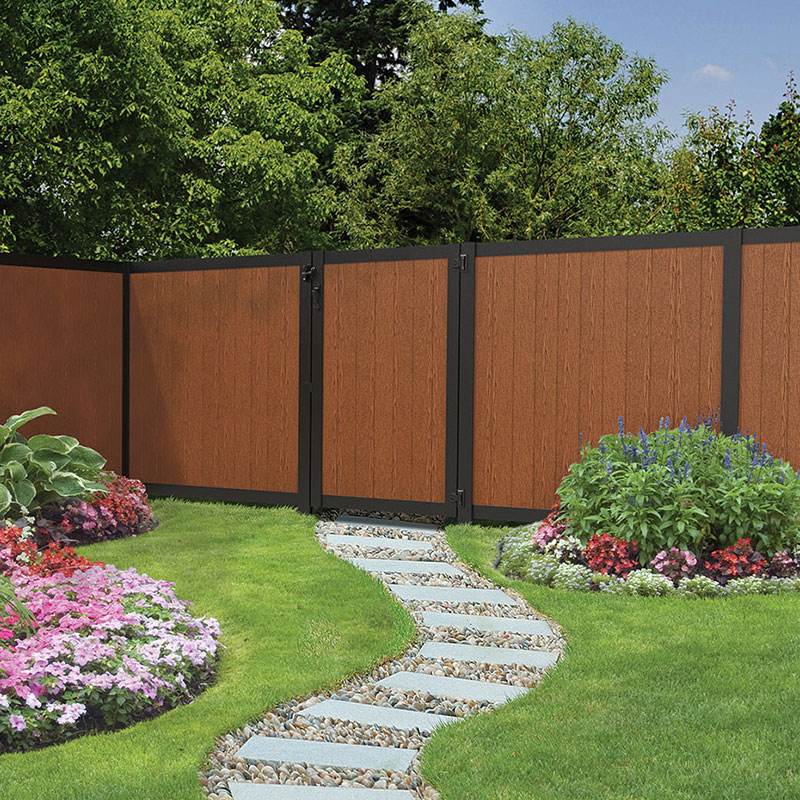
The Look: Sleek, sharp, and architectural. Imagine sturdy hardwood posts and a lower section of timber sleepers, topped with a band of horizontal black steel cables or flat bar.
-
Why It Works: The warm, organic grain of the wood is perfectly balanced by the cool, industrial precision of the metal. The horizontal lines make your space feel wider and more open.
-
Perfect For: Creating a semi-private screen that maintains light and airflow while defining the boundary with style. It’s a fantastic choice for a modern or mid-century home.

2. The Textured Screen: Aluminium Slats & Natural Stone
For a fence that feels both permanent and polished, this combination is unmatched.
-
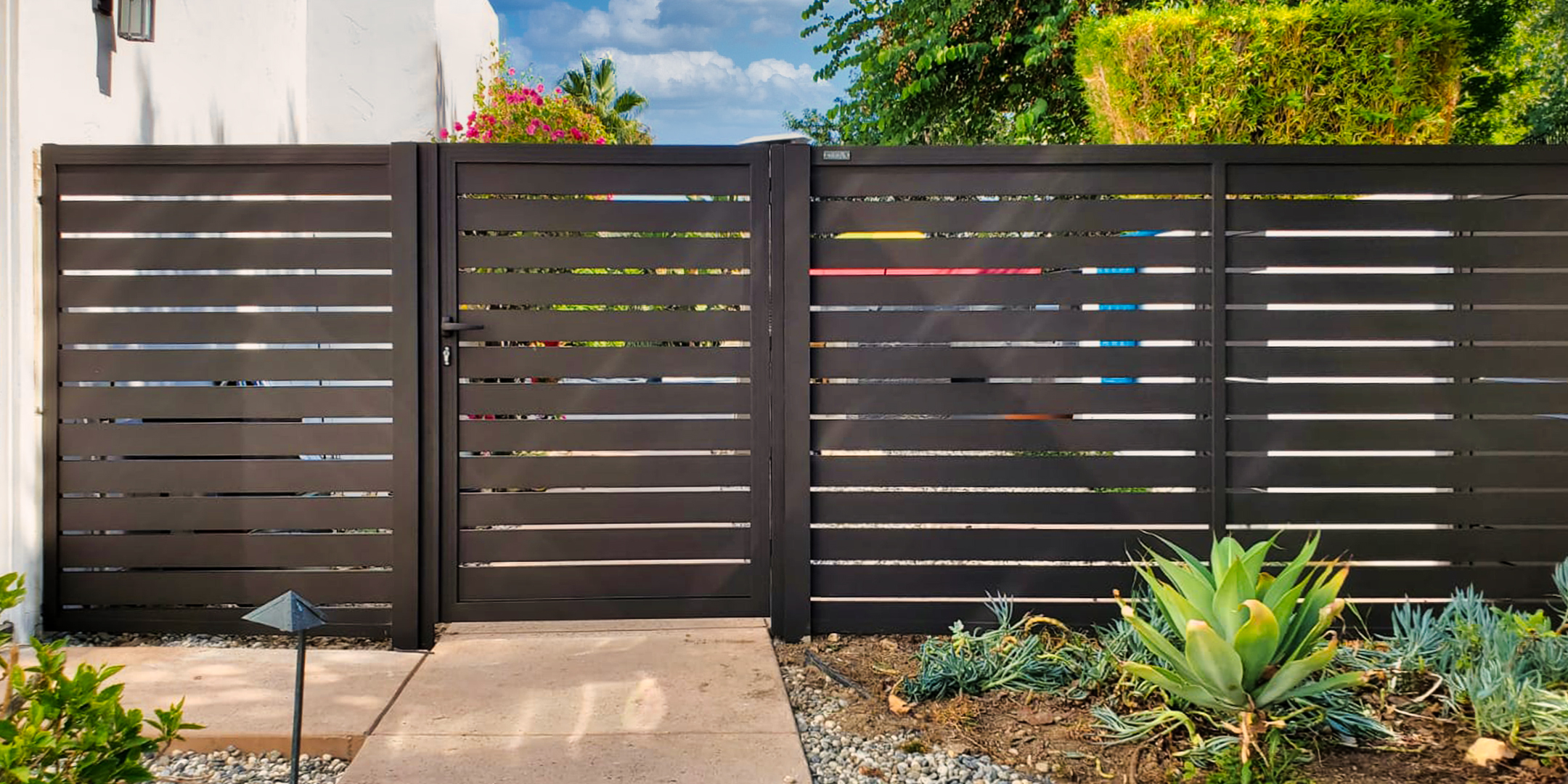
The Look: A solid base of local sandstone or rendered block, with the upper section featuring a series of vertical or horizontal aluminium slats.
-
Why It Works: The heavy, grounded feel of the stone base provides visual weight and durability, while the lightweight, often Colorbond-coated slats above add privacy without bulk. You can space the slats to control the level of seclusion and light filtration.
-
Perfect For: Adding depth and sophistication to a front entrance or creating a private, low-maintenance backyard oasis.
3. The Rustic Industrial: Reclaimed Timber & Gabion Cages
If your goal is to make a bold, textural statement, look no further.
-
The Look: The raw, rugged character of recycled railway sleepers is paired with the gritty, industrial feel of gabion baskets filled with stone or recycled brick.
-
Why It Works: This combination is all about raw texture. It’s eco-friendly, incredibly durable, and has an artistic, sculptural quality. The contrast between the solid wood and the aggregated stone is visually fascinating.
-
Perfect For: Gardeners and artists looking to create a fence that feels like a natural extension of the landscape. It works beautifully in bushland settings or for adding an “edge” to a modern design.
Benefits of Mixed Material Fencing
4. The Friendly Boundary: Picket & Wrought Iron
A fresh take on a timeless favourite that adds charm and durability.
-
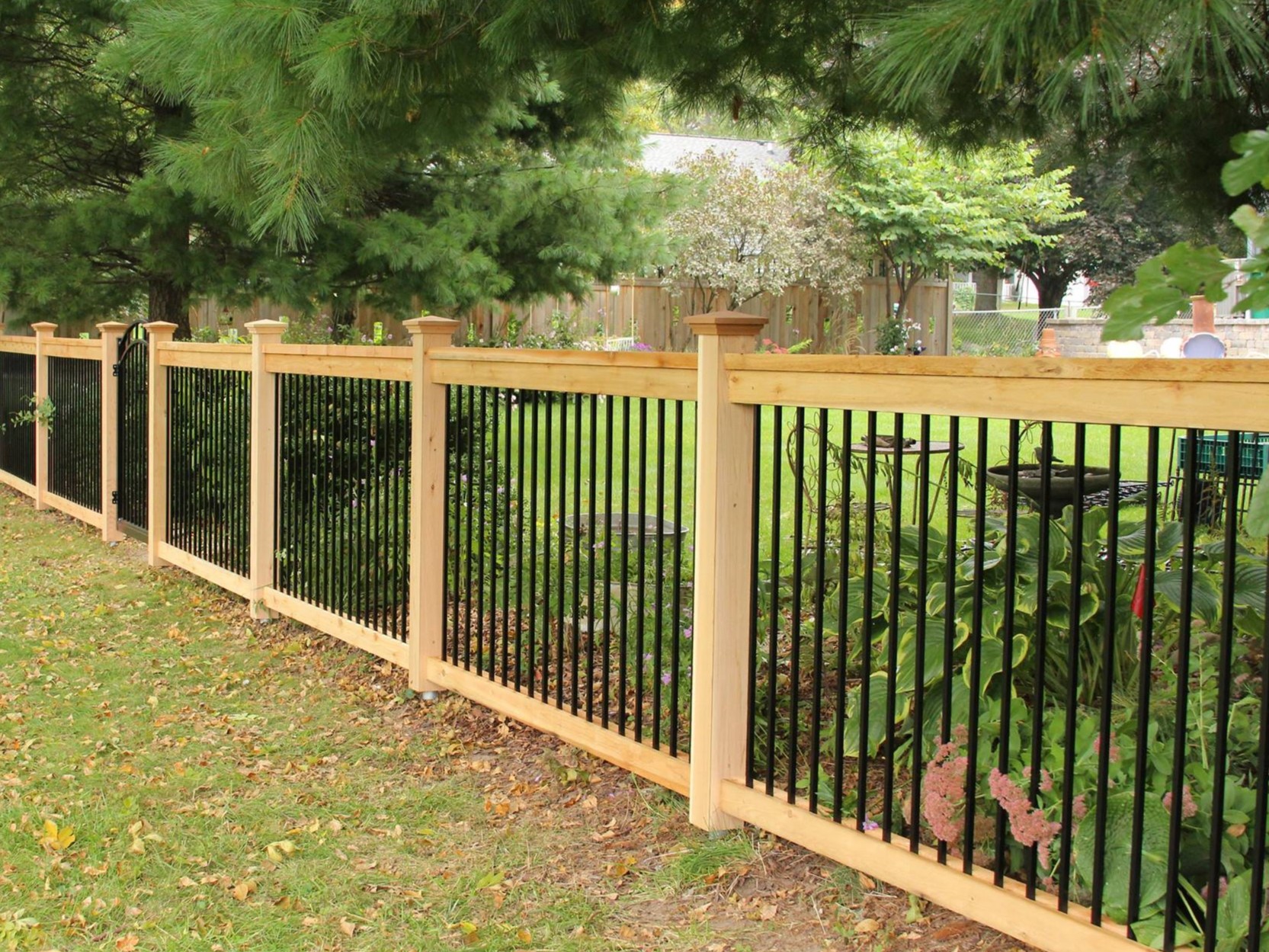
The Look: A classic white picket fence gets an upgrade with decorative wrought iron elements along the top or set within the panels.
-
Why It Works: It maintains the friendly, welcoming appeal of a traditional picket fence while the metalwork adds a layer of elegance, security, and unique design. The metal can be painted black for contrast or white for a more seamless look.
-
Perfect For: Heritage homes where you want to preserve charm while incorporating a unique twist, or for front yards where you want to show off your garden.
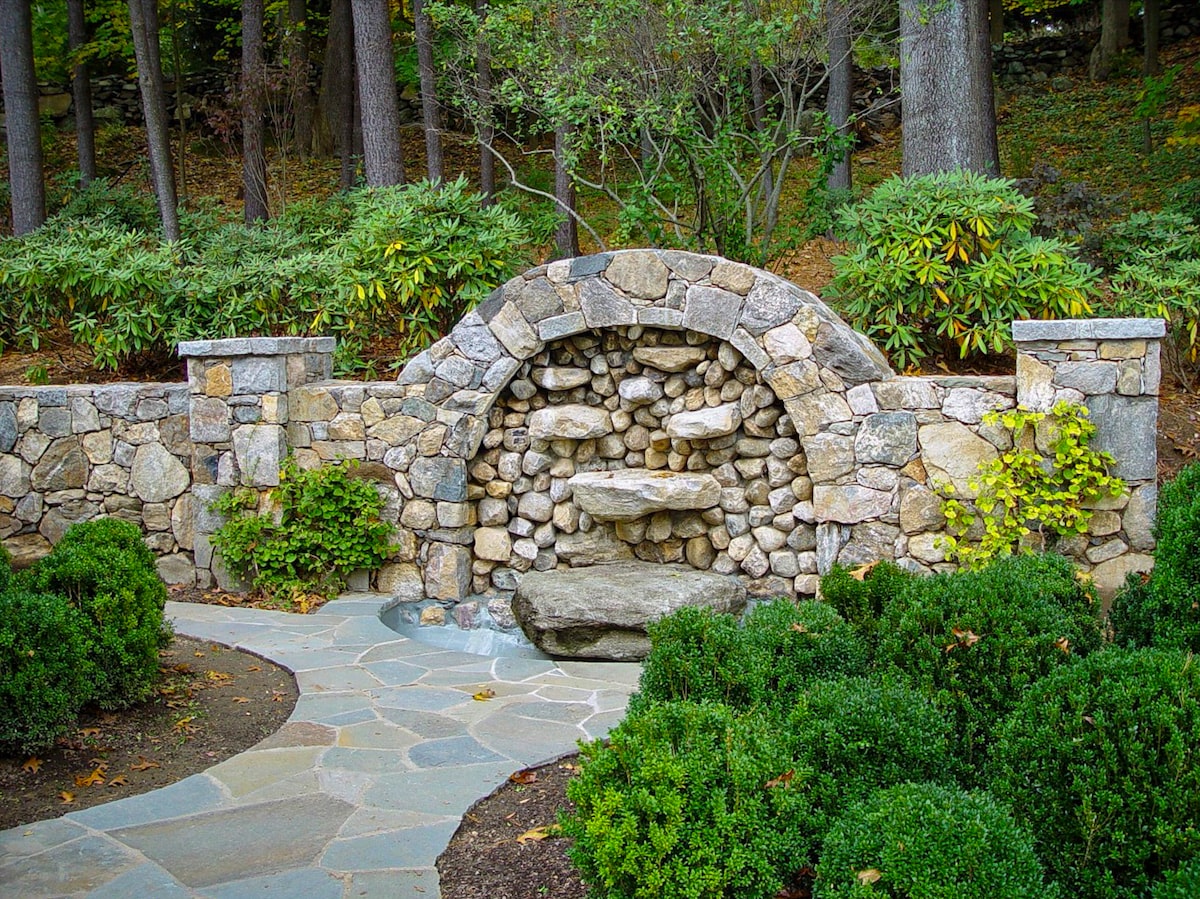
This combination balances the elegance of stone with the strength of metal. Stone pillars anchor the fence, creating visual weight, while metal fencing sections in between add security without blocking the view. This style works well for homes seeking a stately, refined look that enhances curb appeal.
Why Choose Mixed Material Fencing? The Benefits Beyond Beauty
This approach isn’t just about looks; it’s also incredibly smart.
-
Maximised Durability: Use a rot-resistant material like stone or metal for the base (where it’s most vulnerable to moisture and lawnmower damage) and a warmer material like timber for the upper sections.
-
Cost Effectiveness: You can use a more expensive, statement material (like custom metalwork) as an accent, while building the majority of the fence with a more budget-friendly option.
-
Functional Zoning: A solid stone base can act as a windbreak or sound barrier, while a more open metal or timber slat section above allows for light and breezes.
Your Guide to a Successful Mixed Material Fence
Blending materials is an art. To ensure your mixed material fencing project is a success, keep these tips in mind:
-
Anchor with a Unifying Element: Use a consistent colour palette. For example, painting your metal components and timber in the same Colorbond shade (like ‘Woodland Grey’ or ‘Surfmist’) can tie very different materials together seamlessly.
-
Consider the Architecture: Let your home’s style guide you. A timber and metal combo suits a modern home, while stone and wrought iron may better complement a traditional facade.
-
Professional Installation is Key: Joining different materials securely and aesthetically requires skill and an understanding of how materials expand and contract. A professional ensures it’s not only beautiful but built to last.
Ready to Redefine Your Boundary?
A mixed material fencing project is your opportunity to create a one-of-a-kind feature that reflects your personal style. It’s about thinking outside the box and building a fence that does more than just mark a line; it makes a statement.
Inspired to blend materials for your Sydney home? The team at Sydney Landscaping specialises in designing and building custom fences that are as unique as your property. Contact us for a consultation, and let’s create something extraordinary together.
At Sydney Landscaping, we pride ourselves on delivering custom, high-quality fencing solutions tailored to Sydney’s unique climate and diverse architectural styles. Our expert team works with you from design to installation, ensuring every detail matches your vision and adds value to your property. Whether you’re looking for a minimalist wood-and-metal fence or a statement-making combination of stone and metal, we have the expertise to bring your ideas to life.
Let us help you create a fence that not only secures your property but also elevates its style. Contact Sydney Landscaping today to discuss your mixed material fencing options and take the first step toward a unique, stunning outdoor space.