
Garden bed edging timber is one of the most versatile ways to define garden beds, warm, natural, and easy to customise. Here are some creative approaches to consider:
Transforming your outdoor space into a breathtaking haven is easier than you think. One versatile and timeless choice is using garden bed edging timber. Not only does timber edging define your garden beds beautifully, but it also adds warmth and natural charm to your landscape. Let’s explore some creative design ideas to elevate your garden’s aesthetics while maximising functionality.
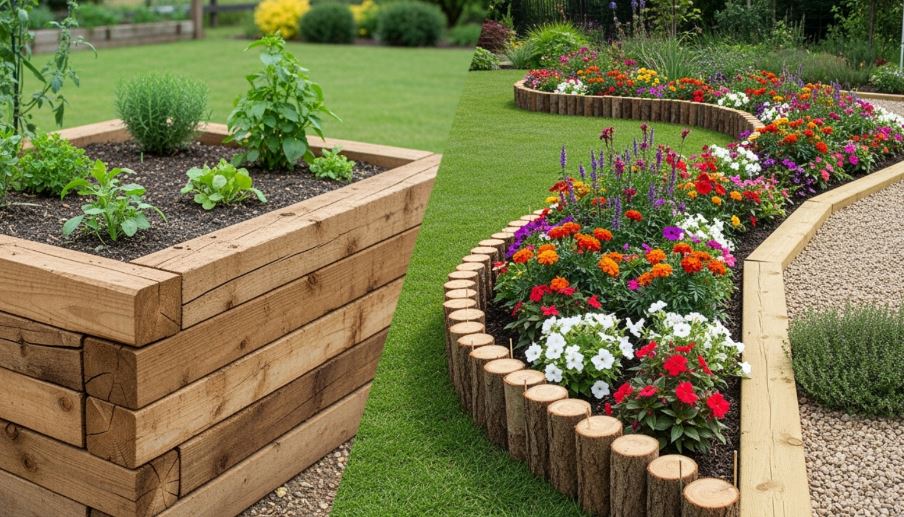
1. Classic Log Roll Edging
Half-round timber logs laid side by side create a rustic, cottage-garden border. It’s inexpensive, flexible for curved beds, and pairs beautifully with informal planting.
2. Raised Sleeper Beds:
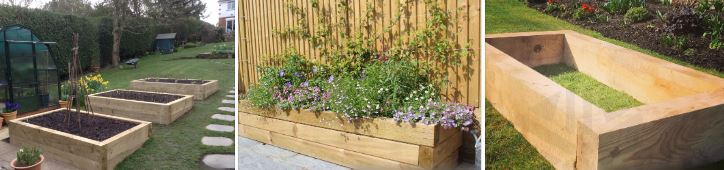
Stacking thick timber sleepers 2–3 rows high creates a bold, architectural raised bed, great for vegetable gardens or modern landscapes. Stain them dark for contrast against greenery, or leave natural for a Scandinavian feel.
3. Scalloped or Picket-Style Edging
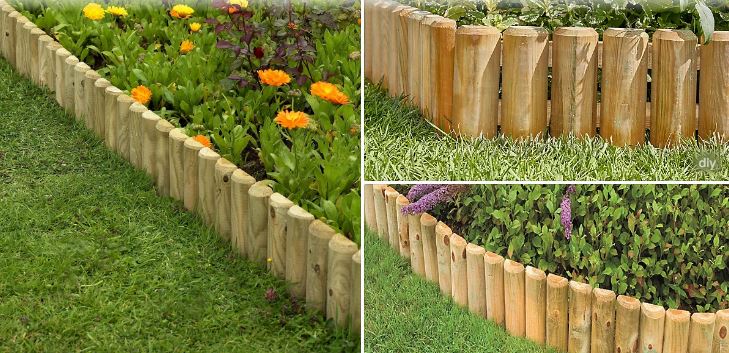
Cut short timber posts at alternating heights or angled tops for a playful, scalloped silhouette along pathways, a nice contrast to straight-edged lawns.
4. Vertical Log Border:
Setting short timber rounds vertically, like tightly packed posts, gives a woodland, textured edge that works well for curved or organic bed shapes and adds real dimension compared to flat edging.
5. Geometric Timber Frames
For a modern landscape, use squared timber (4x4s or 6x6s) to build clean rectangular or hexagonal raised planters, sharp lines that suit minimalist or contemporary gardens.
6. Stepped Terrace Edging
On sloped yards, timber edging can be layered in stepped tiers to terrace the landscape, turning a tricky grade into a striking multi-level garden feature.
A few finishing touches that elevate any of these:
- Contrast mulch (dark bark or gravel) against the timber to make the edge pop
- Weathering/staining charred (shou sugi ban) timber looks especially striking against greenery
- Mixed materials pair timber with a stone or metal cap rail for added durability and visual interest
- Corner detailing mitred corners look tidy and formal; overlapping log ends look rustic and relaxed
Want me to tailor these ideas to a specific style (modern, cottage, Japanese-inspired) or a particular yard layout you have in mind?
5 Tips for Garden Bed Edging Timber
1. Rustic Timber Borders for a Natural Look
Nothing says “classic garden” like a rustic timber border. Using untreated or reclaimed timber planks can give your garden an organic, natural feel. Perfect for cottage gardens or eco-friendly landscapes, this design blends seamlessly with plants and soil.
2. Raised Timber Garden Beds for Modern Appeal
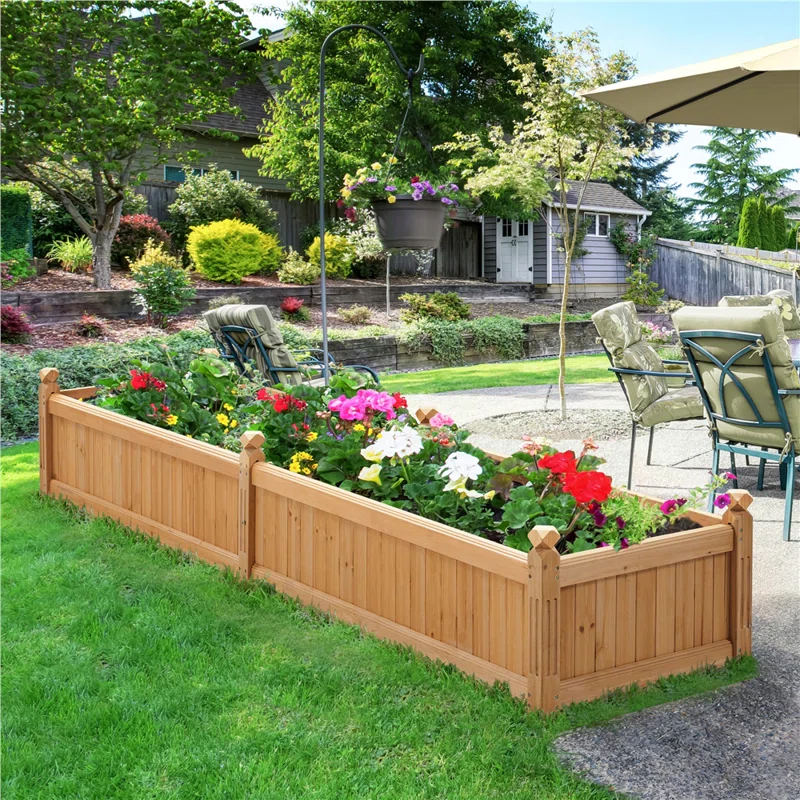
Timber isn’t just for flat edging, it’s perfect for creating raised garden beds. This option is ideal for growing vegetables, herbs, or flowers, offering better soil control and ease of gardening.
- Design Idea: Stagger the heights of your timber beds to add depth and dimension to your yard.
- Relative Keywords: “timber raised garden beds,” “modern garden bed edging timber.”
3. Curved Timber Edging for Flowing Landscapes
Straight lines are classic, but curves bring movement and elegance to your garden. Use flexible timber planks to create wavy or circular designs that guide the eye through your landscape.
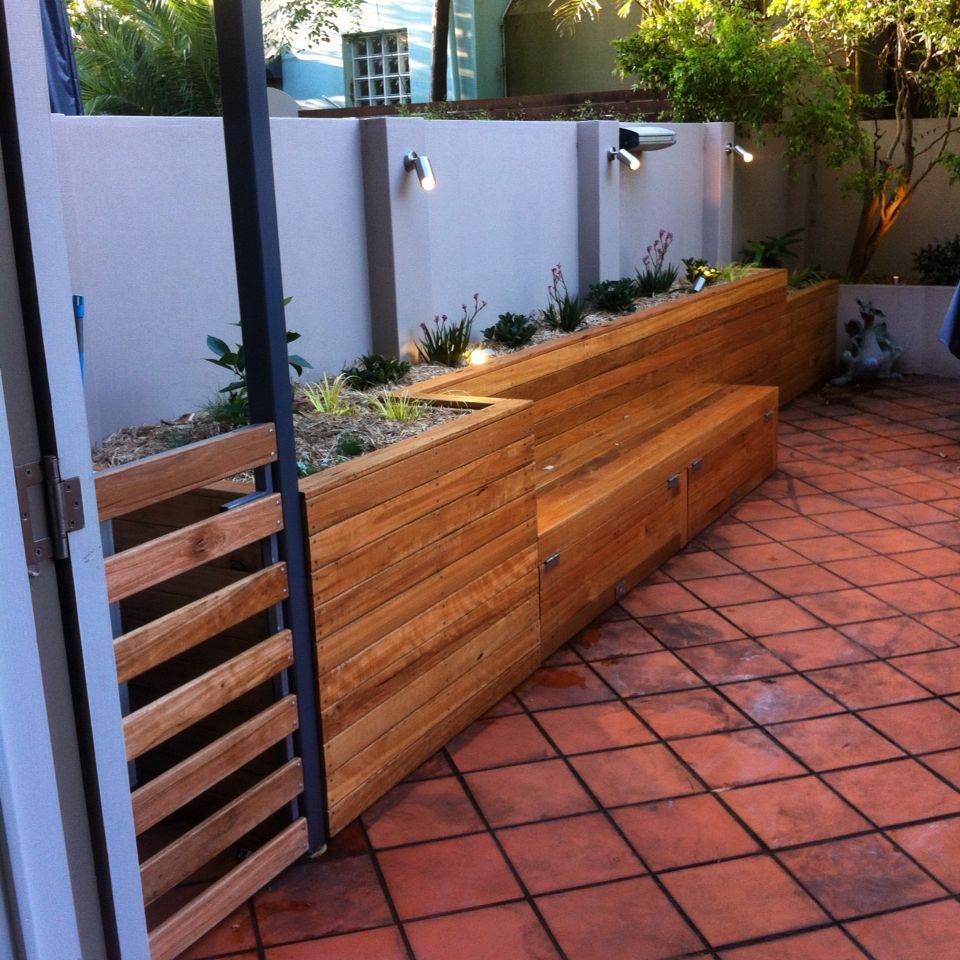
4. Layered Timber Edging for Depth and Texture
If you’re looking to add a dramatic effect, consider layered timber edging. By stacking timber at different heights, you can create a tiered look that adds texture and depth to your garden beds.
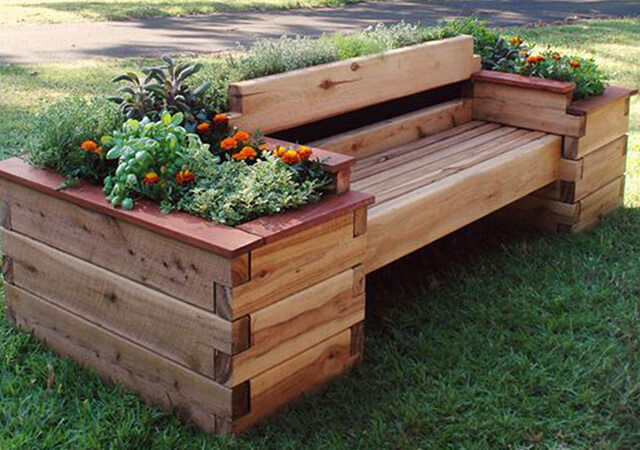
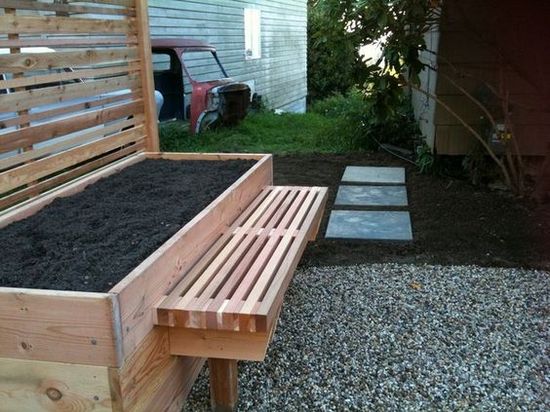
5. Timber Edging with Built-In Seating
For a multi-functional twist, design garden bed edging with integrated seating. This approach is not only practical but also invites you to spend more time in your garden.
Benefits of Using Garden Bed Edging Timber
Timber edging is more than just an aesthetic choice; it offers several advantages:
- Eco-Friendly Material – Timber is a renewable resource that aligns with sustainable gardening practices.
- Customisable Designs – From rustic to modern, timber adapts to various garden styles.
- Cost-Effective – Timber edging is affordable and readily available.
- Easy Installation – With basic tools, you can achieve professional-looking results.
- Long-Lasting Beauty – Treated timber can withstand weather elements, ensuring durability.
Maintenance Tips for Timber Edging
- Seal the Wood: Protect the timber from moisture and pests by using a weatherproof sealant.
- Regular Cleaning: Remove dirt and debris to keep the timber looking fresh.
- Check for Rot: Periodically inspect the wood for signs of decay and replace damaged sections as needed.
Final Thoughts
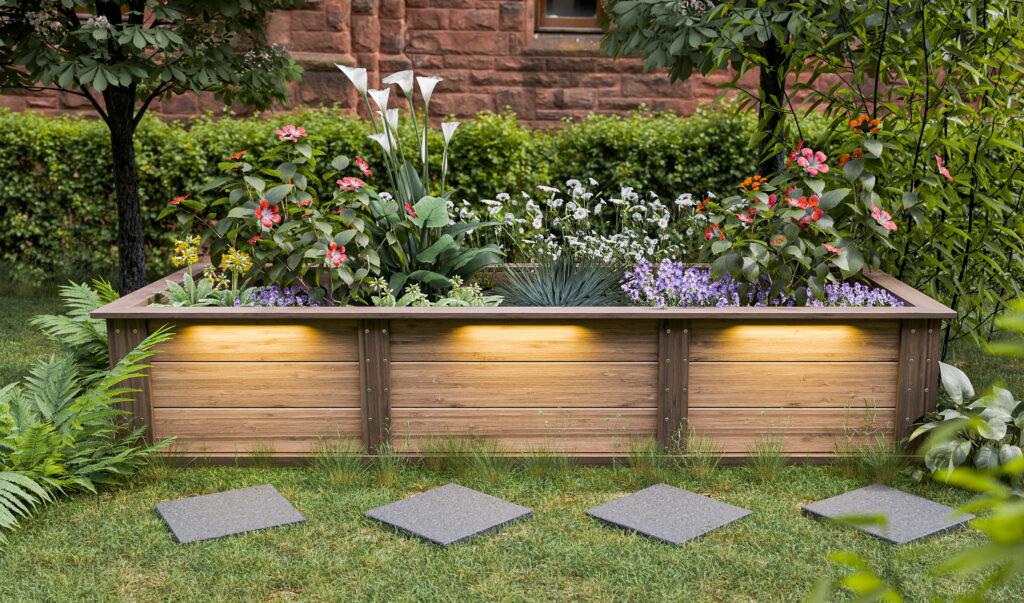
Incorporating garden bed edging timber into your landscape design is a fantastic way to elevate its aesthetic appeal and functionality. Whether you opt for rustic borders, raised beds, or multi-functional designs, timber edging provides endless possibilities for creativity.
Ready to transform your garden? Start designing with timber today and enjoy a stunning, eco-friendly landscape that’s built to last!