
If you’re choosing a new fence for your Australian home, the options can quickly become overwhelming. Colorbond, brick, aluminium, steel, PVC and masonry all have their place, but timber fencing continues to be one of the most practical and attractive choices for Australian properties.
There is a reason timber fences appear in everything from established suburban streets to new developments and spacious regional properties: timber combines privacy, affordability, flexibility and visual warmth in a way few other materials can match.
More importantly, timber does not have to look generic. You can stain it, paint it, oil it, leave it natural, combine it with landscaping or design it around the architecture of your home.
When it comes to enhancing your property’s privacy, security, and aesthetic appeal, timber fence designs in Australia stand out as the ideal choice for Australian homes. Not only does it provide a natural and timeless look, but it also adapts seamlessly to the diverse climates and landscapes across the country. In this article, we’ll explore why timber fences are a popular choice, discuss various design options, and guide you through selecting the perfect timber fence for your Aussie backyard.
Choosing Timber Fences for Your Aussie Backyard
Australia’s unique blend of urban and rural settings makes timber fencing a versatile option for any property type. Timber fences are particularly valued for their durability, cost-effectiveness, and eco-friendly attributes. When selecting a timber fence for your backyard, consider the following factors:
- Purpose: Whether you need privacy, security, or a decorative boundary, timber fences can meet various needs.
- Materials: Choose high-quality, treated timber like pine or hardwood to ensure resistance against termites and weather damage.
- Height and Style: The height and design of your fence should complement your home’s architecture and meet local regulations.
Timber Fence Designs Australia
Investing in a timber fence enhances the overall value of your property while providing a warm, welcoming feel to your outdoor space.
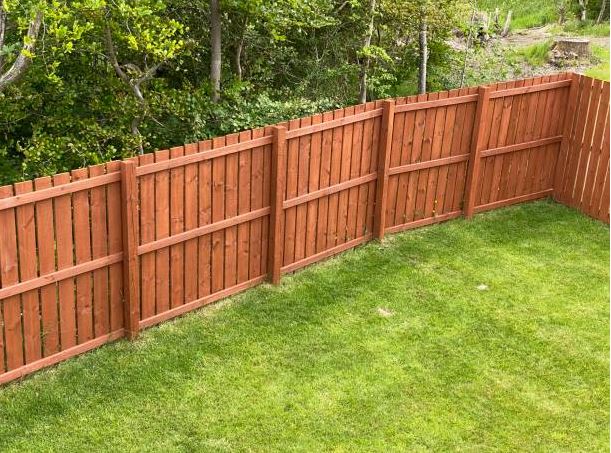
Do You need a Stylish Fence For your Home?
Stylish Timber Fence Ideas for Every Australian Climate
Australia’s diverse climates—ranging from tropical and arid to temperate—call for adaptable fencing solutions. Timber fences excel in this regard, offering style and resilience no matter where you live. Here are some ideas:
- Tropical Areas: Opt for hardwood timber fences coated with weatherproof sealants to resist heavy rains and humidity.
- Coastal Regions: Consider timber species like cypress or teak, which are known for their salt and moisture resistance.
- Arid Zones: Light-coloured, heat-reflective finishes can prevent the timber from cracking under intense sun.
- Temperate Climates: Decorative timber slat fences are perfect for creating a blend of privacy and airflow in mild weather conditions.
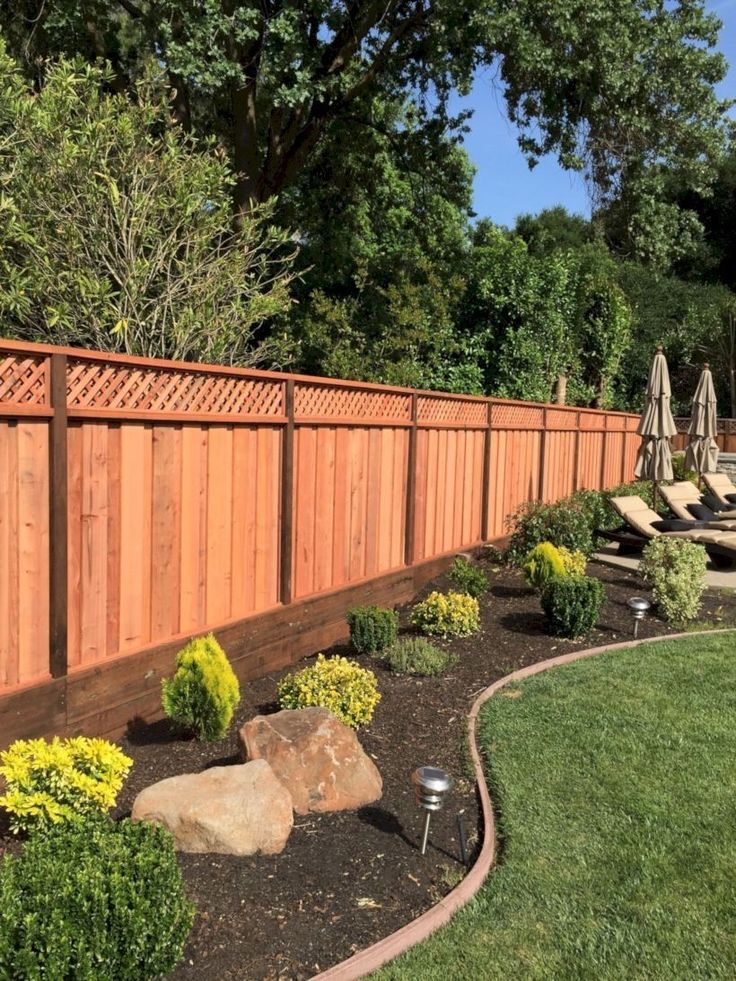
Timber Decking Maintenance
Classic Timber Fence Styles
Classic timber fence styles remain a timeless choice for many Australian homes. These designs exude charm and sophistication while offering robust functionality:
- Picket Fences: Known for their quaint appeal, picket fences are perfect for front yards and cottage-style homes.
- Lapped and Capped Fences: This design provides full privacy by overlapping timber panels, with a capping board adding durability.
- Post and Rail Fences: Commonly used in rural areas, these fences combine rustic aesthetics with practicality for large properties.
These traditional styles ensure that your home’s exterior remains elegant and in harmony with its surroundings.
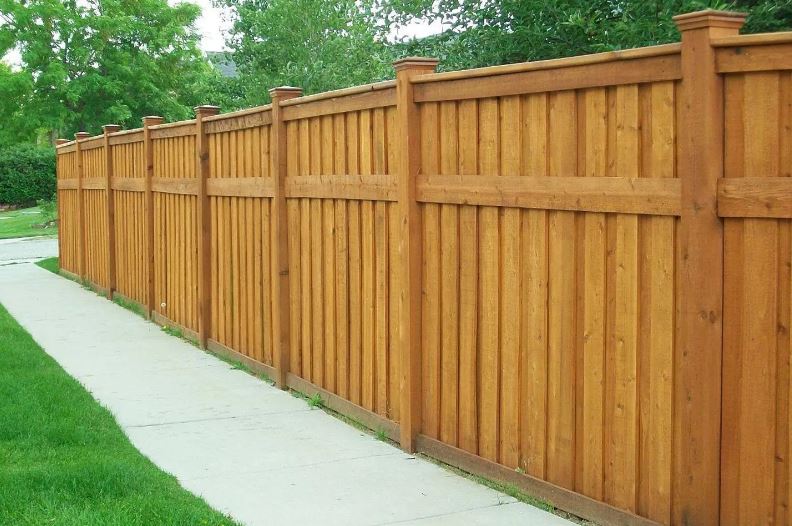
Modern Timber Fence Styles
For homeowners seeking contemporary designs, modern timber fences deliver clean lines and innovative aesthetics. Popular options include:
- Horizontal Slat Fences: These sleek fences offer a minimalist look while maintaining airflow and visibility.
- Black Stained Timber Fences: Perfect for creating a bold statement, black-stained timber adds a touch of sophistication to any property.
- Mixed Material Fences: Combine timber with materials like metal or stone to create unique, modern boundaries.
- Vertical Timber Panels: A contemporary twist on classic designs, these fences create an illusion of height and space.
Modern timber fence styles are ideal for properties looking to achieve a cutting-edge, stylish appearance.
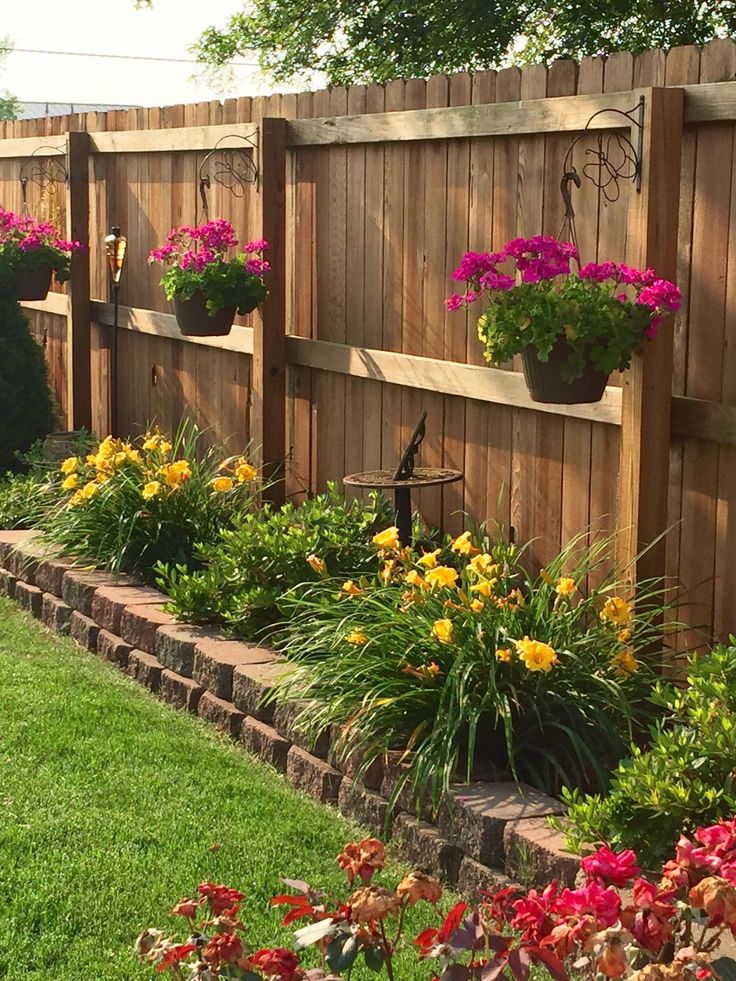
Timber Fences in Australia
Timber fences have become a staple across Australia due to their adaptability and aesthetic versatility. They blend seamlessly into natural landscapes and urban environments alike. Additionally, timber is a renewable resource, making it an environmentally responsible choice for homeowners.
The advantages of timber fencing in Australia include:
- Durability: With proper treatment, timber fences can withstand harsh weather conditions.
- Customisation: Easily tailored to suit any style, height, or finish.
- Cost-effectiveness: Timber fences are often more affordable than alternatives like metal or brick.
- Easy Maintenance: Regular sealing and occasional repairs keep timber fences in excellent condition.
Timber Fencing Offers Excellent Privacy
Privacy is one of the strongest practical reasons Australian homeowners choose timber fencing. A well-designed paling or slat fence can create a clear physical and visual separation between neighbouring properties, making a backyard feel substantially more private. That matters even more as suburban blocks become smaller and homes are built closer together.
Instead of looking directly into a neighbour’s yard, you can create a protected outdoor zone for children, pets, gardening, swimming, dining or simply relaxing with a cup of coffee. Timber is particularly effective because it can be constructed at different heights and with different board arrangements. Closely spaced palings provide strong screening, while slatted designs can provide privacy without making the boundary feel completely closed in.
You can also incorporate lattice or screening extensions where additional height is appropriate and permitted. Current Australian fencing cost guidance specifically identifies timber as a material capable of providing privacy while remaining relatively affordable. The important thing is to think about privacy as more than simply building the tallest possible wall. Consider sightlines from neighbouring windows, outdoor entertaining areas, pools, and upper-storey rooms, as well as sunlight and airflow. A thoughtfully designed timber fence can block unwanted views while still keeping the backyard feeling open and connected to the garden.
Creating a More Comfortable Outdoor Space
A fence can change the way you experience your backyard, and timber is especially good at creating that sense of enclosure without making the space feel industrial. Imagine sitting outside on a weekend morning with a coffee while the fence quietly blocks the view of bins, driveways, neighbouring activity and passing pedestrians. Suddenly the backyard feels less like leftover space around the house and more like an outdoor room.
Timber helps create that effect because its texture is visually softer than many solid manufactured alternatives. You can strengthen the feeling with climbing plants, garden beds, feature lighting or a seating area positioned against the fence. In this sense, the fence becomes part of the landscaping rather than merely marking a legal boundary.
It can also provide a useful backdrop for plants, making greenery stand out more clearly. A darker stained timber fence, for example, can recede visually and allow foliage to become the star of the garden. A lighter painted fence can create a brighter, more traditional atmosphere. The same principle applies to entertaining areas: a well-finished timber boundary can provide a neutral background for outdoor furniture, barbeques and garden features.
When you combine privacy with thoughtful landscaping, a timber fence can effectively add another usable layer to your property. That’s a surprisingly valuable benefit from something many people initially consider nothing more than a boundary.
The Affordability of Timber Fencing
For many homeowners, the biggest question is simple: How much will it cost? Timber is attractive partly because it can deliver substantial coverage without requiring the budget associated with premium masonry, stone or glass systems.
Other 2026 market estimates show wider ranges depending on the construction method, with standard treated-pine fences potentially reaching higher installed rates when steel posts, greater heights, difficult access or upgraded finishes are included. So don’t treat any online figure as a quote carved in stone.
The actual price of your fence can be influenced by the length, height, ground conditions, slope, removal of an existing fence, access for materials, gates, post type, timber species and finishing requirements. The advantage is that timber gives you multiple ways to control those costs. You can choose economical treated pine for long boundary runs and reserve premium hardwood or decorative construction for visible areas. You can also decide whether you need a feature fence or simply a durable privacy barrier. That ability to scale the specification is one of timber’s strongest financial advantages.
Treated Pine vs Hardwood
The choice between treated pine and hardwood often comes down to the classic trade-off between budget, appearance and durability characteristics. Treated pine is widely used because it is relatively inexpensive, easy to handle and can be treated to provide protection suitable for outdoor applications.
Hardwood, on the other hand, tends to be denser and can offer a more premium appearance, with richer grain and a substantial feel. It can also be more expensive. Current Australian guides consistently identify treated pine as the more economical mainstream option, while hardwood sits higher in the pricing range. But cheaper doesn’t automatically mean inferior. A correctly specified treated-pine fence can be an excellent choice for a standard suburban boundary, particularly when the posts and other components are selected for the conditions they will experience.
Hardwood can make more sense when appearance is a major priority, when the fence forms part of a high-end landscape design, or when a particular species provides characteristics suited to the project. The key is not to compare the materials solely by the price of a single paling. Compare the entire installed system and consider what you actually need. Paying substantially more for hardwood doesn’t make sense if your main objective is a practical backyard boundary, while choosing the cheapest possible timber may be false economy if the site demands higher durability. Good fencing starts with matching the material to the job.
Understanding Timber Treatment and Durability
Australian outdoor conditions can be unforgiving, which makes timber treatment a critical part of a successful fence. Moisture, insects, fungi and ground contact can gradually damage untreated or incorrectly specified timber. Australia’s Department of Agriculture, Fisheries and Forestry identifies different hazard classes under the AS 1604 series, with H3 applying to timber used outside above ground and H4 applying to timber used outside in ground contact. H4 is therefore particularly relevant when selecting timber fence posts that will be exposed to soil and moisture. This is one of those details that may not be obvious when you’re looking at a sample board in a showroom, but it can have a major effect on the long-term performance of your fence.
Ask what hazard class applies to every timber component and where it will be used. Don’t assume that because a fence is marketed as “treated pine”, every piece is suitable for the same environment.
The rails and palings may have different exposure conditions from the posts. Installation matters too: even excellent treated timber can perform poorly if water is allowed to remain trapped around vulnerable areas. Proper drainage, suitable post installation, appropriate fixings and sensible separation from constantly wet surfaces all contribute to longevity. In other words, durability isn’t a single product feature. It is the result of choosing the right material and then using it correctly.
Choosing the Right Hazard Class
Hazard classes are essentially a way of matching timber treatment to the conditions the timber is expected to face. The Australian Government’s guidance identifies H3 for outdoor above-ground exposure and H4 for outdoor in-ground applications, with increasing hazard classes corresponding to increasingly severe exposure.
For fencing, that distinction is particularly important because a post set into the ground experiences a completely different environment from a paling exposed to rain but positioned above soil. The post can encounter persistent moisture, soil organisms and conditions that accelerate decay.
That’s why simply asking for “treated timber” isn’t enough. You want to know what the timber has been treated for and whether that treatment corresponds with its intended location. It is also sensible to ask your fencing contractor about the treatment standard and documentation for the timber being supplied. The Department of Agriculture notes that AS 1604 covers preservative treatment requirements for relevant timber products, so using compliant materials gives you a much stronger foundation for a durable installation. If you live in an area with particular termite pressures, coastal exposure or persistent humidity, discuss those conditions before the materials are ordered. The right hazard class doesn’t make a fence indestructible, but it dramatically improves your chances of getting the service life you expect from your investment.
Think of it as choosing the right footwear for the terrain: hiking boots and running shoes are both good products, but only one is appropriate for a rocky trail.
Timber Fencing and the Australian Climate
Australia doesn’t have one climate; it has many. A timber fence in tropical Queensland can face intense humidity and rainfall, while one in a dry inland region may deal with extreme heat and large temperature swings. Coastal properties can add salt-laden air to the equation, while southern regions may experience cold, wet winters.
This variety makes material selection especially important. Timber can perform very well across these environments when the species, treatment and construction details are appropriate. The Australian Government’s hazard-class guidance explicitly distinguishes outdoor exposure and ground contact, reinforcing the importance of specifying timber according to its actual service conditions. Maintenance also plays a role.
A timber fence that is regularly inspected for damaged boards, loose fixings, moisture problems and early signs of deterioration is easier to protect than one that is ignored for years. Good landscaping can help too. Keep sprinklers from constantly soaking the fence, avoid piling soil or mulch against vulnerable timber and make sure plants don’t trap persistent moisture against the boards. In areas exposed to strong sunlight, an appropriate exterior finish can help manage weathering and keep the fence looking better for longer.
Timber doesn’t need to be treated like a fragile piece of furniture, but it does benefit from sensible care. When those basics are handled, the material can cope remarkably well with Australia’s demanding outdoor environment.
Conclusion
Timber fences remain the best choice for Australian homes due to their durability, adaptability, and timeless appeal. Whether you prefer classic styles or modern designs, there’s a timber fence to suit every home and climate. By choosing high-quality materials and thoughtful designs, you can create a functional and visually striking boundary for your property. For the best results, explore the vast array of timber fence designs Australia has to offer and transform your outdoor space today!